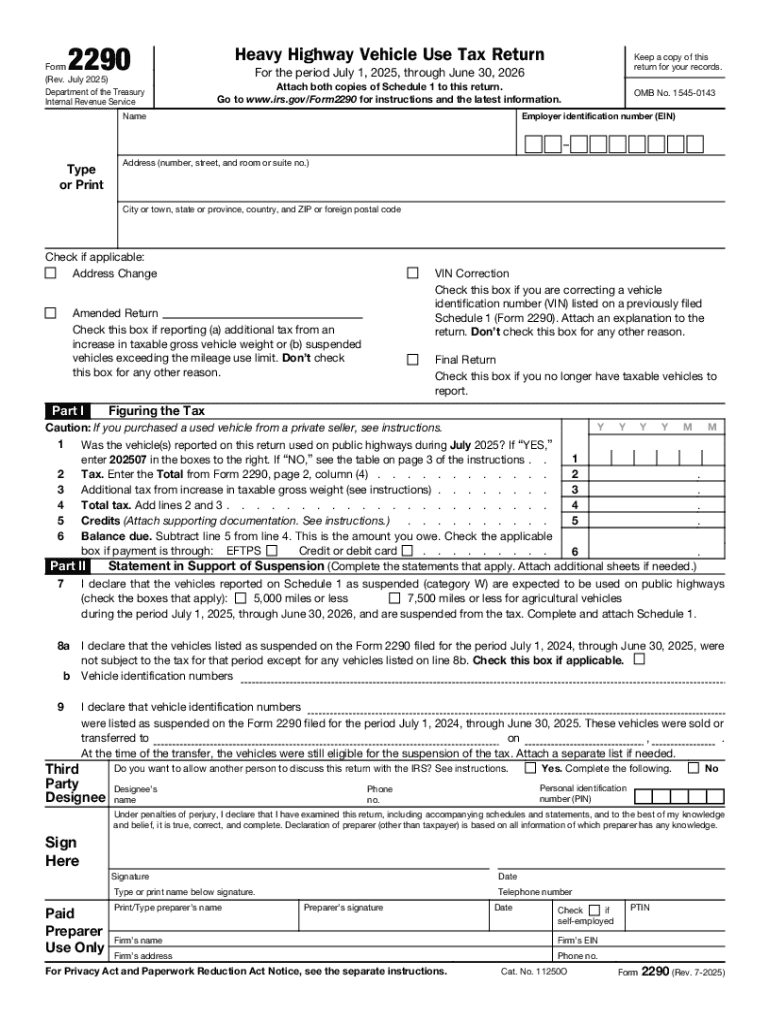







Definition and Meaning of Form 2290
Form 2290, also known as the Heavy Highway Vehicle Use Tax Return, is utilized by truck owners and operators in the United States to report and pay taxes on highway motor vehicles with a taxable gross weight of 55,000 pounds or more. The form helps fund highway infrastructure by collecting taxes from vehicles that have a significant impact on road maintenance due to their weight.
Purpose and Importance
- Road Maintenance Funding: The tax revenue from Form 2290 supports highway maintenance and improvements.
- Legal Requirement: Filing this form is mandatory for operators and owners of qualifying heavy vehicles to remain compliant with federal tax laws.
- Proof of Payment: Completing this form provides proof of tax payment, which is essential for vehicle registration and tagging in most states.
How to Use the Form 2290
Prerequisites
Before completing Form 2290, ensure you have the following:
- Employer Identification Number (EIN): Required for filing, as a Social Security Number cannot be used.
- Vehicle Information: Including the Vehicle Identification Number (VIN) and the taxable gross weight of each vehicle.
Filing Instructions
- Determine Eligibility: Verify that your vehicle meets the criteria based on weight and use.
- Complete the Form: Fill out all necessary sections with accurate vehicle and taxpayer information.
- Calculate the Tax: Use the IRS-provided tables to compute the right tax amount based on your vehicle's weight and mileage.
- Submit the Form: Choose between electronic filing or submitting a paper form through mail, ensuring adherence to deadlines.
Steps to Complete the Form 2290
Detailed Process
- Provide Taxpayer Information: Enter personal or business details, including the EIN and business name.
- Report Vehicle Details: List each vehicle's VIN and taxable gross weight.
- Calculate Taxes: Based on IRS publications, ascertain the total tax due per vehicle.
- Sign and Date: Ensure the form is signed and dated to validate your tax return.
- File the Form: Submit either electronically through an IRS-authorized e-file provider or by mailing to the relevant IRS address.
Filing Deadlines and Important Dates
Key Deadlines
- Annual Filing Date: The standard deadline is August 31 for the tax period from July 1 to June 30 of the following year.
- Pro-Rated Taxes: If a vehicle is added during the tax year, the tax must be filed by the last day of the month following the month in which the vehicle was first used.
Considerations
- Timely Filing: Avoid penalties by ensuring the form is submitted on or before due dates.
- Late Submission: Penalties and interest may apply to late filings, stressing the importance of adherence to deadlines.
Required Documents for Form 2290
Necessary Documentation
- EIN Confirmation: Documentation demonstrating the EIN assigned by the IRS.
- Vehicle Details: VINs and documents indicating the vehicle's taxable gross weight.
- Mileage Records: If applicable, mileage records to support credit claims for vehicles driven under a certain mileage threshold.
Penalties for Non-Compliance with Form 2290
Consequences of Non-Filing
- Financial Penalties: Failure to file can lead to additional charges amounting to 4.5% of the total tax due, accruing monthly.
- Interest Charges: Additional interest is calculated at a rate of 0.5% per month for unpaid taxes.
- Registration Issues: Non-compliance may prevent state registration of the vehicle, affecting its operational legality.
Electronic vs. Paper Submission of Form 2290
Comparison of Submission Methods
-
Electronic Filing (E-File):
- Speed: Faster processing and quicker receipt of a stamped Schedule 1.
- Convenience: Eliminates paperwork through submission via IRS-authorized e-file providers.
-
Paper Filings:
- Traditional Method: Suitable for those preferring physical submissions or lacking internet access.
- Potential Delays: Longer processing times compared to electronic filing.
Key Elements of the Form 2290
Critical Sections
- Part I: Filing Information: This section includes the tax period and number of vehicles.
- Part II: Tax Computation: Accurate calculation of taxes owed based on the vehicle's characteristics.
Special Considerations
- Exemptions: Vehicles under 5,000 miles for agricultural use may qualify for an exemption.
- Certifications: Signature certification is required for form validation and compliance with IRS requirements.