
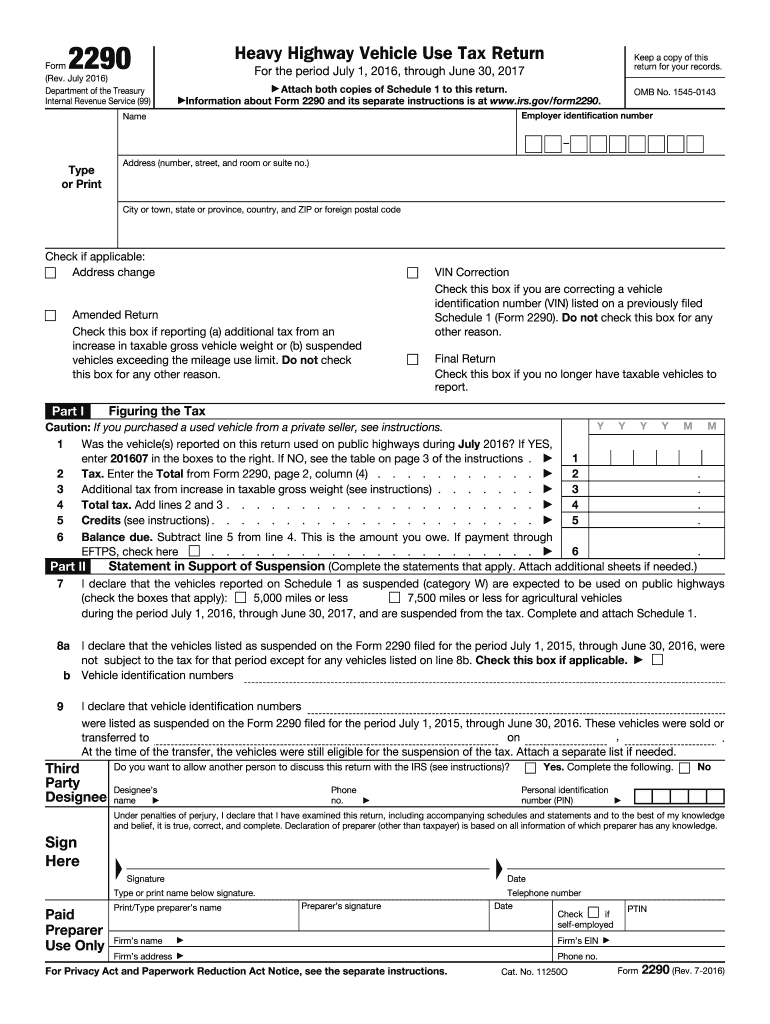







Definition and Meaning of Form 2290
Form 2290, known as the Heavy Highway Vehicle Use Tax Return, is utilized for reporting and paying taxes on heavy highway vehicles with a taxable gross weight of 55,000 pounds or more. Specifically, the 2 form pertains to the tax period starting July 1, 2016, and ending June 30, 2017. This form is crucial for owners of heavy vehicles as it facilitates the IRS in tracking and collecting taxes based on vehicle usage on public highways. Understanding the purpose of Form 2290 ensures compliance with federal requirements and aids in avoiding penalties associated with late or incorrect submissions.
How to Obtain the 2 Form
You can acquire the 2 form from the IRS website, where it is available as a downloadable PDF. Alternatively, physical copies can be requested from the IRS by mail. Many tax software programs also offer an option to generate this form directly within their platforms. It's crucial to ensure the form referenced explicitly mentions the 2016 tax period to prevent filing errors. Using self-service kiosks at IRS offices is another method, although it requires a visit in person.
Steps to Complete the 2 Form
- Determine Eligibility: Verify that your vehicle's gross weight is 55,000 pounds or more.
- Gather Information: Collect necessary details such as the Vehicle Identification Number (VIN), Employer Identification Number (EIN), and taxable gross weight.
- Calculate Tax: Use the IRS guidelines provided with the form to compute the tax owed based on the vehicle's weight and mileage.
- Fill Out Form: Complete all sections of the form accurately, paying close attention to required fields.
- Submit Form: File the form with the IRS either electronically or by mail, as outlined in the form's instructions.
Important Terms Related to Form 2290
- Taxable Gross Weight: The weight of a vehicle which determines the tax amount, composed of the unladen weight plus the weight of the maximum load customarily carried.
- VIN (Vehicle Identification Number): A unique code used to identify individual motor vehicles.
- EIN (Employer Identification Number): A unique number assigned to a business entity by the IRS for identification purposes.
- Suspended Vehicles: Vehicles exempt from tax for the period due to operating under 5,000 miles.
Legal Use of the 2 Form
Form 2290 is legally required for declaring and paying tax obligations on applicable heavy highway vehicles. It ensures adherence to federal rules and facilitates revenue collection for road maintenance and infrastructure projects. Non-compliance can lead to penalties, and documenting tax payments with Form 2290 is necessary for lawful vehicle operation under U.S. transportation regulations.
IRS Guidelines for Form 2290
The IRS requires that the 2290 form be filed yearly for every vehicle meeting the weight and usage criteria. Tax is computed annually, although specific situations might call for prorated tax filings if vehicles are placed into or withdrawn from service mid-year. The IRS website provides detailed guides for tax computations and any allowable credits or exemptions.
Filing Deadlines and Important Dates
The filing deadline for the 2290 form spans from July 1 to August 31 each year. This deadline ensures taxes correlate with the beginning of the operational year on highways. It’s critical for vehicle owners to adhere to these dates to avoid penalties. For newly acquired or newly qualifying vehicles, the form must be filed by the last day of the month following the month of first use.
Required Documents and Information
- Completed Form 2290: Must contain accurate data reflecting the specified tax year.
- VIN Documentation: Proof of vehicle registration with the correct VIN.
- Proof of Payment or Exemption: For vehicles not subject to tax, documentation of miles driven may be required.
- Tax Payment Documentation: If filing by mail, include proof of electronic payment through IRS-approved methods.
Implementing these steps and ensuring the provision of all pertinent documents can aid in the smooth processing of your tax return for heavy highway vehicles. Understanding the legal implications and incorporating proper documentation practices is essential for businesses operating these vehicles.




