







Definition & Meaning
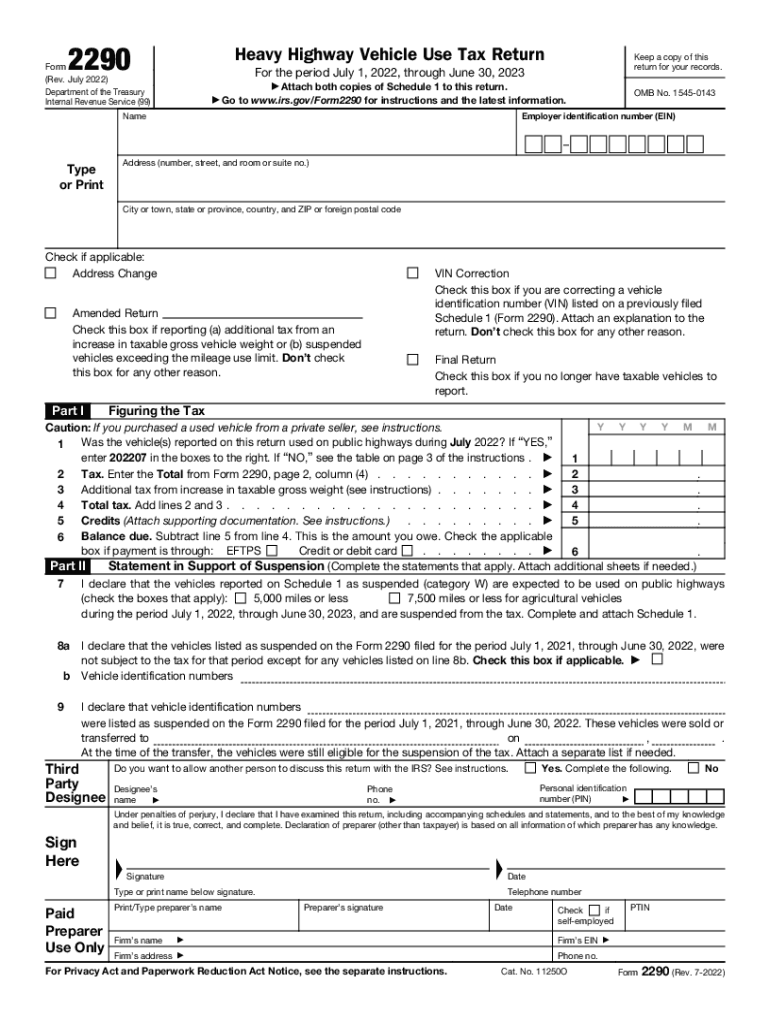
Form 2290, officially titled "Heavy Highway Vehicle Use Tax Return," is a form used for declaring and paying taxes applicable to heavy highway motor vehicles that carry taxable gross weights of 55,000 pounds or more. This tax helps fund highway programs across the United States. The specific version referred to here, Rev. July 2022, applies to the tax period spanning from July 1, 2022, to June 30, 2023.
Key Elements of Form 2290
- Taxable Vehicles: Any highway motor vehicle with a taxable gross weight of 55,000 pounds or more.
- Tax Rates: Calculated based on the weight of the vehicle. Typically, heavier vehicles incur higher taxes.
- Logging Vehicles: These are taxed at lower rates due to the specific nature of their operations.
- Exemptions: Include vehicles used 5,000 miles or less (or 7,500 miles or less for agricultural vehicles) during the tax year.
How to Use the Form 2290 (Rev. July 2022). Heavy Highway Vehicle Use Tax Return
When using Form 2290, vehicle owners or operators must calculate the appropriate tax based on their vehicle's weight and use type. The form requires details such as the business name, address, EIN (Employer Identification Number), VIN (Vehicle Identification Number), and the specific vehicle details. It's crucial to ensure each section is filled appropriately to avoid delays in processing.
Steps to Complete the Form 2290 (Rev. July 2022). Heavy Highway Vehicle Use Tax Return
- Gather Necessary Information:
- Collect all relevant vehicle data including VINs and information about the business or individual owner.
- Calculate the Tax:
- Use the weight of the vehicle to determine the tax liability using the IRS-provided rates.
- File the Form:
- Choose to file electronically or submit the form via mail if filing less than 25 vehicles.
- Payment Submission:
- Payment can be made electronically through the IRS, or by sending a check or money order if mailing the form.
Required Documents
To ensure the Form 2290 is completed without issues, you will need:
- Proof of vehicle identification
- Documentation of vehicle weight
- Prior tax year filings, if applicable, to verify any changes
Penalties for Non-Compliance
Failing to file Form 2290 or pay the necessary tax by the deadline can lead to financial penalties. These typically include:
- Late Filing Penalties: Impose a percentage of the unpaid tax for each month or part of a month the form is late.
- Penalty for Non-Payment: An additional interest rate may apply on the overdue tax amount.
Filing Deadlines / Important Dates
The deadline for filing Form 2290 is August 31 of each year for vehicles first used in July. For vehicles first used in any month other than July, the form must be filed by the last day of the month following the month of first use.
Who Typically Uses the Form 2290 (Rev. July 2022). Heavy Highway Vehicle Use Tax Return
This form is predominantly used by owners of heavy highway motor vehicles, including:
- Transportation Businesses: Companies operating fleets of taxable-sized trucks.
- Agricultural Operators: Users of heavy vehicles in farming activities, noting mileage exemptions.
- Individual Owner-Operators: Independent drivers with vehicles that meet the taxable criteria.


IRS Guidelines
The IRS provides specific guidelines on how Form 2290 should be completed and submitted:
- Electronic Filing: Required for those reporting 25 or more vehicles, and optional for others.
- Form Accuracy: Ensure all information is accurate to prevent form rejection.
- Record Keeping: Maintain copies of the filed form and all payments for at least three years for audit purposes.
Legal Use of the Form 2290 (Rev. July 2022). Heavy Highway Vehicle Use Tax Return
Using this form correctly ensures compliance with federal highway tax laws. Non-compliance can result not only in financial penalties but also legal issues with the IRS. Proper filing supports roadway maintenance funding, essential for vehicle operators.


