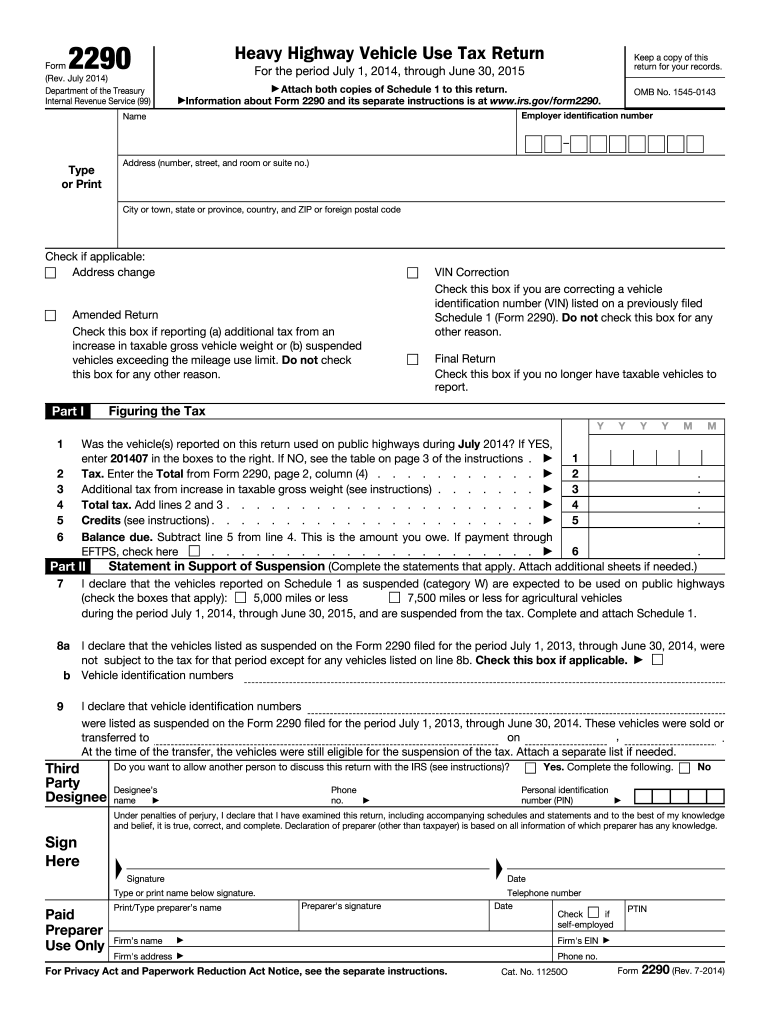







Definition and Purpose of the 2014 Form 2290
Form 2290, also known as the Heavy Highway Vehicle Use Tax Return, is utilized for reporting and paying taxes on highway motor vehicles with a taxable gross weight of 55,000 pounds or more. The 2014 version applies specifically to the tax period beginning on July 1, 2014, and ending on June 30, 2015. The form allows vehicle owners to provide necessary information, such as vehicle identification numbers (VIN), and make calculations for their tax obligations based on the vehicle's weight and usage. By submitting Form 2290, taxpayers comply with federal regulations and contribute to infrastructure maintenance.
Key Components of Form 2290
- Vehicle Identification Information: Essential for identifying the specific heavy highway vehicle(s) for which the tax is being paid.
- Tax Calculation: Based on the vehicle's gross weight and mileage, determining the amount owed.
- Amended and Final Return Sections: Options for cases requiring adjustments or concluding tax responsibility.
How to Use the 2014 Form 2290
To use the 2014 Form 2290 efficiently, taxpayers need to gather relevant information before filling it out. This includes obtaining the vehicle's VIN, understanding gross weight categories, and staying informed about filing deadlines. Filing can be done electronically or via paper, with the electronic method being significantly faster and more convenient. Whether self-preparing the form or using tax preparation software, accuracy in reporting is crucial to avoid penalties or delays.
Steps for Electronic Filing
- Gather Necessary Information: VIN, taxpayer identification, weight category.
- Access IRS Authorized e-file Provider: Choose from a list available on the IRS website.
- Complete the Form: Fill out the sections as required electronically.
- Submit and Pay: Follow the steps for electronic payment if due.
How to Obtain the 2014 Form 2290
Taxpayers have two primary methods for obtaining Form 2290. They can either download it directly from the IRS website or order a paper copy from the IRS directly. It is crucial to ensure they are using the correct year's form to avoid tax calculation discrepancies. Additionally, accessing the form through reputable tax software often provides an integrated workflow for filing and record-keeping.
Steps to Complete the 2014 Form 2290
Completing Form 2290 involves several detailed steps to ensure compliance and accuracy:
- Enter Business Information: Include name, address, and Employer Identification Number (EIN).
- Provide Vehicle Details: VINs, weight category, and usage type.
- Calculate Tax Due: Based on instructions provided, apply the appropriate rates.
- Amendments and Adjustments: Use if applicable.
- Sign and Date: Authenticated signature.
Important Considerations
- Mandatory Fields: Ensure all sections are completed to the IRS standards.
- Submission of Schedule 1: Necessary to receive proof that taxes were filed and paid.
Who Typically Uses the 2014 Form 2290
Form 2290 is primarily used by individuals and businesses operating heavy highway vehicles in the U.S. It applies to owners of trucks, tractors, and buses that meet the weight threshold. Certain exemptions are noted, such as vehicles used exclusively for government or non-taxable purposes, but these still require submission for documentation purposes.


Business Types and Usage
- Transport Companies: Registering fleets and individual trucks.
- Owner-Operators: Independent drivers managing their own vehicle(s).
Legal Use of the 2014 Form 2290
Form 2290 is legally recognized under the Internal Revenue Code for fulfilling federal tax obligations on heavy vehicles. Failure to file or inaccurate reporting may result in penalties and interest, emphasizing the form's importance in annual tax cycles.
Potential Legal Penalties
- Late Filing: Monetary penalties increase with time past the deadline.
- Incorrect Information: Additional fines or audits if not corrected promptly.
Filing Deadlines and Important Dates
The typical deadline for filing Form 2290 is August 31 each year, covering vehicles first used in July. For vehicles first used after July, the filing is due at the end of the month following the first use. Compliance with these timelines ensures avoidance of penalties.
Examples of Using the 2014 Form 2290
Consider a trucking company expanding its fleet in August 2014. By using Form 2290, they calculate their tax based on new vehicles' weight classes. Another example involves an independent trucker reviewing gross weight adjustments and filing an amended form to reflect accurate usage.
Practical Scenarios
- Fleet Expansion: Immediate filing for newly-acquired trucks.
- Usage Alterations: Amendments for increased or decreased weight categories.
In conclusion, Form 2290 serves as a critical tool for legally documenting and paying taxes on heavy vehicles in the United States. Proper understanding and application of the form ensure compliance and contribute to the nation's road infrastructure maintenance. Each step, from obtaining the form to filing it, supports efficient and accurate tax processes for vehicle operators across the country.