







Definition and Meaning
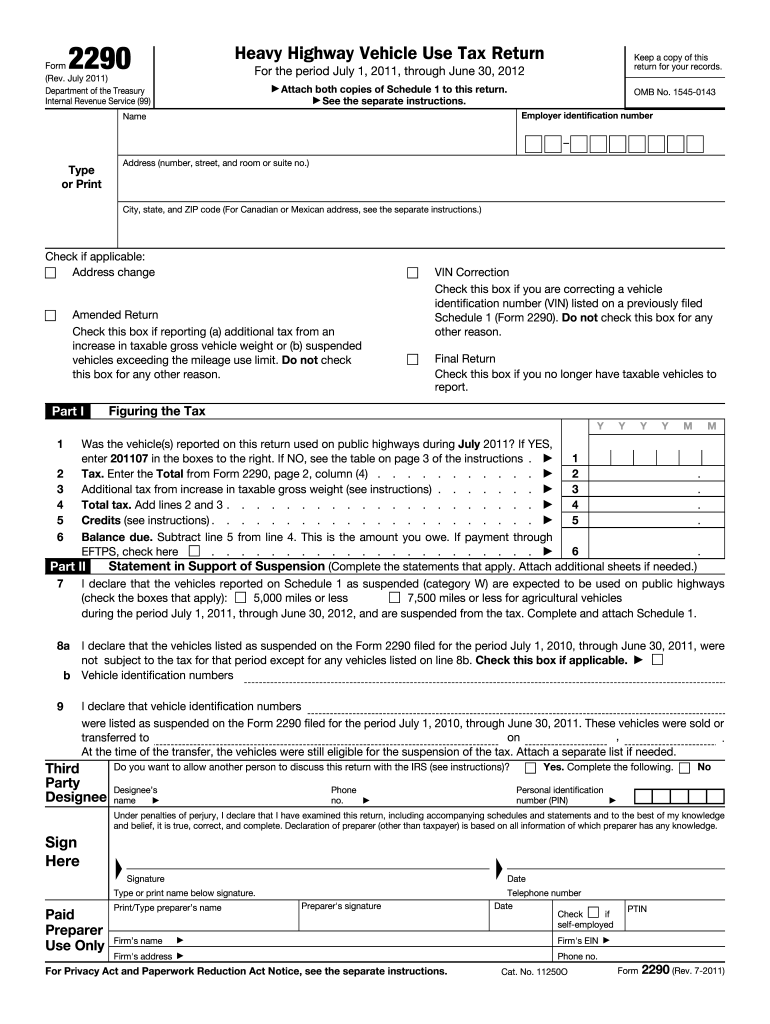
Form 2290 is officially known as the Heavy Highway Vehicle Use Tax Return. Specifically for 2011, this form is integral for reporting and paying taxes on heavy highway vehicles that operate on public highways in the U.S. The tax period for the 2 form covered the timeframe from July 1, 2011, to June 30, 2012. This form is essential for truckers and trucking companies who own and operate vehicles with a gross weight of 55,000 pounds or more. Understanding the intricacies of the 2 form is crucial for compliance and proper tax filing.
How to Use the 2 Form
Completing the 2 form requires specific details about your heavy highway vehicle. Key components include:
- Vehicle Identification: Enter details such as Vehicle Identification Number (VIN) and weight.
- Tax Calculation: This is based on the vehicle's gross weight and mileage use category.
- Amending or Correcting Information: Opportunities for amending previous submissions are available if errors were made.
When properly filled, the form enables you to compute the appropriate tax owed for vehicles used on public highways. Providing accurate information is vital for avoiding penalties and ensuring swift processing.
Steps to Complete the 2 Form
- Gather Necessary Documents: Collect information including VIN numbers, vehicle weight, and mileage.
- Fill Out Identification Section: Include your EIN, business name, and complete address.
- Calculate Tax: Based on the weight and category of the vehicle, calculate the highway use tax.
- Provide Payment Information: Indicate your chosen method of payment for the tax due.
- Check for Errors: Review all entries for accuracy. Incorrect details can lead to penalties or rejections.
- Submission: Decide whether to file electronically for faster processing or via mail.
Understanding each step improves accuracy and compliance, which is invaluable to avoid unnecessary follow-ups with IRS.
Key Elements of the 2 Form
Vital elements included in the 2 form ensure accurate tax reporting:
- Vehicle Details: Identifying the type and weight of the vehicle is crucial for tax assessment.
- Tax Payment Calculations: Specific calculations determine the total tax owed for the tax year.
- Corrections and Amendments: Enabling corrections helps in case of initial errors.
- Payment Voucher (Form 2290-V): This is used when making payments through checks or money orders.
Correctly addressing these elements ensures full compliance with IRS requirements.
IRS Guidelines
The IRS provides detailed instructions alongside Form 2290 to guide taxpayers. The guidelines cover:
- Filing Requirements: Explaining who needs to file based on usage thresholds.
- Payment Methods: Options include Electronic Funds Transfer (EFT), credit, and debit cards.
- Amendments: Procedures for rectifying mistakes on earlier submissions.
- Exemptions and Reductions: Details on vehicles potentially exempt from taxes or eligible for reduced rates.
IRS guidelines offer clarity and legal backing for vehicle owners on tax payment and reporting.
Filing Deadlines / Important Dates
For the tax period ending June 30, 2012, the filing deadline for the 2 form was August 31, 2011. Meeting this deadline avoids potential penalties and interest charges. Understanding the timeline helps ensure proper planning and timely submission, essential to maintaining legal compliance with road tax requirements.
Penalties for Non-Compliance
Failure to file the 2 form or pay requisite taxes leads to penalties set by the IRS. Common penalties include:
- Late Filing Penalty: Typically five percent of the total tax due, assessed monthly until filed.
- Late Payment Penalty: Initially 0.5 percent per month of the amount due.
To avoid these penalties, ensure timely and accurate submission and payment of associated taxes.
Form Submission Methods
The 2 form can be submitted through:
- Online E-Filing: Faster processing with immediate acknowledgment of filing.
- Mail: Done via the IRS address designated for paper submissions.
- In-Person: Visit IRS Taxpayer Assistance Centers.
Electronic submission via e-filing is often preferred for its efficiency and reduced error rate in processing.
Examples of Using the 2 Form
Owners of interstate and intrastate freight vehicles leverage Form 2290 to report taxes owed. For instance:
- A long-haul trucking company operating a fleet of 75,000-pound rigs must file this form to compute taxes due.
- An individual owner-operator of a heavy-duty haul truck similarly uses this form to detail their specific tax liabilities based on mileage and weight.
These examples illustrate practical applications where Form 2290 plays a critical role in fulfilling tax obligations.




