Definition and Purpose of Schedule F (Form 1040)
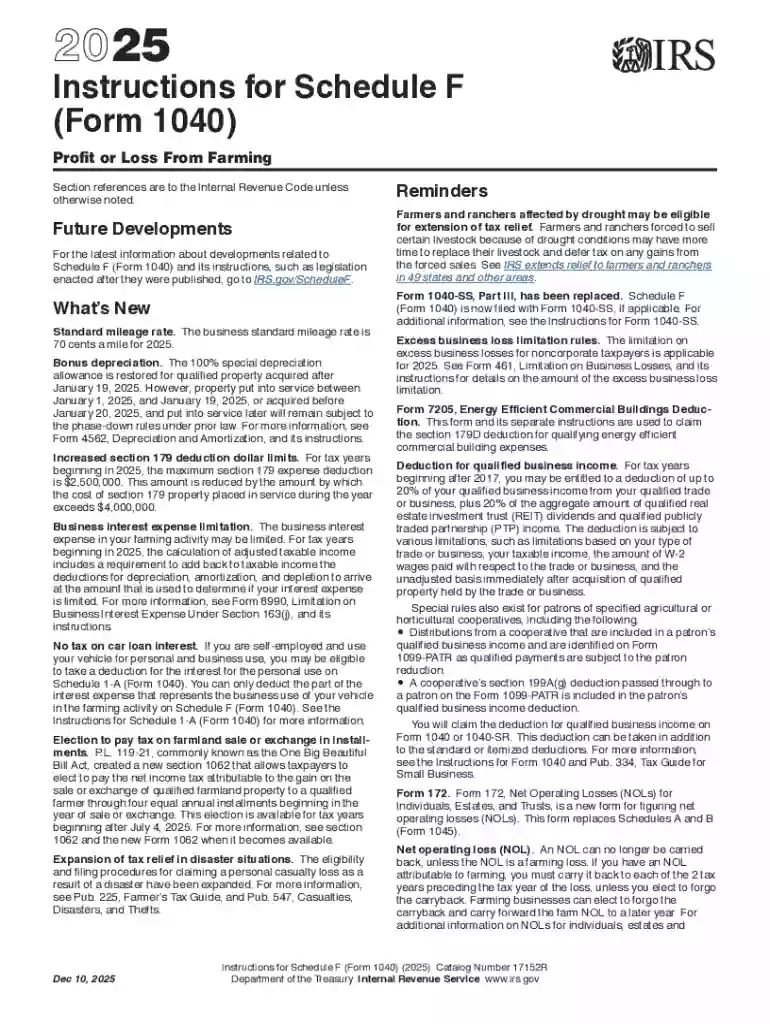
Schedule F is a form used as part of the IRS Form 1040 to report farm income and expenses. It helps farmers and those involved in agricultural operations calculate their profits or losses, which then contribute to their overall taxable income. The form is essential because it allows individuals engaged in farming to accurately report their varied sources of income and expenses specific to their agricultural activities, ensuring compliance with tax laws.
Key Elements of Schedule F (Form 1040)
- Income Reporting: Farmers must report all sources of income from their farming activities. This includes sales of livestock, produce, grains, products, and any payments from agricultural programs.
- Expense Deduction: The form allows farmers to deduct necessary expenses directly related to their farming operations, such as seeds, feed, fertilizers, repairs, and farm labor costs.
- Profit or Loss Calculation: After listing all revenues and expenses, Schedule F calculates the net profit or loss from the farming operations, which is transferred to Form 1040.
How to Use Schedule F (Form 1040)
Obtaining the Form
- IRS Website: Schedule F can be downloaded directly from the IRS website in PDF format. It is part of the broader IRS Form 1040 package.
- Tax Software: Most tax preparation software, such as TurboTax and QuickBooks, include Schedule F and guide users through its completion process.
Completing the Form
- Gather Required Documents: Ensure you have all necessary documents, including sales receipts, expense invoices, and previous tax returns.
- Fill Out Income Section: List all agricultural income sources, including sales and government subsidies.
- Detail Farming Expenses: Accurately itemize all deductible expenses related to your farming operations.
- Calculate Net Gain or Loss: Use the form’s guidelines to compute your farming operation’s net profit or loss.
Common Errors to Avoid
- Incomplete Information: Ensure all sections of the form are completed as required.
- Miscalculations: Double-check figures to prevent errors in profit or loss calculations.
- Missing Attachments: Include all relevant schedules and receipts to support your claims.
Who Uses Schedule F (Form 1040)
Target Users
- Individual Farmers: Including sole proprietors who own or operate a farming business.
- Partnerships and Corporations: Engaged in farming operations needing to report income separately.
- Family Farms and Small Agricultural Businesses: Family-run farms or small agricultural entities that meet certain IRS criteria.
Required Documents and Submission Methods
Essential Documents
- Sales Receipts: Proof of income from various farming operations.
- Expense Documentation: Receipts for purchases and services related to farm operations.
- Previous Tax Returns: Past records to assist in accurate and consistent reporting.
Submission Methods
- Online Filing: Completing and submitting the form electronically via IRS e-file or approved tax software.
- Mailing: Paper filing directly mailed to the IRS, although it is less commonly used in the digital age.
- In-Person Consultation: Working directly with a tax professional who can file on your behalf can also be advantageous.
IRS Guidelines and Compliance
Legal Use
- Accuracy: The form must be filled out truthfully and accurately to avoid discrepancies.
- Timeliness: All tax filings, including Schedule F, must meet IRS deadlines to prevent penalties.
- Compliance with Updates: Stay informed about IRS changes to tax codes affecting the Schedule F Form 1040 by consulting IRS publications or a tax professional.
Filing Deadlines and Important Dates
Critical Deadlines
- General Deadline: Aligns with the general tax filing deadline, traditionally around April 15.
- Extensions: Possibility to file for an extension, typically until October 15, but subject to IRS approval.
Importance of Timely Filing
- Avoid Penalties: Missing deadlines can result in financial penalties and interest on owed taxes.
- Securing Refunds: Timely filing ensures any potential tax refunds are processed and received faster.
Variants and Alternatives to Schedule F (Form 1040)
Related Forms
- Schedule C: Used for Profit or Loss from Business for non-farming incomes, contrasting with Schedule F’s farming focus.
- Form 4835: Used for farm rental income and is a potential alternative if individual ownership isn’t applicable.
Software Compatibility
- Tax Software Integration: Most tax software offers tools to assist with both federal and state compliance issues.
- Updated Forms: Ensure using the latest form version and conditions outlined in tax software.
Examples and Scenarios
Real-World Application
- Vegetable Farmer: Reporting income from farmer's markets, with expenses for seeds and local advertising.
- Livestock Rancher: Documenting sales proceeds from auctions and necessary veterinary expenses.
Edge Cases
- Crop-share Leases: Requires special considerations and potentially invoking Form 4835 in addition to or instead of Schedule F.