







Definition and Purpose of Schedule F Instructions
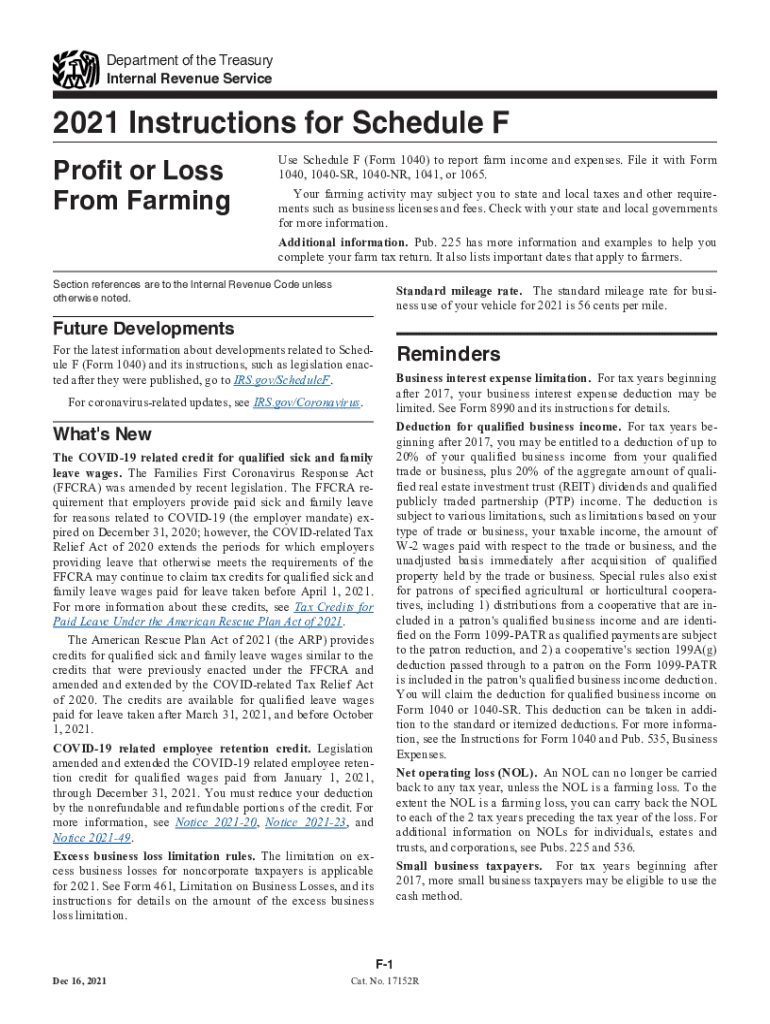
Schedule F (Form 1040) instructions are essential guidelines for farmers who report profit or loss from their farming activities. These instructions provide a comprehensive understanding of how to detail farm income and various expenses, which is crucial for accurate tax filing. The document covers a range of topics, including ways to list different types of farm revenue, from sales to cooperative distributions. By following these instructions, farmers can ensure compliance with IRS regulations and make informed decisions about allowable deductions. These instructions also play a vital role in understanding the timing and application of deductions and credits, including those related to recent tax legislation.
How to Obtain the Schedule F Instructions
Farmers can easily access the Schedule F instructions via several methods. Firstly, the IRS website offers downloadable PDF versions of the form and its instructions. Additionally, taxpayers can request printed copies by contacting the IRS directly or visiting a local IRS office. Many tax preparation software programs, such as TurboTax and QuickBooks, integrate these instructions directly into their platforms, providing users with step-by-step assistance. Ensuring access to the latest version of these instructions is crucial, as they contain updates on new tax laws and provisions that may affect the farmer's tax liability.
Steps to Complete Schedule F Instructions
- Gather Required Documents: Ensure you have all necessary financial records, including income statements, receipts for farm-related expenses, and any 1099 forms received.
- Income Details: Report all sources of farm income, such as sales of livestock, grain, or other produce, subsidies, and cooperative distributions.
- Expense Deductions: Utilize sections of the instruction to deduct eligible farming expenses, such as labor, feed, seed, insurance, and depreciation.
- Calculate Net Income/Loss: Use the instructions to accurately calculate the net profit or loss from your farming activities after subtracting expenses from total revenue.
- Review Specialized Instructions: Pay attention to guidance on more complex situations, such as accounting for breeding livestock or government agricultural program payments.
Key Elements of the Schedule F Instructions
The instructions for Schedule F cover several key areas vital to proper tax reporting. They include definitions of crucial terms, methods for accounting income and expenses, specific guidance on deductions related to home office use, vehicle expenses, and crop insurance proceeds. Farmers are also informed about business interest expense limitations and qualified business income deductions. Instructions regarding the treatment of cooperative distributions and crop share arrangements are provided, offering tailored guidance for less common revenue streams.
IRS Guidelines and Compliance
The IRS provides specific guidelines within Schedule F instructions to ensure compliance with federal tax laws. Adhering to these guidelines helps avoid potential penalties or audits. Farmers are required to understand different classifications of farm income and the corresponding required documentation. The IRS outlines ways to handle complex transactions, such as barter exchanges or canceled debt, ensuring completeness and correctness in filing. It's critical for farmers to keep updated on any changes in the tax code through these instructions, as they can impact deductions and overall tax liabilities.
Required Documents for Schedule F
Completing Schedule F necessitates various documentation. Farmers must compile detailed records of all income sources and corresponding expenses. This typically includes:
- Sales receipts or invoices for livestock and crops
- Inventory records
- Documentation of cooperative distributions or subsidies
- Receipts for purchases such as feed, fertilizer, and equipment repairs
- Payroll records if employees are involved Maintaining accurate and thorough records aligns with IRS expectations and supports filed claims if questioned.
Examples of Using Schedule F Instructions
Consider a farmer with diverse revenue streams, including crop sales and livestock breeding. Using Schedule F instructions, they can accurately report each income type and apply relevant expense deductions, such as feed costs and veterinary expenses. Another example involves a farmer in a drought-stricken area, utilizing guidance on crop insurance proceeds within the instructions to ensure appropriate handling of such unique income. These instances underscore the importance of precise application of the instructions to reflect the economic reality of farming operations.
Penalties for Non-Compliance with Schedule F
Failure to properly complete Schedule F can result in significant penalties. The IRS imposes fines for underreporting income, misstatement of expenses, or failure to include critical information as outlined by the instructions. Penalties may include fines calculated as a percentage of owed taxes and interest on unpaid amounts. Continual non-compliance may warrant more severe actions, including audits or legal proceedings. Proper adherence to Schedule F instructions helps farmers avert these risks by fostering accurate and complete tax filings.




