




01. Edit your form online
Type text, add images, blackout confidential details, add comments, highlights and more.

Type text, add images, blackout confidential details, add comments, highlights and more.

Draw your signature, type it, upload its image, or use your mobile device as a signature pad.

Send it via email, link, or fax. You can also download it, export it or print it out.
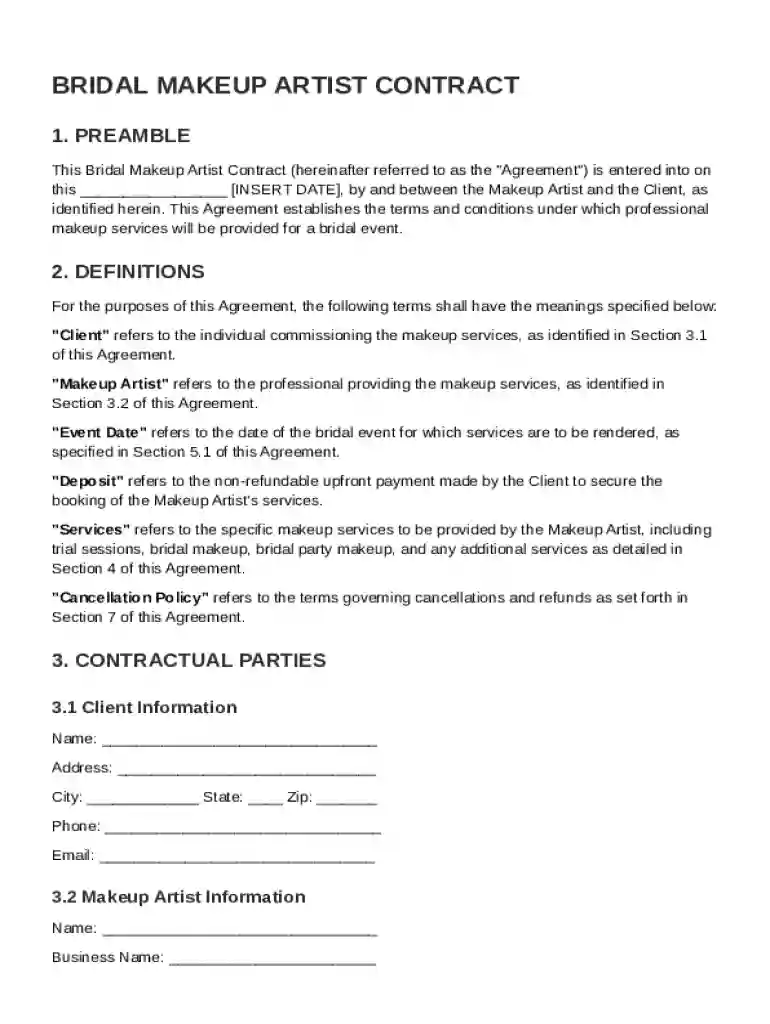
The Bridal Makeup Artist Contract Template is essential for clarifying the terms of your services as a makeup artist for bridal events. It includes specific elements that protect both the artist and the client, ensuring a harmonious professional relationship.
Service Scope: This section outlines the makeup services you provide. It typically includes details about trial sessions, day-of-event makeup, and any additional services like hair styling or touch-ups.
Payment Terms: Include information about your fees, deposit requirements, payment schedules, and accepted payment methods. Ensure you have clear cancellation and refund policies to prevent disputes.
Liability Clauses: Specify any limitations on your responsibility concerning allergic reactions or dissatisfaction with services. This can include requirements for a waiver or release of liability from the client.
Amendments and Changes: Detail how changes to the contract can be made post-signing. It’s crucial to ensure all modifications are documented in writing and agreed upon by both parties.
Using the template effectively requires understanding and tailoring it to fit each unique client engagement.
Customizing the Document: Start by personalizing the template with your professional details and the specifics of the bridal event. Include client information, event date, location, and any unique requirements.
Consult with Clients: Discuss all aspects of the contract with your clients to ensure they understand and agree with the terms. It's an opportunity to clarify any uncertainties and make adjustments if necessary.
Finalizing the Agreement: Both parties should review the completed contract for accuracy before signing. Use electronic signatures to streamline this step, ensuring that it is legally binding.
To ensure the contract is thoroughly completed and ready for execution, follow these steps:
Gather Information: Collect all necessary details about the services you will provide, client contact information, and event specifications.
Review the Template: Carefully read through the entire template, understanding each section, and noting areas that require customization.
Input Data: Fill in all relevant information, ensuring accuracy and clarity in all fields. Double-check service descriptions and terms.
Client Review: Share the draft contract with the client for review, discussing any potential modifications or concerns they might have.
Execute the Contract: Once all parties agree to the terms, obtain signatures using a secure method, ensuring all necessary copies are stored securely.
Understanding the terminology within the contract is crucial for ensuring legal compliance and clarity.
Consideration: The payment or compensation to be received for services rendered, forming the basis of the contractual exchange.
Force Majeure: A clause that frees both parties from liability or obligation when an extraordinary event or circumstance beyond their control occurs.
Indemnity: An agreement to compensate the other party for any loss or damage that occurs during the engagement of services.
To ensure your contract is legally enforceable, it must adhere to specific legal standards.
Compliance with Laws: Ensure the contract complies with local, state, and federal laws applicable to service contracts and consumer protection.
Clarity and Precision: Use clear and precise language to avoid ambiguity, which can lead to disputes or the contract being considered void.
Legal Advice: Consider seeking legal advice to review your contract, especially if it’s your first time using one or if there are substantial financial stakes involved.
Practical examples can illuminate how the contract functions in real-world scenarios.
Scenario 1: A bride books your services for a destination wedding. The contract specifies extra travel fees and accommodation requirements, ensuring these costs are transparent and agreed upon.
Scenario 2: A client requests changes to their makeup service post-signing. Thanks to a detailed amendment clause, these changes are documented, re-signed, and legally binding.
While primarily designed for makeup artists, others might find it beneficial.
Bridal Event Coordinators: Use it to secure vendors for weddings, ensuring all service specifics are captured in one document.
Beauty Salons: Employ the template when offering specialized bridal packages to clients, formalizing every aspect of the service.
Freelancers: Independent contractors can utilize this template to formalize their agreements with clients, protecting themselves and setting clear expectations.


Consider how the template might be adapted or alternatives that may better suit your needs.
Standard Service Contracts: For those offering varied services, a general service contract could be adapted to include makeup specifics.
Electronic Templates: Use platforms such as DocHub to tailor and electronically finalize contracts, providing the dual benefits of legal compliance and environmental responsibility.
Custom Legal Drafting: In unique or high-stakes scenarios, commissioning a lawyer to draft a bespoke contract can address specific concerns not encompassed by a general template.
At DocHub, your data security is our priority. We follow HIPAA, SOC2, GDPR, and other standards, so you can work on your documents with confidence.

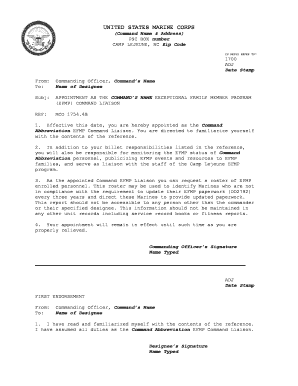


The contract acts as a legal document, protecting the makeup artist from non-payment and the bride from unmet expectations. Key Elements Included in a Bridal
Jul 12, 2019 Written and Art Directed by David Collier. Designed and Illustrdted by Lynn Clark and Alex Gollner.


