






Definition and Meaning
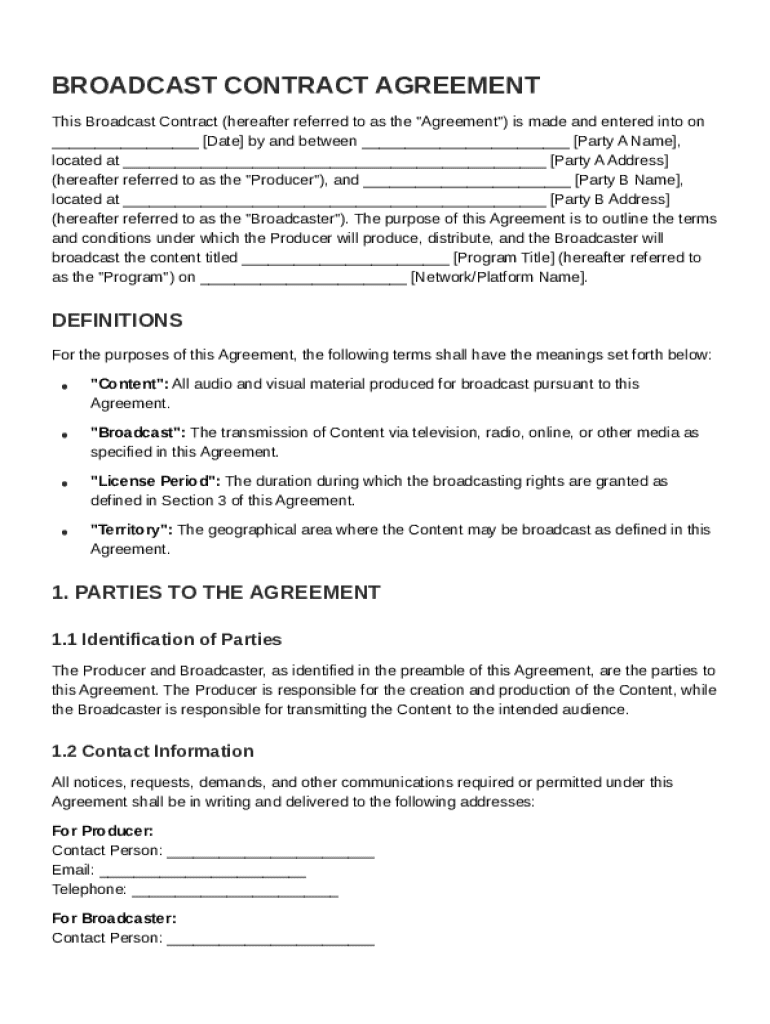
A Broadcast Contract Template is a structured agreement used between a Producer and a Broadcaster. This contract outlines the terms for producing and broadcasting a specified program. It includes essential clauses covering the responsibilities of both parties, licensing rights, financial arrangements, intellectual property rights, confidentiality, termination conditions, and dispute resolution procedures. The template ensures that the Producer maintains ownership of the content while providing the Broadcaster specific rights to air the program within an agreed territory and timeframe. This type of agreement is fundamental in the media industry, providing a framework that secures both legal and commercial interests of the parties involved.
Key Elements of the Broadcast Contract Template
A Broadcast Contract Template contains several crucial components to ensure clarity and legal protection for both the Producer and the Broadcaster. Key elements include:
- Parties Involved: Clearly defined roles of the Producer and Broadcaster.
- Program Description: Detailed information about the program, including title and synopsis.
- License Terms: Specific rights granted to the Broadcaster, covering the channels and platforms for broadcast.
- Territory and Duration: Geographic scope and timeline for which the broadcasting rights are valid.
- Financial Terms: Information on payments, royalties, and revenue sharing.
- Approval Processes: Steps to approve content, including editorial control.
- Intellectual Property Rights: Clarification on content ownership and derivative works.
- Confidentiality Obligations: Measures to protect sensitive information.
- Termination Conditions: Circumstances under which the contract can be ended.
- Dispute Resolution: Procedures in place for resolving conflicts.
These elements help manage expectations and reduce legal risks inherent in broadcasting agreements.
Steps to Complete the Broadcast Contract Template
Completing a Broadcast Contract Template involves several methodical steps to ensure accuracy and compliance with intended terms:
- Identify Parties: Clearly state the names and contact information of both parties.
- Define Program Details: Include all relevant information about the program being broadcasted.
- Clarify Rights and Obligations: Outline what each party is entitled to and responsible for, ensuring mutual understanding.
- Set Financial Terms: Establish payment obligations, including methods and schedules.
- Include Necessary Clauses: Address important legal aspects such as intellectual property rights, confidentiality, and dispute resolution.
- Review and Approve: Have both parties review the document thoroughly to ensure all terms are acceptable and accurate.
- Sign the Agreement: Secure signatures from authorized representatives of both the Producer and Broadcaster to finalize the contract.
Legal Use of the Broadcast Contract Template
Using a Broadcast Contract Template adheres to legal standards within the broadcasting industry. This document offers a legal framework ensuring that all aspects of the broadcast operations are covered:
- Compliance with Laws: Aligns with federal and state broadcasting regulations, ensuring legality of operations.
- Binding Agreement: Once signed, the template becomes a legally binding contract, enforceable by law.
- Documentation of Terms: Provides a written record of agreed terms, vital for legal disputes or audits.
The template also incorporates legal protections specific to U.S. industry standards, such as compliance with intellectual property laws and broadcasting rights.
Who Typically Uses the Broadcast Contract Template
The Broadcast Contract Template is primarily used by:
- Producers: Companies or individuals responsible for content creation, seeking to license their programs for broadcast.
- Broadcasters: Television and radio stations or networks that air programs to the public.
- Media Companies: Entities involved in various aspects of content distribution and broadcasting.
- Legal Teams: Attorneys and legal advisors who draft and review broadcasting agreements to ensure their clients' interests are protected.
- Talent Agencies: Facilitate agreements for clients in the industry.
These users rely on the template to define clear, legally sound agreements that govern the broadcasting of content.

Important Terms Related to Broadcast Contract Templates
Key terminology associated with Broadcast Contract Templates includes:
- License: The permission granted to broadcast the program.
- Producer: The party responsible for creating the content.
- Broadcaster: The entity airing the program.
- Intellectual Property Rights: Legal rights to the produced content.
- Revenue Sharing: Agreement on how earnings are distributed.
- Territory: Geographical area where the rights apply.
- Editorial Control: Degree of influence a broadcaster has over the content.
Understanding these terms helps all parties comprehend their rights and responsibilities within the broadcasting agreement.
Business Types That Benefit Most from Broadcast Contract Templates
Broadcast Contract Templates are particularly beneficial for specific business types, including:
- Independent Production Companies: Seek to license their content to broadcasters.
- Cable and Network Television Stations: Need to secure content for their programming lineup.
- Streaming Platforms: Platforms like Netflix or Hulu seeking content for streaming.
- Radio Stations: Require sound agreements for syndicated content.
- Advertising Agencies: Manage advertising rights and placements within broadcasts.
These businesses often engage in contractual agreements that necessitate precise terms and clarity provided by a formal template.
Examples of Using the Broadcast Contract Template
Consider the following scenarios where a Broadcast Contract Template might be used:
- A local TV station licenses a new cooking show from an independent producer, specifying weekly airing times.
- A radio network obtains rights to a popular podcast series, arranging terms for sponsorship and advertising revenue sharing.
- A streaming service secures exclusive broadcasting rights for a documentary series, outlining digital distribution details and promotional commitments.
- An international broadcaster purchases a drama series with specific terms for translation and subtitle services for a non-English speaking audience.
Each scenario requires a detailed agreement facilitated by a comprehensive Broadcast Contract Template.