






Understanding Omnibus Certification
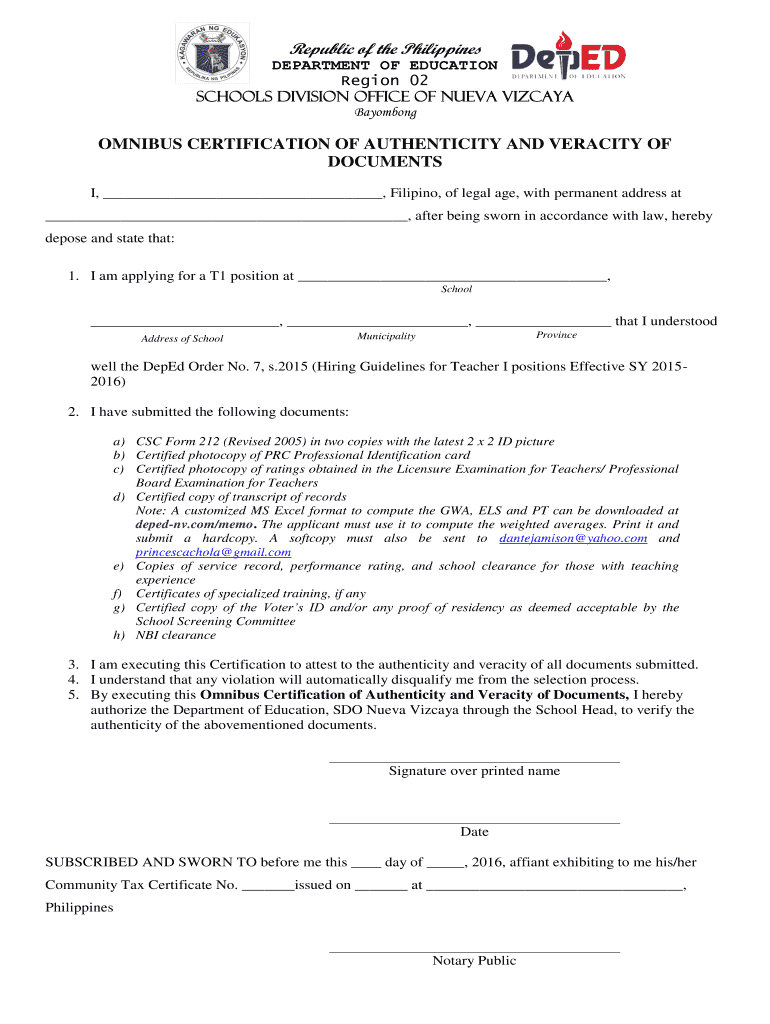
Omnibus certification is a formalized declaration that verifies the authenticity and veracity of documents. Typically utilized by institutions such as education departments, the omnibus certification consolidates multiple document attestations into one comprehensive declaration. This certification is crucial for applicants, particularly in sectors like education, where confirming the legitimacy of credentials is paramount. The omnibus certification is often required to accompany applications for positions, enrollments, and various professional registrations.
Purpose and Importance of Omnibus Certification
The primary function of an omnibus certification is to assure receiving authorities that the submitted documents are legitimate. It serves several vital purposes:
- Verification of Credentials: Organizations require proof that applicants have provided accurate and authentic documentation. This includes degrees, transcripts, and identification.
- Legal Compliance: Submitting an omnibus certification can ensure compliance with regulatory bodies, especially in education and healthcare sectors, where strict guidelines are enforced.
- Streamlining Processes: By consolidating multiple attestations into a single certification, the application process becomes more efficient for both applicants and reviewing authorities.
Components of Omnibus Certification
An omnibus certification typically includes several key elements:
- Applicant Information: The full name, contact details, and other identifying information of the applicant.
- Document List: A detailed list of all documents being certified, including their titles and any pertinent identification numbers.
- Verification Statement: A clear statement asserting the authenticity of the documents in question, often accompanied by the applicant's signature.
- Notarization: In some cases, requiring notarization by a qualified official enhances the certification's legitimacy.
- Date of Issue: The date when the certification is completed, which indicates the timeliness of the verification.
Who Needs an Omnibus Certification?
Various professionals and applicants may need to obtain an omnibus certification, particularly in sectors where documentation integrity is crucial:
- Teachers and Educators: Applicants for teaching positions often need to submit an omnibus certification to validate their educational background and credentials.
- Healthcare Professionals: New applicants seeking positions in healthcare must confirm the legitimacy of their licenses and certifications through omnibus certification.
- Job Applicants: Many organizations require new hires to submit various documents, necessitating an omnibus certification to simplify the verification process.
How to Obtain an Omnibus Certification
The process for obtaining an omnibus certification generally involves the following steps:
- Gather Required Documents: Collect all pertinent documents that need to be included in the certification.
- Complete the Certification Form: Fill out the appropriate omnibus certification form, ensuring all information is accurate and complete.
- Include Supporting Attachments: Attach copies of all supporting documents outlined in the form.
- Sign and Date the Form: Ensure that you or the legal authority responsible for verifying the documents signs and dates the certification form.
- Notarize When Necessary: If required, take the certification form to a notary public for verification.
- Submit the Certification: Send the completed omnibus certification to the requesting body, either electronically or via mail.
Key Considerations for Omnibus Certification
- Accuracy is Crucial: Ensure that all names, document titles, and dates are correct to avoid delays or rejections.
- Check Specific Requirements: Different organizations may have unique requirements for what is needed in an omnibus certification, including additional forms or notarization.
- Stay Updated: Regulations regarding authentication and certification can evolve, so it is essential to stay informed about any changes in the requirements set forth by governing bodies.
Resources for Omnibus Certification
To facilitate the process of obtaining an omnibus certification, resources are available online. Many educational institutions provide templates or guidelines for completing the necessary forms. Additionally:
- Omnibus Certification Forms: These can often be downloaded directly from the relevant educational institution or agency's website.
- Examples and Samples: Reviewing sample omnibus certifications helps ensure that applicants understand how to structure their certification correctly.
- Guidance from Peers: Engaging with others who have undergone the certification process can provide practical insights and tips.
Conclusion
Omnibus certification serves as a crucial document for individuals trying to validate their educational or professional claims. Ensuring the authenticity and accuracy of the omnibus certification is essential not just for compliance but also for fostering trust with potential employers or educational institutions. Therefore, understanding the requirements and processes related to this certification can significantly streamline your application efforts.