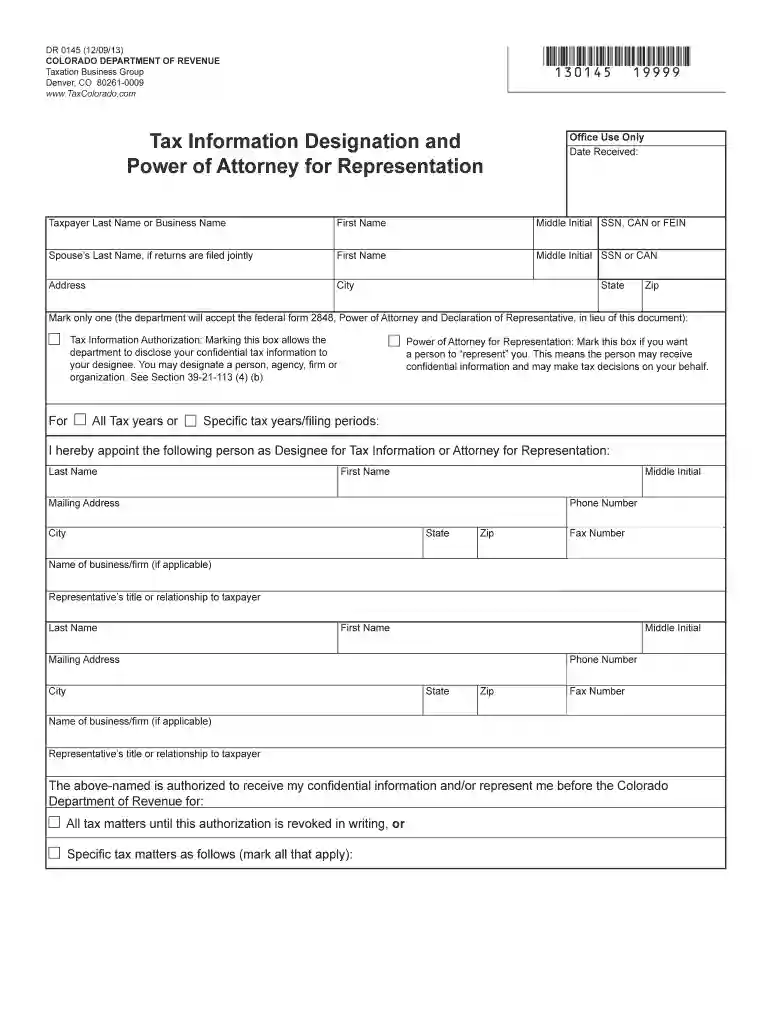
Definition and Meaning of the Colorado Tax Power of Attorney Form
The Colorado Tax Power of Attorney Form, commonly referred to as DR 0145, empowers a designated individual to represent a taxpayer in matters related to the Colorado Department of Revenue. It serves two primary purposes: authorizing the disclosure of confidential tax information and granting power of attorney for tax representation. This legal document ensures that the taxpayer can have their personal or business tax affairs managed by a trusted representative, streamlining the process for communication and decision-making with tax authorities.
How to Use the Colorado Tax Power of Attorney Form
Using the Colorado Tax Power of Attorney Form involves several steps to ensure it is completed correctly and serves the intended purpose.
- Determine the Representative: Decide on the person or entity you wish to authorize. This could be a tax advisor, accountant, or attorney.
- Specify the Scope: Clearly specify the powers being granted. This includes the tax matters and the tax periods the form will cover.
- Fill Out Required Sections: Accurately fill out all required sections such as taxpayer information, representative details, and descriptions of authorized actions.
- Signatures: Ensure that both the taxpayer and the representative sign the form to validate the authorization.
- Submission: Submit the completed form to the Colorado Department of Revenue. Ensure that all sections are filled without omissions for it to be processed effectively.
Key Elements of the Colorado Tax Power of Attorney Form
Understanding the key elements of the form is crucial for its proper completion and use.
- Taxpayer Information: Includes full name, address, social security number or business identification number.
- Representative Information: Requires details such as the representative's name, address, and contact information.
- Scope of Authority: A detailed section where the taxpayer specifies what powers are being granted.
- Effective Date and Expiration: Defines the time period for the delegation of authority. The form may need to be updated or revised if circumstances change.
- Revocation Clause: To revoke previously granted powers, informing the need for a new form if changes in representation occur.
Steps to Complete the Colorado Tax Power of Attorney Form
Successfully completing the form involves methodically working through each requirement.
- Gather Necessary Information: Collect all relevant information for both the taxpayer and their representative.
- Fill the Form Accurately: Enter all specifics without any errors to avoid delays.
- Define Authorization Scope Accurately: Clarify which aspects of tax matters the representative can handle and for which periods.
- Review and Sign: Both parties must carefully review to ensure accuracy, followed by signatures to affirm agreement.
- Submit the Form: Send the completed form to the designated address or platform as advised by the Colorado Department of Revenue.
Why Use the Colorado Tax Power of Attorney Form
This form plays a vital role for taxpayers who wish to delegate tax management tasks. It is especially beneficial in the following scenarios:
- Simplifying Tax Procedures: By granting authority to a knowledgeable professional, taxpayers can ensure accurate and efficient handling of their tax matters.
- Convenience: Reduces the need for personal involvement in routine tax communications or disputes.
- Legal Protection: It offers documented proof of the representative’s authorization, protecting both parties in the event of legal scrutiny.
Important Terms Related to the Colorado Tax Power of Attorney Form
Understanding the language used in the form is critical for proper comprehension and use.
- Power of Attorney (POA): A legal document granting the authority to act on someone else's behalf in specific legal or financial matters.
- Tax Matters: Refers to any issues related to the preparation, filing, and dispute of tax returns or payments.
- Scope of Authorization: The specific powers and limitations granted to the representative as outlined in the form.
- Joint Returns: Tax returns filed collectively by a married couple, which may require special permissions on the form.
State-Specific Rules for the Colorado Tax Power of Attorney Form
Variations in state laws mean that Colorado-specific guidelines must be followed for the DR 0145 form.
- State Guidelines: Colorado’s tax laws may have unique provisions about who can act as a representative and what roles they can fulfill.
- Identification Requirements: The form must include state-specific identification numbers for both parties.
- Submissions and Renewals: Compliance with Colorado state deadlines and rules regarding form renewals or amendments is mandatory.
Form Submission Methods for the Colorado Tax Power of Attorney Form
The form can be submitted in several ways to the Colorado Department of Revenue, depending on resources and preferences.
- Online Submission: Using the department’s secure online platform for faster processing.
- Mail Submission: Sending through the postal service to the designated department address. This method might take more time for processing.
- In-Person: Direct submission to a local Department of Revenue office might be available for those preferring face-to-face interactions.
Maximal content provided ensures that readers are equipped with comprehensive insights into the Colorado Tax Power of Attorney Form, unlocking detailed understanding and effective utilization.