




01. Edit your form online
Type text, add images, blackout confidential details, add comments, highlights and more.

Type text, add images, blackout confidential details, add comments, highlights and more.

Draw your signature, type it, upload its image, or use your mobile device as a signature pad.

Send it via email, link, or fax. You can also download it, export it or print it out.
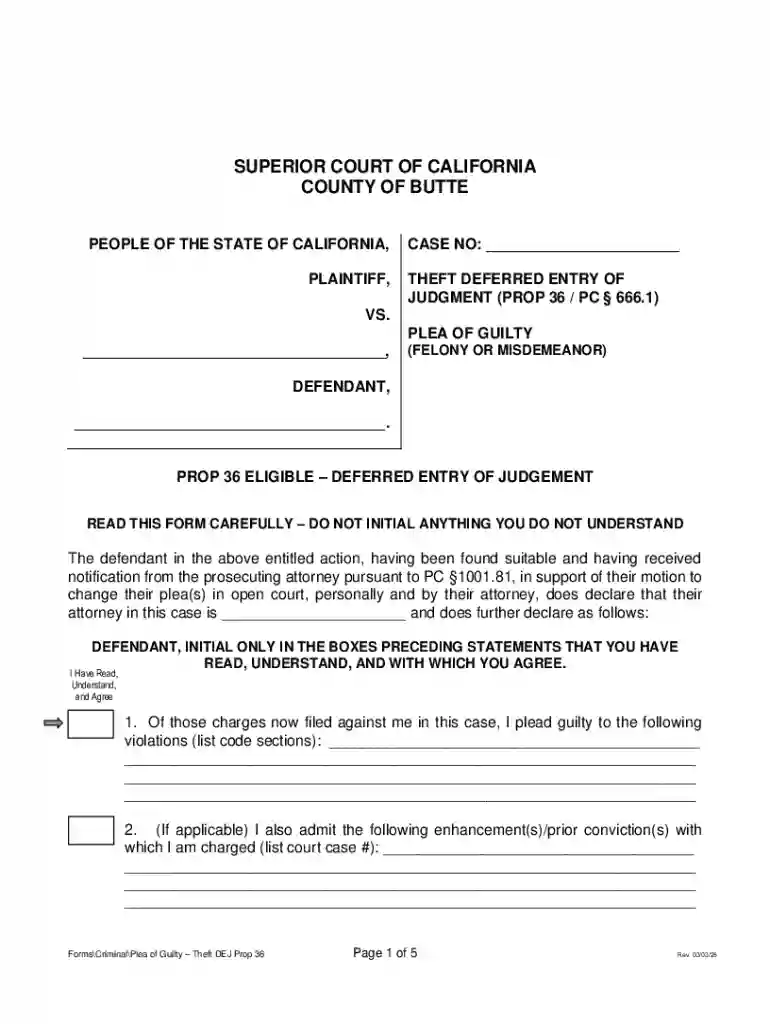
The Theft Deferred Entry of Judgment (Prop 36 / PC 666.1) program is a legal avenue in California that allows defendants to plead guilty to theft-related offenses while deferring the final judgment. This option provides a structured opportunity for rehabilitation, primarily ensuring that individuals with substance abuse issues receive the necessary treatment. Should they successfully complete the stipulated drug program, the court may dismiss the charges. This deferral aims to reduce repeat offenses by addressing underlying issues rather than mere punitive measures. It emphasizes giving defendants a chance to rectify their conduct through mandated rehabilitation.
Engagement with the program begins once a defendant is offered a plea deal under Prop 36. The defendant must agree to enter a guilty plea, acknowledging the offense and understanding the associated rights being waived. It is critical for defendants to comply strictly with the conditions set by the court, which often include completing a drug rehabilitation program and abiding by other specified terms. Successfully completing these conditions could lead to the dismissal of charges, thereby expunging the conviction from their record. Legal counsel is essential in navigating this process to ensure that all requirements are met.
Completion of these steps is vital for eligibility in having the judgment deferred.
Key elements include:
Understanding these elements aids in the accurate application of the program.
Legally, the program is used as an alternative to standard sentencing procedures, aimed at first-time or non-violent offenders with substance abuse issues. It is grounded in the belief that treating the root cause of criminal behavior—in this case, drug dependency—can reduce recidivism. Defendants are subjected to ongoing assessments to track progress. Non-compliance can result in reverting to standard sentencing guidelines, thereby facing the original penalties without the benefits of the program.
Familiarity with these terms is crucial:
Knowing these terms aids in a comprehensive understanding of the program's requirements and scope.
The program is typically used by:
Identifying these user profiles helps tailor court-approved recommendations and interventions.


Eligibility largely depends on:
Understanding these requirements is essential for successful application and participation in the program.

Consider these scenarios:
These examples highlight the practical application and potential life-changing outcomes of the program.
While the program is specific to California, nuances may apply:
Recognizing these differences assists in better preparing for and navigating through the program's detailed processes in various local jurisdictions.
At DocHub, your data security is our priority. We follow HIPAA, SOC2, GDPR, and other standards, so you can work on your documents with confidence.




Penal Code 1000-1000.65 is a pretrial diversion program. (formerly known as Deferred Entry of Judgment) in which the defendant pleads not guilty and criminal
Dec 31, 2019 The Capital segment leases and finances aircraft, aircraft engines and helicopters, provides financial and underwriting solutions, and manages
PC 1000.4(a). Sealing. Limited types of records may be sealed: successful drug diversions. Prop 36 or Deferred Entry of Judgment (DEJ). successful


