




01. Edit your form online
Type text, add images, blackout confidential details, add comments, highlights and more.

Type text, add images, blackout confidential details, add comments, highlights and more.

Draw your signature, type it, upload its image, or use your mobile device as a signature pad.

Send it via email, link, or fax. You can also download it, export it or print it out.
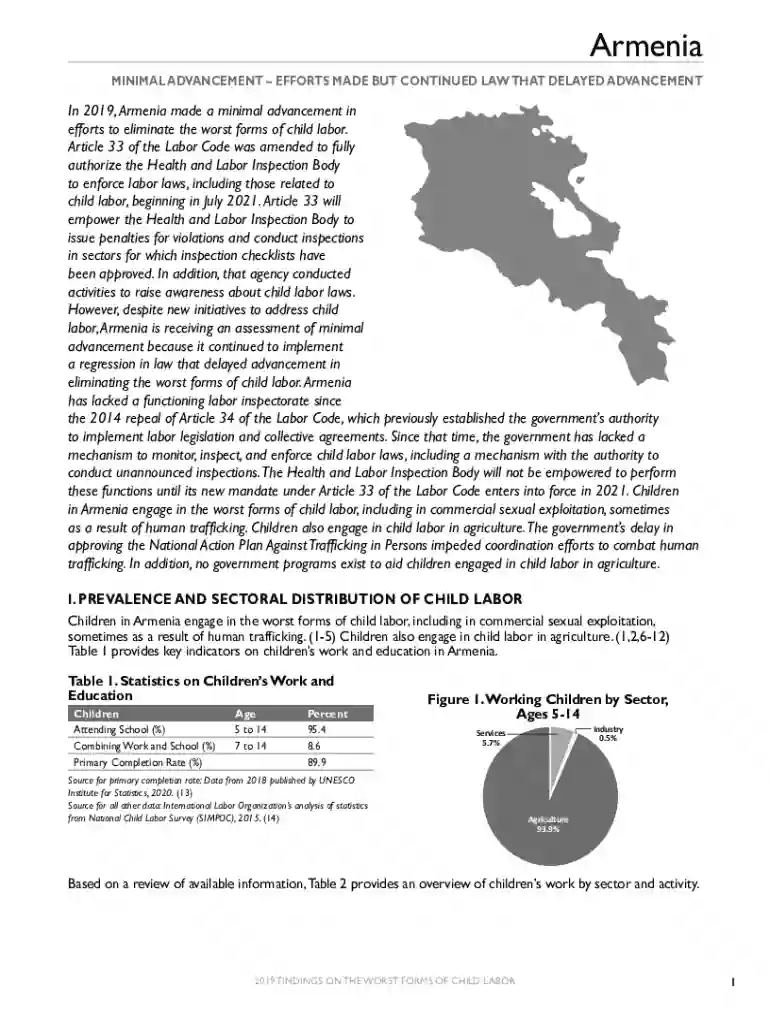
The "Armenia Child Labor Report 2019" is an in-depth analysis of the circumstances surrounding child labor within Armenia during the year 2019. It provides insights into the progress made and challenges faced by the country in addressing the worst forms of child labor. The report evaluates legislative measures, enforcement actions, as well as the roles of various institutions in mitigating child labor issues.
Utilizing the report effectively involves understanding its structure and contents to draw meaningful conclusions. Here’s how you can use it:
Completing or contributing to this type of report involves several meticulous phases:
This report serves several critical roles:
The report is composed of several fundamental components designed to offer comprehensive coverage:
This report can be applied in various contexts beyond academia:
The report provides a legal framework that highlights the country's obligations under national and international labor laws. It serves as a crucial resource for legal professionals and lawmakers:
While the report focuses on national statistics, it also touches on regional nuances:
We've got more versions of the Armenia Child Labor Report 2019 form. Select the right Armenia Child Labor Report 2019 version from the list and start editing it straight away!
At DocHub, your data security is our priority. We follow HIPAA, SOC2, GDPR, and other standards, so you can work on your documents with confidence.
The Ministry of Internal Affairs Criminal Police department established a direct connection to the National Center for Missing and Exploited Children, allowingRead more
Aug 30, 2023 For 9 months, 120,000 Armenians, including 30,000 children have been isolated, starving, and deprived of everything. We have brought urgent aid
The Committee welcomes the submission of the combinedthird and fourth periodic reports of Armenia and the written replies to its list of issues (CRC/ARM/Q/34/Read more


