







Definition & Meaning
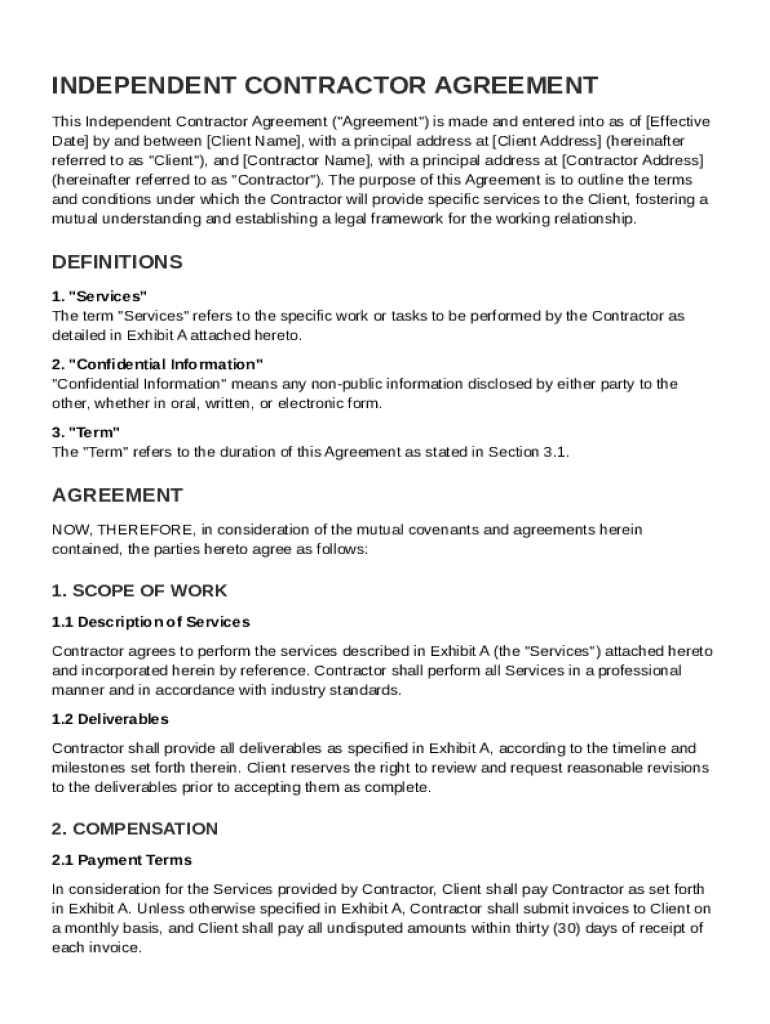
An Independent Contractor Agreement Template is a formal document that establishes the terms and conditions between an independent contractor and a client for the provision of specified services. The template outlines various pivotal components such as the scope of work, compensation, and confidentiality obligations. It also delineates the responsibilities of the contractor as an independent entity, including tax liabilities. By using this template, both parties ensure clarity regarding the working relationship, indemnification, intellectual property rights, and other legalities like governing laws and termination clauses. The agreement provides a structured framework that protects the interests of both the client and the contractor, setting clear expectations and reducing misunderstandings.
Key Elements of the Independent Contractor Agreement Template
The Independent Contractor Agreement Template comprises several critical sections essential to a well-defined professional relationship:
-
Scope of Work: Clearly defines the tasks and responsibilities of the contractor, ensuring that both parties understand the expectations and deliverables.
-
Compensation Details: Specifies the payment structure, including any milestones, hourly rates, or fixed fees, and outlines the invoicing process for the contractor.
-
Confidentiality Obligations: Addresses the handling of sensitive information, detailing the measures the contractor must take to protect the client's proprietary data.
-
Intellectual Property Rights: Allocates ownership of work products produced by the contractor to the client, ensuring that the client retains rights over any creations.
-
Termination Clauses: Outlines the procedures and conditions under which the agreement can be terminated, providing a clear exit strategy for both parties.
-
Indemnification: Protects each party against potential liabilities that might arise from the contract, specifying how risks are managed and by whom.
How to Use the Independent Contractor Agreement Template
Using the Independent Contractor Agreement Template involves a series of steps to ensure it meets the needs of both parties:
-
Download the Template: Obtain the document in a compatible file format, such as PDF or DOC, which allows for easy editing.
-
Customize the Details: Edit the template to include specific details about the contractor and the client, ensuring all necessary contact information and legal details are accurate and up-to-date.
-
Define Project-Specific Information: Clearly outline the project objectives, deliverables, timelines, and any unique conditions pertinent to the agreement.
-
Review Legal Provisions: Ensure that the agreement includes all standard legal protections and is compliant with relevant laws. Consultation with a legal professional can enhance the document's robustness.
-
Secure Signatures: Utilize electronic signature tools to get signatures from both parties, which solidifies the agreement and makes it legally binding.
Legal Use of the Independent Contractor Agreement Template
The legal application of the Independent Contractor Agreement Template is paramount for both compliance and protection:
-
Compliance with the ESIGN Act: By incorporating legally binding electronic signatures, the agreement adheres to the Electronic Signatures in Global and National Commerce Act, ensuring digital acceptance.
-
Clarity on Tax Liabilities: Establishes the independence of the contractor, clarifying that the contractor is responsible for their own tax filings and liabilities, not as an employee but as an independent entity.
-
Governing Laws: Identifies the jurisdiction under which the agreement is governed, typically aligning with the client’s business location, to provide a basis for any potential legal disputes.
Steps to Complete the Independent Contractor Agreement Template
To successfully complete the Independent Contractor Agreement Template, follow these guided steps:
-
Gather Necessary Information: Collect all relevant details about the parties involved, including personal and business identification information.
-
Fill in Template Sections: Complete each section of the template, ensuring all terms, scopes, and financial details are thorough and accurately reflect the agreement.
-
Include Specific Clauses: Tailor each clause to meet legal requirements and practical needs, possibly by consulting a lawyer to avoid ambiguous language.
-
Review and Revise: Double-check the document for any inaccuracies or missing components, revising as necessary to ensure completeness.
-
Finalize the Document: Once reviewed, finalize the document by confirming all edits are saved and prepare it for signature collection.
Who Typically Uses the Independent Contractor Agreement Template
The Independent Contractor Agreement Template is a versatile tool used by numerous business entities and individuals:
-
Freelancers and Independent Contractors: Utilize the template to formalize engagements with clients, protecting their rights and clearly defining work conditions.
-
Small to Medium Enterprises (SMEs): Use the template to standardize contracts with multiple contractors, ensuring consistency across various projects.
-
Legal Advisors: Employ the template as a basis to draft customized agreements for their clients, saving time and providing a reliable foundation for contract creation.


State-Specific Rules for the Independent Contractor Agreement Template
While the Independent Contractor Agreement Template is broadly applicable, various states impose specific regulations:
-
California: Requires adherence to the ABC test for determining independent contractor status, which insists on certain conditions for classification.
-
New York: Has specific provisions around labor laws and tax withholdings, necessitating additional clauses in agreements.
-
Texas: Allows for more flexibility, but still stipulates clear terms around employment classification and project scopes to avoid misclassification.
Examples of Using the Independent Contractor Agreement Template
Real-world applications of the Independent Contractor Agreement Template offer insight into its versatility:
-
A graphic designer contracting with multiple tech firms: Uses the template to define deliverables and intellectual property retainment for each project with different clients.
-
A software developer engaging a startup: Integrates the template to outline the development processes, timelines, and payment milestones, ensuring project clarity.
-
A marketing consultant hired by an e-commerce company: Adapts the template to set specific campaign objectives, confidentiality terms, and performance metrics.
By following these structured insights into the Independent Contractor Agreement Template, individuals and businesses can assure clarity, compliance, and efficiency in their contractual engagements.




