






Key Elements of the Short Term Lease Agreement Template
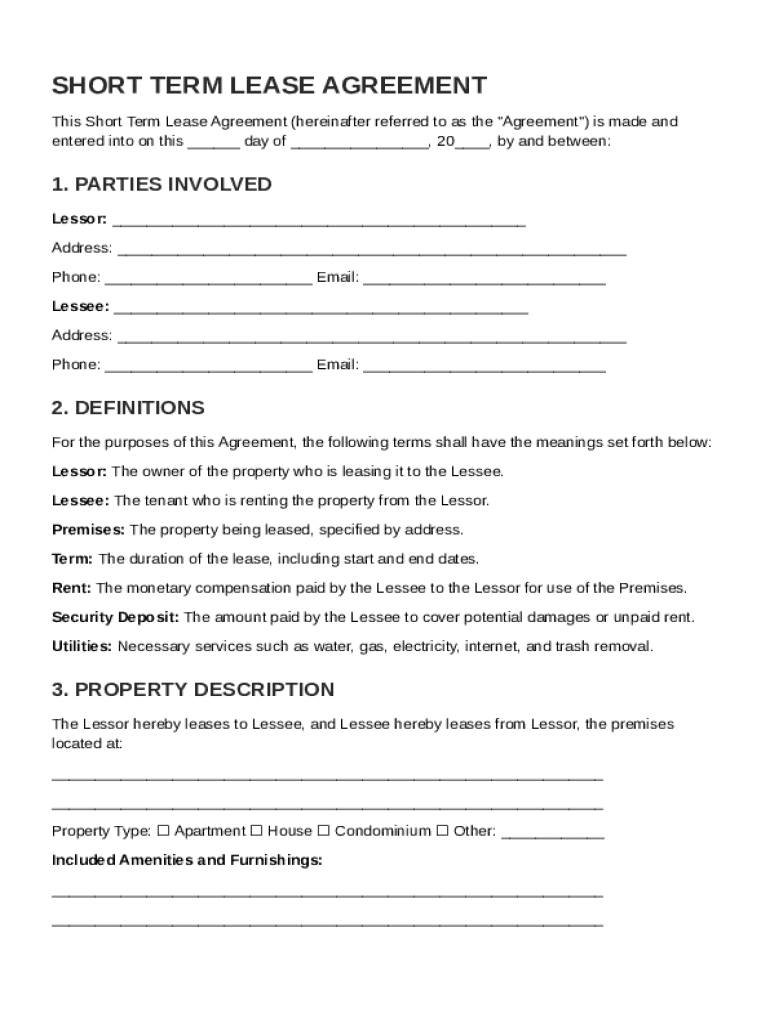
A Short Term Lease Agreement Template is designed to outline fundamental aspects of a rental contract for a short duration. These templates typically include several key elements to ensure clarity and legal compliance.
-
Parties Involved: Clearly define the lessor (landlord) and the lessee (tenant) involved in the agreement. This is crucial to establish the rights and responsibilities of each party.
-
Property Description: Provide a detailed description of the rental property. This should include the address and any specific areas included in the lease, such as parking spaces or storage units.
-
Lease Term: Specify the duration of the lease, which is usually less than a year. This section should also indicate the start and end dates of the lease period.
-
Rental Payment Structure: Outline the amount of rent, the due date, and acceptable payment methods. This section may also include late payment penalties and grace periods.
-
Security Deposit Requirements: Detail the security deposit amount, how it will be collected, and the conditions under which it might be withheld or returned at the end of the lease.
-
Use of Premises: State the permitted uses of the property to prevent misuse or illegal activities. This typically covers restrictions on alterations to the property without the lessor's consent.
-
Utilities Responsibilities: Define which utilities are included in the rent and which are the tenant's responsibility. This section ensures that both parties understand their obligations.
Steps to Complete the Short Term Lease Agreement Template
Completing a Short Term Lease Agreement Template requires a structured approach to ensure all necessary information is accurately captured.
-
Gather Basic Information: Collect details about both the lessor and lessee, including full names and contact information.
-
Fill Out Property Details: Input the address and specific descriptions of the rental property, ensuring that all shared or exclusive areas are noted.
-
Define the Lease Term: Clearly enter the start and end dates of the lease, considering any potential extensions or renewals.
-
Establish Rent and Payment Terms: Specify the rent amount, due dates, and accepted payment methods to prevent misunderstandings.
-
Outline the Security Deposit: Document the agreed security deposit, conditions for use, and procedures for return, following state regulations.
-
Clarify Rights and Responsibilities: Include provisions for both parties' obligations, such as maintenance and repair duties, use of premises, and rules about subletting if applicable.
-
Review and Sign: Ensure both parties thoroughly review the agreement and understand its terms. Signatures from both the lessor and lessee should be obtained to finalize the contract.
Important Terms Related to the Short Term Lease Agreement Template
Understanding the terms associated with a Short Term Lease Agreement is essential for both lessors and lessees.
-
Lease Renewal: The process by which an existing lease can be extended for an additional term under agreed terms and conditions.
-
Holdover Tenant: A tenant who remains in the property after the lease term has expired without the landlord's explicit consent.
-
Rent Control: Government-imposed limits on the amount of rent a landlord can charge, aimed at maintaining rental affordability.
-
Subletting: When a tenant rents out the property or a portion of it to another party, subject to the terms and conditions of the original lease agreement.
-
Termination Clause: A provision outlining the conditions under which the lease can be legally terminated by either party before the end date.
Legal Use of the Short Term Lease Agreement Template
Ensuring the legal validity of a Short Term Lease Agreement involves adherence to several legal practices.
-
Compliance with State Laws: Each state in the U.S. may have specific landlord-tenant laws that must be adhered to, affecting various aspects of lease agreements like security deposits and tenant rights.
-
Inclusion of Required Disclosures: Landlords are often legally required to provide disclosures or notices, such as lead paint warnings for older properties.
-
Mutually Agreed Terms: All terms within the template should be mutually agreed upon to ensure enforceability.
-
Amendments and Addendums: Any changes to the lease should be documented in writing and signed by both parties to maintain legal standing.
-
Legal Advice: Both parties may need to consult legal professionals to understand their rights and obligations under the lease agreement fully.
State-Specific Rules for the Short Term Lease Agreement Template
State-specific rules can significantly impact the details of a Short Term Lease Agreement Template.
-
Security Deposits: States may have regulations on the maximum amount a landlord can charge and how it should be stored or returned.
-
Notice Periods: The required notice period for terminating a lease can differ from state to state, as well as the conditions under which different notice periods apply.
-
Implied Warranty of Habitability: Most states require that rental properties meet basic living standards, and landlords are obligated to maintain these conditions throughout the lease period.
-
Tenant Rights: Varying state laws affect rights around eviction processes, privacy, and entry into the property by the landlord.
Understanding these differences is crucial in drafting a valid and enforceable lease agreement tailored to the location of the property.
Who Typically Uses the Short Term Lease Agreement Template
Short Term Lease Agreement Templates are used by a diverse group of individuals and organizations.
-
Landlords: Private property owners and property management companies to formally document the rental of residential properties for brief periods.
-
Tenants: Individuals or groups seeking temporary housing solutions might require a short-term lease for flexibility.
-
Real Estate Agents: Professionals assisting clients in securing short-term rentals may use these templates to structure leasing terms.
-
Corporate Clients: Businesses securing temporary housing for employees during relocation or short-term assignments may rely on these agreements.


Examples of Using the Short Term Lease Agreement Template
Short Term Lease Agreement Templates are versatile and have several practical applications.
-
Vacation Rentals: Landlords offering properties for seasonal tenants or holidaymakers.
-
Temporary Job Assignments: Individuals seeking accommodation during short-term employment opportunities away from home.
-
Housing During Renovations: Homeowners needing temporary housing solutions while their primary residence undergoes renovation.
-
Student Housing: Universities or landlords renting apartments for a single academic semester or year.
These scenarios illustrate the adaptability of short-term lease agreements to meet varying temporary housing needs.
Software Compatibility for Utilizing Short Term Lease Agreement Template
Software compatibility is crucial for effectively managing and editing a Short Term Lease Agreement Template.
-
DocHub: Allows easy uploading and editing of templates, supporting formats like PDF and DOC. With its integration into Google Workspace, it facilitates seamless sharing and signing.
-
Adobe Acrobat Reader: Offers tools for viewing and filling out PDF lease templates.
-
Microsoft Office: Use Microsoft Word for creating or editing lease agreements in DOC format, providing versatile formatting options and easy conversion to PDF.
-
Cloud Services: Google Drive and Dropbox can store and share lease agreements efficiently, ensuring accessibility across devices.
These tools and platforms enhance the ease of creating, modifying, and distributing a Short Term Lease Agreement Template and offer robust features to meet different document management needs.