




01. Edit your form online
Type text, add images, blackout confidential details, add comments, highlights and more.

Type text, add images, blackout confidential details, add comments, highlights and more.

Draw your signature, type it, upload its image, or use your mobile device as a signature pad.

Send it via email, link, or fax. You can also download it, export it or print it out.
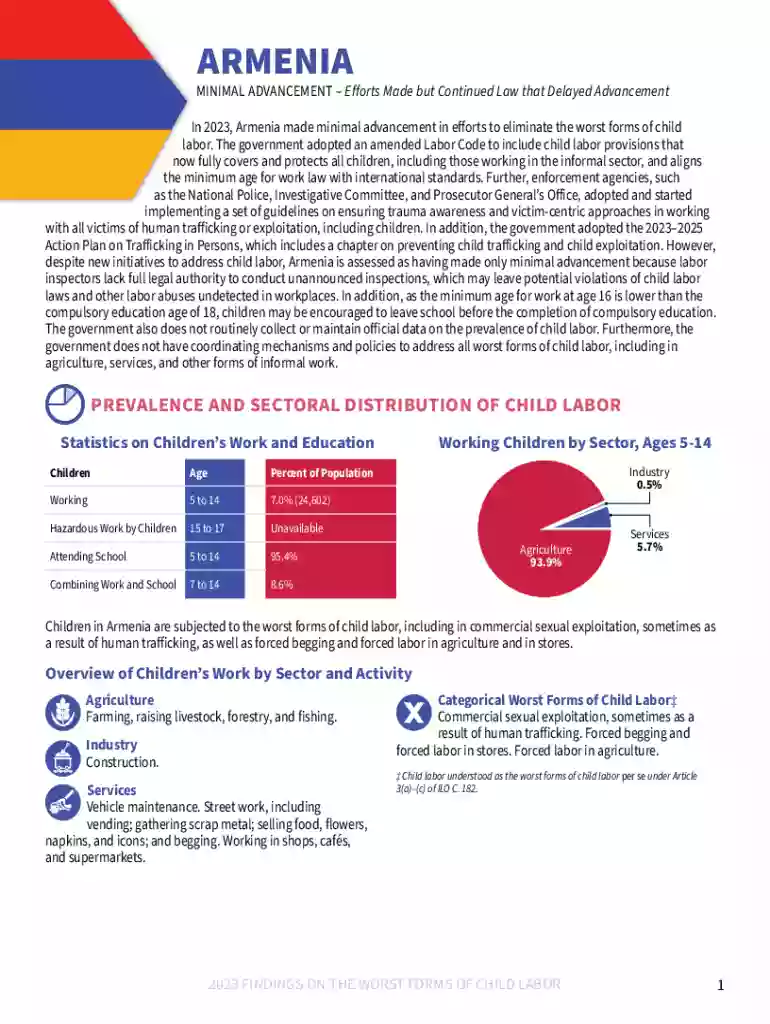
The "Findings on the Worst Forms of Child Labor - Armenia" document provides a comprehensive overview of child labor issues in Armenia, focusing on the most severe forms. This form is primarily an informational guide released annually by the Bureau of International Labor Affairs (ILAB). It details various factors contributing to child labor, such as economic, social, and educational elements. This document also highlights legislative measures, enforcement practices, and the prevalence of child labor in Armenia. By understanding this report, stakeholders can better grasp the current state and challenges of child labor in Armenia, facilitating efforts to address these issues effectively.
Users of this document usually consist of policymakers, researchers, and advocacy groups aiming to combat child labor. The content aids in identifying gaps in existing policies and helps advocate for new regulations to protect vulnerable children. An individual using this form may extract specific statistics, legal frameworks, or case studies to support their initiatives. For instance, the form offers detailed sections that stakeholders can analyze to develop targeted interventions or awareness campaigns regarding child labor practices.
Several essential components make up the "Findings on the Worst Forms of Child Labor - Armenia." These include:
To effectively utilize the report, consider the following steps:
Understanding the terminology used in the report is crucial for proper analysis. Key terms include:
The report highlights legal responsibilities and compliance measures required by the Armenian government. It discusses international agreements such as the United Nations Convention on the Rights of the Child (UNCRC) and International Labour Organization (ILO) conventions ratified by Armenia. Legal practitioners and policymakers use this document to ensure existing laws are enforced correctly or to propose legislative updates.
The "Findings on the Worst Forms of Child Labor - Armenia" document can serve various applications:
Despite advancements, challenges remain:
Opportunities for improvement include leveraging international partnerships, enhancing local enforcement agencies' capabilities, and increasing public engagement. By utilizing the detailed insights from the "Findings on the Worst Forms of Child Labor - Armenia," stakeholders can make informed decisions to foster systemic change.
We've got more versions of the Findings on the Worst Forms of Child Labor - Armenia form. Select the right Findings on the Worst Forms of Child Labor - Armenia version from the list and start editing it straight away!
At DocHub, your data security is our priority. We follow HIPAA, SOC2, GDPR, and other standards, so you can work on your documents with confidence.
The Ministry of Internal Affairs Criminal Police department established a direct connection to the National Center for Missing and Exploited Children, allowingRead more
hazardous work is prohibited for all children under 18, following the Worst Forms of Child Labor Convention 182. Armenia, Pakistan, Bangladesh, where labor


