



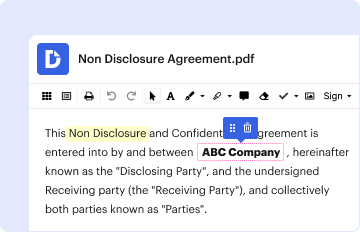
01. Edit your form online
Type text, add images, blackout confidential details, add comments, highlights and more.

Type text, add images, blackout confidential details, add comments, highlights and more.
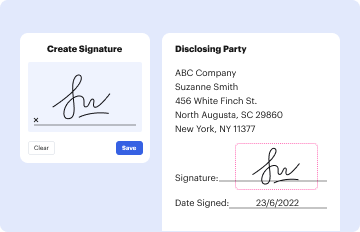
Draw your signature, type it, upload its image, or use your mobile device as a signature pad.

Send it via email, link, or fax. You can also download it, export it or print it out.
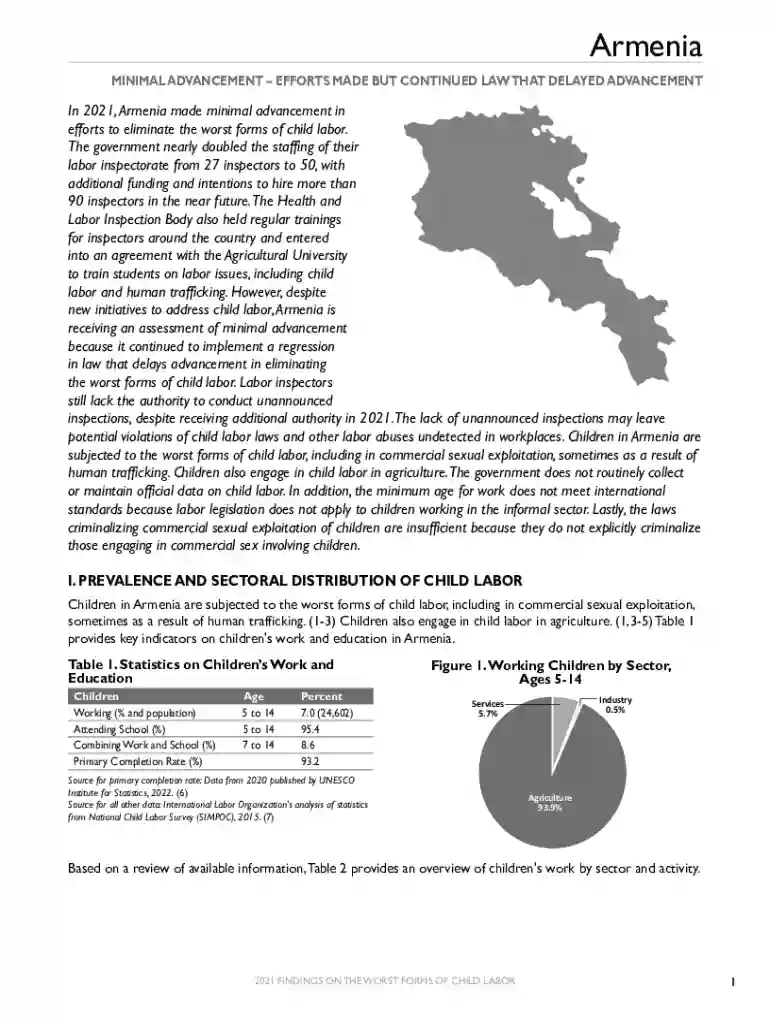
The "Armenia Child Labor Report 2021" is a comprehensive document evaluating the state of child labor in Armenia for that year. This report is critical for understanding how Armenia is tackling child labor issues and its commitment to international labor standards. It provides insights into the governmental actions, challenges, and progress made regarding child labor laws and enforcement.
This report is a valuable tool for policymakers, researchers, and advocacy groups who are working to eliminate child labor. It provides:
By leveraging this report, stakeholders can develop strategies to address shortcomings and enhance child protection systems.
To access the report:
The report contains several critical elements:
Each section provides a detailed examination of the current landscape and proposes actionable solutions.
The report highlights Armenia’s legal context regarding child labor, including:
Understanding these laws is crucial for ensuring compliance and advocating for stronger protections.
Familiarity with key terms enhances comprehension of the report:
Being well-versed in this terminology aids in precise interpretation and discussion of the findings.
Real-world applications of the report include:
The report acts as both a benchmark and a roadmap for future initiatives.
For individuals or entities interested in utilizing insights from the report:
This process ensures structured and effective use of the report to drive change.
The Armenia Child Labor Report 2021 is often accessible in both digital and paper formats:
Users can choose based on their needs, ensuring the format supports their objectives effectively.
We've got more versions of the Armenia Child Labor Report 2021 form. Select the right Armenia Child Labor Report 2021 version from the list and start editing it straight away!
At DocHub, your data security is our priority. We follow HIPAA, SOC2, GDPR, and other standards, so you can work on your documents with confidence.
Aug 30, 2023 For 9 months, 120,000 Armenians, including 30,000 children have been isolated, starving, and deprived of everything. We have brought urgent aid
This report covers the Armenia findings. Tags Research or Evaluation Reports 2021. Current Child Labor and Application of Good Employment Practices.
The Ministry of Internal Affairs Criminal Police department established a direct connection to the National Center for Missing and Exploited Children, allowingRead more


