




01. Edit your form online
Type text, add images, blackout confidential details, add comments, highlights and more.

Type text, add images, blackout confidential details, add comments, highlights and more.

Draw your signature, type it, upload its image, or use your mobile device as a signature pad.

Send it via email, link, or fax. You can also download it, export it or print it out.
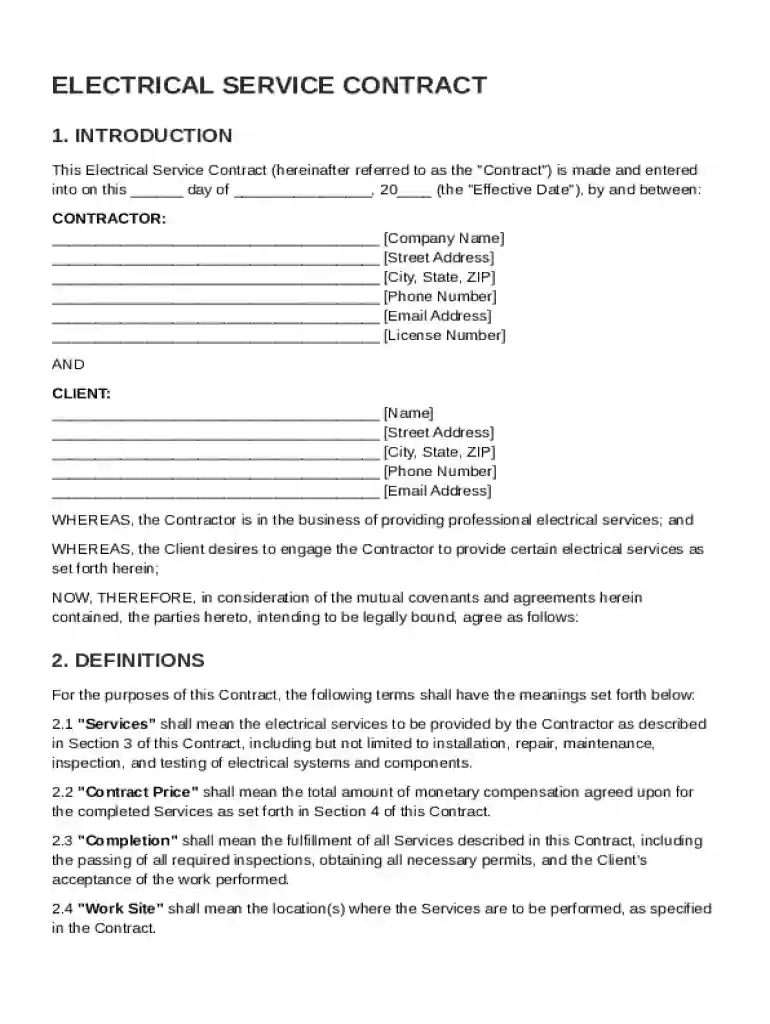
The Electrical Service Contract Template is a formal agreement used by contractors and clients to specify the terms and conditions of electrical services rendered. It serves as a legally binding document that sets clear expectations for both parties involved. This template typically includes various sections covering the scope of work, payment terms, responsibilities, and legal provisions such as liability and termination clauses. By providing a structured format for documenting the terms of an electrical service engagement, this template facilitates clear communication and helps prevent disputes.
Using the Electrical Service Contract Template involves customizing it to fit the unique needs of each project. It's essential to ensure that all critical sections are accurately filled out to protect the interests of all parties involved.
The template includes several key components that ensure a comprehensive agreement is established. Each element plays a crucial role in clarifying the terms and protecting the interests of both parties.
Familiarity with specific terms can enhance understanding and prevent potential disputes when using the template. Below are some terms commonly found within this context.
Indemnification: A provision where one party agrees to compensate for any losses incurred by the other.
Force Majeure: Events beyond the control of parties that might prevent contractual obligations from being met.
Arbitration: An alternative dispute resolution method that involves a neutral third-party.
Case Study: A client delayed a project due to unforeseen circumstances. The force majeure clause helped avoid penalties.
The template is intended to serve as an enforceable contract under U.S. law, providing legal protection to both contractors and clients.
Preparation and careful completion of the template can ensure that it serves its intended purpose effectively. The following steps provide a guideline for filling out the document.
The template is widely used across various sectors, primarily by those offering or requiring electrical services.


Electrical Contractors: Use the template to formalize agreements with clients.
Business Owners: Often require the template when hiring contractors for electrical installation or repair.
Property Managers: Utilize it to ensure clarity in maintenance contracts.
Practical Scenario: A property management company engaging an electrician for routine maintenance on multiple properties uses the template to standardize agreements with each contractor.

Electrical service regulations and contractual requirements can vary across different states, making it crucial to consider local laws when drafting an agreement.
Ensuring state-specific compliance enhances the legal standing of an electrical service contract and helps avoid potential regulatory penalties.
At DocHub, your data security is our priority. We follow HIPAA, SOC2, GDPR, and other standards, so you can work on your documents with confidence.



The Engineer shall, within thirty (30) days after the date of execution of this Agreement, make a complete field inspection and investigation for the purpose of
The Designer shall provide professional services for the Project in accordance with the Terms and Conditions of this Agreement and the latest edition of the
The contractor is asked to commence the work within 10(ten) days of issue of award of work or handing over of site whichever is later. In some cases, mostly in


