Definition & Meaning
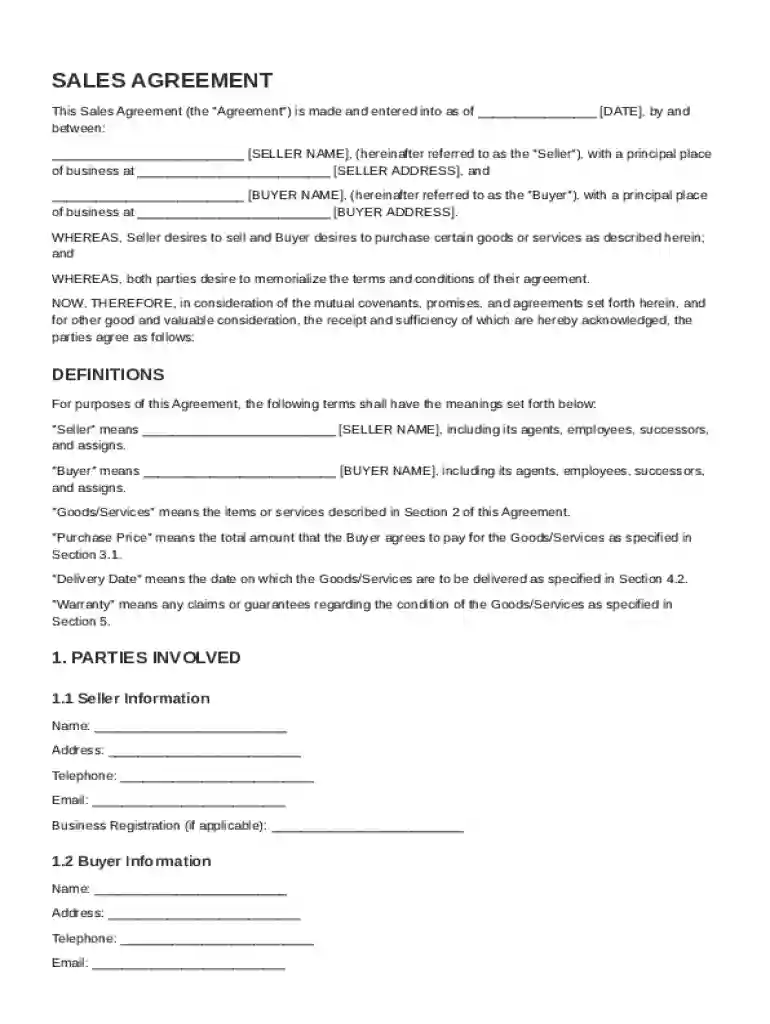
A "Sell Contract Template" is a pre-structured document outline that facilitates the formalization of agreements for selling goods or services. This template is essential in capturing all pertinent transaction details, ensuring both buyer and seller have a clear understanding of their obligations. Its comprehensive nature covers various critical components like payment schedules, delivery terms, and legal stipulations.
Critical Components:
- Parties Involved: The document identifies the buyer(s) and seller(s) with their contact details.
- Goods/Services: A clear description of the goods or services to be exchanged, including quantity, quality, and specifications.
- Payment Terms: Detailed terms on price, payment methods, schedules, and conditions for delayed payments.
- Delivery Details: Specifics about delivery time, location, and who bears the shipping costs.
- Legal Clauses: Provisions for dispute resolution, liability limitations, and agreement termination processes.
Key Elements of the Sell Contract Template
Key elements of a Sell Contract Template are designed to protect both parties involved in a transaction, making it a vital document in commercial exchanges. It includes various sections that detail the responsibilities and rights of each party.
Essential Components:
- Representations and Warranties: Statements affirming the condition or status of the goods/services.
- Amendments: How changes to the agreement are to be handled, requiring written consent from both parties.
- Governing Law: Specifies which jurisdiction’s laws will apply in interpreting the contract.
Protective Measures:
- Confidentiality Obligations: Ensures that sensitive business information is not disclosed inappropriately.
- Breach and Termination Clauses: Details the consequences if either party does not meet their contractual obligations.
Steps to Complete the Sell Contract Template
Completing a Sell Contract Template involves a series of steps to ensure all aspects of the transaction are clearly documented. Follow these steps to prepare a comprehensive contract:
- Gather Information: Collect all necessary details about both parties, the goods/services, and any specific terms required by either party.
- Fill in the Template: Begin with the template by entering the required information in each section, ensuring accuracy.
- Review Terms: Carefully review payment, delivery, and legal terms to confirm they align with intended expectations.
- Customize Clauses: Modify any sections that require inputs unique to the specific transaction, such as special payment schedules or delivery instructions.
- Internal Review: Have each party or their legal representatives review the contract to ensure all sections meet legal and practical needs.
- Signatures: Obtain signatures from authorized representatives of both parties, confirming agreement.
Legal Use of the Sell Contract Template
This template is legally binding once it is signed by all involved parties. It includes all necessary legal components to ensure enforceability in court, should any disputes arise.
Compliance Considerations:
- ESIGN Act: If digital signatures are used, they must meet specific criteria to be considered legally binding.
- State-specific Laws: Ensure the template complies with local state laws for sales transactions, as these can vary.
Real-world Scenario:
Consider a small business selling equipment to a vendor. The Sell Contract Template explicitly details the description of products, agreed price, and delivery conditions, ensuring both parties have a binding agreement that can be referred to in case of disputes.
Who Typically Uses the Sell Contract Template
Sell Contract Templates are utilized by a wide variety of business entities, from small enterprises to large corporations, whenever a sale transaction is involved.

Typical Users Include:
- Retailers and Wholesalers: To ensure all sale agreements include comprehensive terms.
- Service Providers: Organizations offering services utilize this to outline the specifics of service delivery.
- Manufacturers: Employ this template to detail the sale of goods to vendors and distributors.
Examples:
- A tech company selling a bulk of laptops to an educational institution uses this template to outline specifications, price, and support service terms.
- A construction firm employing the template for material procurement, detailing supply frequency, costs, and warranty provisions.
Important Terms Related to Sell Contract Template
Understanding key terms is critical to fully using and implementing a Sell Contract Template effectively. These terms set clear expectations and ensure each party understands their commitments.
Crucial Terms to Understand:
- Force Majeure: A clause referring to unforeseeable events that prevent fulfillment of the contract.
- Indemnification: It covers conditions under which one party will compensate the other for any incurred harm or loss.
- Consideration: Legal term for the value or price paid, confirming the exchange aspect in the contract.
Software Compatibility
A critical aspect for those using a Sell Contract Template is ensuring that the documents are compatible with various software tools, aiding in efficient document management and execution.
Compatible Software:
- PDF Editors: DocHub or equivalent platforms can be used to edit the contract digitally.
- Document Management Systems: Tools like Google Docs, Microsoft Word, and cloud-based platforms support easy collaboration.
- E-signature Services: Such as DocuSign, which enable secure and straightforward signing processes.
Use Case:
A retailer can easily edit, share, and obtain signatures on a sell contract using a PDF editor integrated with e-signature tools, ensuring a streamlined process without printing physical copies.
State-Specific Rules for the Sell Contract Template
State-specific regulations can affect how contracts are interpreted and enforced. Thus, it's crucial to tailor the Sell Contract Template according to these rules for each transaction.
State Compliance Guidelines:
- Jurisdiction Clauses: Ensure the contract’s governing law section refers to the correct state where the transaction primarily occurs.
- Tax Implications: Consider state tax laws affecting the sale of goods or services.
- Disclosure Obligations: States may have specific requirements on information disclosure that must be included in the contract.
Example:
Different states may have variations in rules about implied warranties, so sellers should adjust contracts to comply with the laws of the state in which the buyer operates.