Definition & Purpose of the Vehicle Release Form
A Vehicle Release Form is a legal document used to authorize the release of a vehicle from impound or storage. It is typically required when a vehicle is towed and the registered owner or a designated agent needs to reclaim it. The form serves as an official declaration that the person signing it has the legal right to take possession of the vehicle.
- Authorization: The form certifies that the person reclaiming the vehicle has the authority to do so, either as the registered owner or as a representative authorized by the owner.
- Legal Documentation: It is legally binding and often requires proof of identity and ownership at the time of signing.
- Usage Contexts: Commonly used by towing companies, impound lots, and law enforcement agencies to manage the release of vehicles.
How to Obtain the Vehicle Release Form
Securing a Vehicle Release Form involves specific steps that vary by jurisdiction and the entity managing the stored vehicle. Understanding these procedures ensures a smooth retrieval process.
- Contact the Storage Facility: Begin by contacting the organization or facility where the vehicle is stored. This could be a towing company or a municipal impound lot.
- Verify Requirements: Inquire about the specific documentation required to obtain the form. Common requirements include proof of ownership, identification, and payment of any associated fees.
- Form Availability: Some facilities provide the form in person, while others might offer downloadable versions via their website.
- Online and In-Person Options: Depending on the facility, you may be able to download and print the form or fill it out in person during a visit.
Steps to Complete the Vehicle Release Form
Completing a Vehicle Release Form involves several steps that ensure all necessary information is accurately captured.
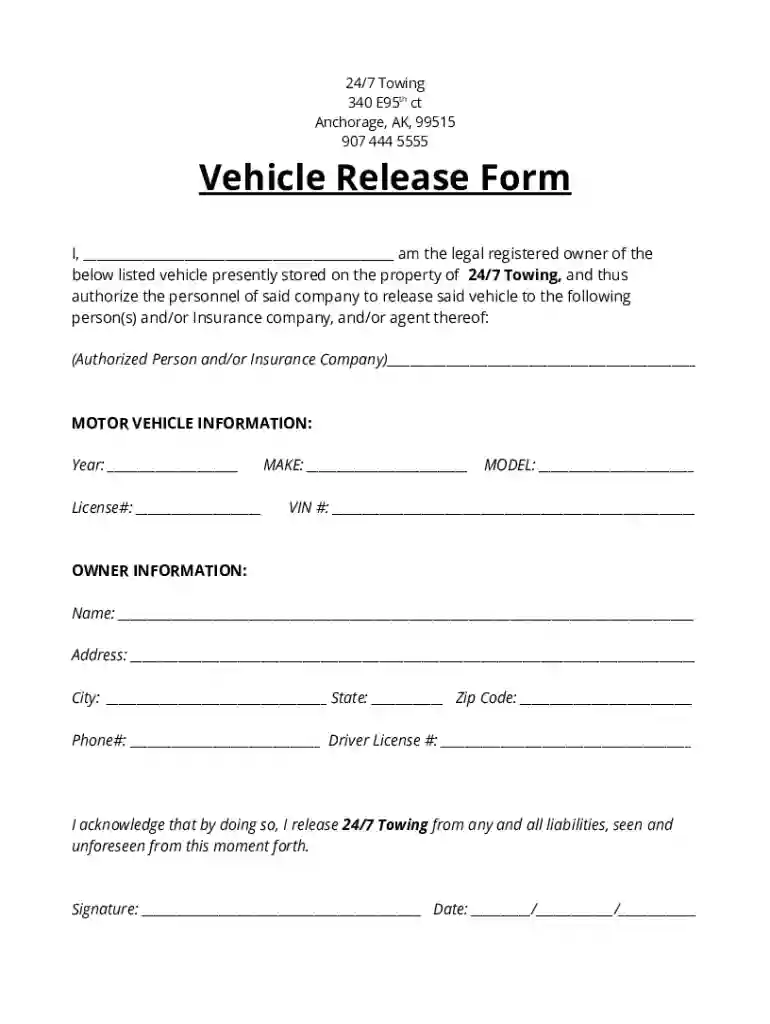
- Fill in Personal Details: Enter the name, address, and contact information of the registered owner and any authorized agents.
- Vehicle Information: Include the make, model, year, Vehicle Identification Number (VIN), and license plate number.
- Ownership Confirmation: Attach a copy of proof of ownership, such as the vehicle title or registration.
- Signatures: The registered owner or authorized agent must sign the form. In some cases, a notary may be required to witness the signature.
- Submission: Submit the completed form to the facility holding the vehicle, either online or in person, depending on their process requirements.
Key Elements of the Vehicle Release Form
Several critical components are standard in a Vehicle Release Form, each serving a distinct purpose to ensure legality and clarity.
- Identification: Information about the person and vehicle, including personal identification numbers and vehicle identifiers.
- Authorization Details: A section detailing the authority of the signer, ensuring the signer's right to claim the vehicle.
- Release Conditions: Terms and conditions under which the vehicle will be released, often including payment of fees or verification of compliance with any legal requirements.
- Signatures: Required from the authorized individual, sometimes including additional witnesses or a notary public.
Legal Use of the Vehicle Release Form
The Vehicle Release Form carries legal weight, authorizing vehicle transfer back to the owner under specified conditions.
- Legal Authority: The form acts as proof that the signatory has been given authority to reclaim the vehicle, reducing the risk of wrongful release.
- Compliance: Ensures compliance with local regulations and laws governing vehicle storage and release.
- Record Keeping: Serves as a documented record for both the releasing institution and reclamation party to prevent legal disputes.
State-Specific Rules for the Vehicle Release Form
Rules governing Vehicle Release Forms can vary significantly between states. Understanding these differences ensures proper compliance.
- State Regulations: Each state may have unique requirements regarding the documentation and processes needed for vehicle release.
- Fee Structures: Costs associated with vehicle release can differ, and some states may impose specific taxes or surcharges.
- Document Modifications: Certain states may require additional forms or specific language to meet legal standards.
Examples of Using the Vehicle Release Form
Real-world scenarios illustrate the versatility and necessity of the Vehicle Release Form in various contexts.
- Towed from Private Property: A vehicle towed from private land may require a form signed by the property owner as well as the vehicle owner.
- Impounded for Legal Violations: Vehicles impounded due to traffic violations can be claimed, conditional on legal compliance and payment of associated fines.
- Accident Recovery: Insurance companies might use the form to authorize the release of a vehicle from a tow lot after an accident evaluation has been completed.
These sections provide in-depth coverage of the Vehicle Release Form, focusing on its legal, procedural, and practical aspects, relevant to users needing to navigate its complexity efficiently.