
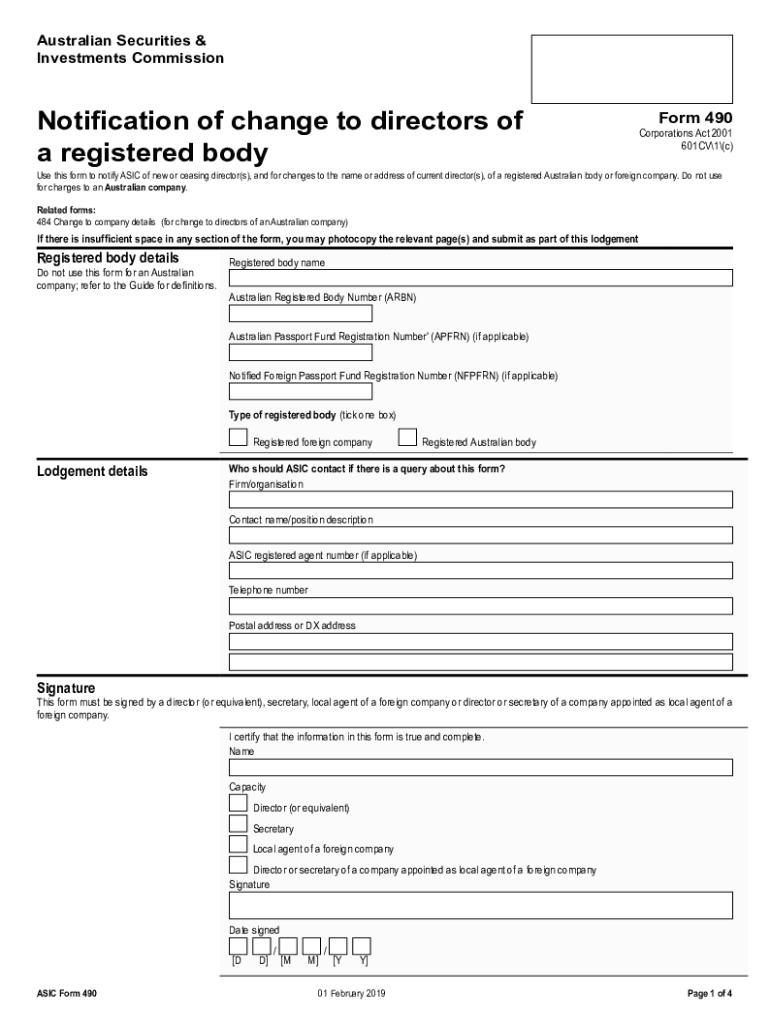







Definition & Purpose of ASIC Form 490
ASIC Form 490 serves as a formal notification submitted to the Australian Securities and Investments Commission (ASIC) to report changes related to directors of registered bodies. Such changes include appointments, cessations, name alterations, and address updates of directors within registered entities or foreign companies operating in Australia. This form ensures ASIC is kept informed about the governance and management changes in these organizations to maintain transparency and regulatory compliance.
- Appointment of Directors: When a new director is appointed, organizations must report the individual's details, including their full name and address.
- Cessation of Directors: When a director resigns or is removed, the cessation date must be clearly indicated.
- Director's Name Change: If a director legally changes their name, this update must be reflected in the form.
- Address Change for Directors: A change in the residential address of a director must be included to keep records updated.
Steps to Complete ASIC Form 490
Filling out ASIC Form 490 involves several crucial steps, ensuring all information is accurate and current prior to submission.
-
Gather Required Information: Before completing the form, collect all necessary details, such as personal data of the directors and any changes to report.
-
Complete Personal Details: Enter the previous director's details such as full name, date of birth, and full address. This ensures their identity is recorded accurately.
-
Update Relevant Section: Fill out the section that corresponds to the change—appointment, cessation, name, or address update.
-
Verify Accuracy: Double-check all filled information for errors or omissions. Inaccurate data can lead to processing delays or legal complications.
-
Sign the Form: Ensure that an authorized individual signs the form to verify the authenticity of the information provided.
-
Submit the Form: Depending on preferences, this form can be lodged online through ASIC's portal, mailed, or delivered personally to an ASIC office.
Required Documents for ASIC Form 490
To successfully lodge ASIC Form 490, specific documents must accompany the submission to verify changes.
- Identity Verification: Provide documents that verify the identification of new directors.
- Legal Documents: If applicable, include legal documents that demonstrate name change or changes in business registration.
- Authorization Letters: If someone other than the company secretary or director submits the form, their authorization might be required.
Legal Use and Compliance
Complying with ASIC's reporting requirements through Form 490 is integral to maintaining lawful operations in Australia. Registered bodies must adhere to the set guidelines to avoid potential penalties or legal disputes.
- Timeliness: Submissions must occur within a stipulated timeframe post the change. Delays can result in fines.
- Accuracy: Providing precise information prevents miscommunications and potential legal challenges.
- Completeness: Ensure the form is thorough with all necessary fields filled out.
Penalties for Non-Compliance
Failing to submit ASIC Form 490 within the specified timeline can lead to legal ramifications for the organization.
- Fines: Late submissions can attract statutory fines based on the period of delay.
- Legal Action: Persistent non-compliance may lead to further administrative or legal actions by ASIC.
- Reputation Damage: Companies not following compliance regulations could damage their credibility with stakeholders.
Examples of Using ASIC Form 490
Case studies showcase the practical application of ASIC Form 490 in ensuring regulatory compliance.
-
Multinational Corporation: A global company operating in Australia appoints a new finance director within its Australian division. ASIC Form 490 is used to notify ASIC about this change to ensure their records reflect current management structures.
-
Local Non-Profit Organization: After a strategic review, several directors are rotated out, and new ones brought in. The organization uses Form 490 to update these changes with ASIC, maintaining transparency.
-
Subsidiary of Foreign Companies: A foreign entity operating under Australian jurisdiction announces a change in the address of their resident director, requiring Form 490 submission for address updates.
Digital vs. Paper Submission of ASIC Form 490
Navigating the choice between digital and paper formats offers flexibility in submission while catering to the organization's operational preferences.
-
Online Submission: Provides convenience, faster processing, and automated confirmation upon successful lodgement. This method reduces paper usage and streamlines keeping records.
-
Paper Submission: Preferred by entities uncomfortable with digital platforms or requiring hard copy submissions for internal record-keeping. However, this may involve longer processing times.
Software Compatibility
Filing ASIC Form 490 may benefit from using compatible software tools that streamline the form completion process.
- Document Management Platforms: Utilize platforms like DocHub to easily edit, sign, and store the digital form versions.
- Integration Options: Some software solutions allow direct submission via ASIC's portal, reducing lodgement errors and inconvenience.
These steps, regulations, and examples highlight the comprehensive nature and the broad utility of ASIC Form 490. Keeping accurate and timely records through this form is essential for any registered body or foreign company operating under ASIC's jurisdiction in Australia.




