






Definition & Meaning
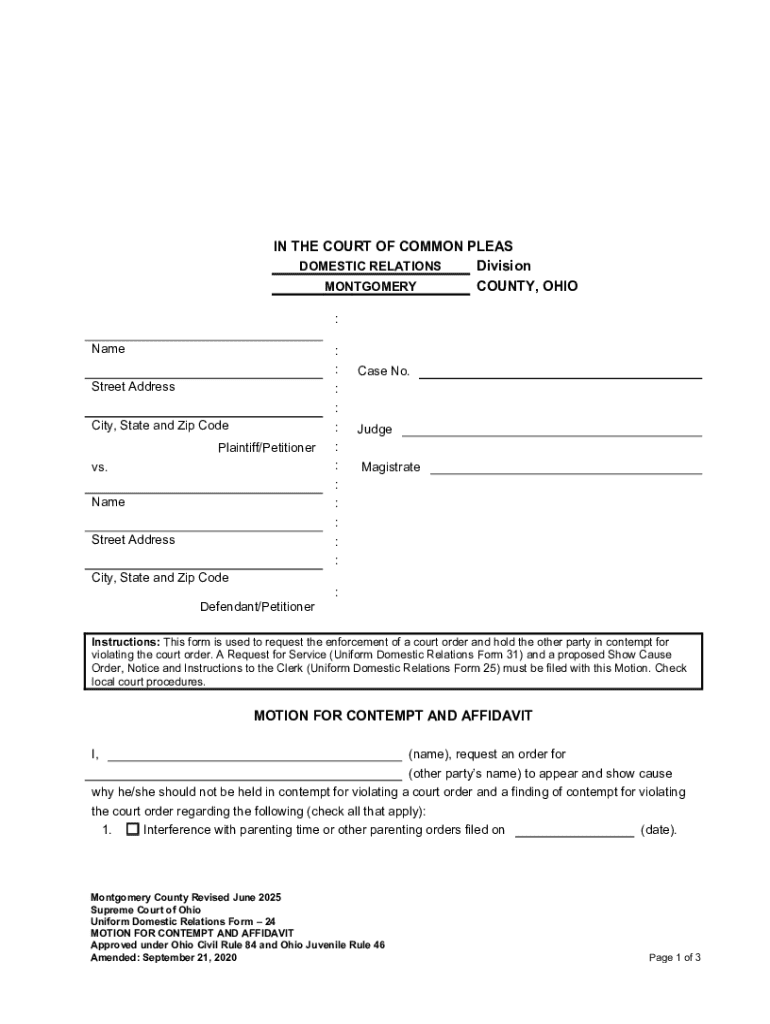
The Motion for Contempt and Affidavit is a legal document used to assert that a party has violated a court order. Typically, this form details the specific ways the order has been disobeyed and requests the court to enforce compliance. This motion serves as a formal procedure to address non-compliance and ensure adherence to judicial mandates.
Steps to Complete the Motion for Contempt and Affidavit
-
Gather Information: Collect all relevant details, including the original court order and evidence of the violation.
-
Fill Out the Form: Enter precise details about the parties involved, specifics of the court order, and how it was breached.
- Personal Information: Provide names, addresses, and contact info of the parties.
- Details of Violation: Describe how the court order was violated with dates and supporting evidence.
- Requested Action: Specify what action you want the court to take.
-
Attach Supporting Documents: Include copies of the original court order and any evidence supporting the claim of contempt.
-
Notarize the Document: Most jurisdictions require the Motion for Contempt and Affidavit to be notarized.
-
File with the Court: Submit the completed form to the court that issued the original order.
-
Serve the Other Party: Ensure the opposing party receives a copy of the motion and affidavit according to state rules.
How to Obtain the Motion for Contempt and Affidavit
This form can be accessed in several ways:
- Court's Website: Many jurisdictions provide downloadable forms online.
- Clerk of Court: Visit the local clerk's office for a physical copy.
- Attorney Services: Lawyers can provide and help file the form as part of their services.
Key Elements of the Motion for Contempt and Affidavit
- Specific Allegations: Clearly articulate the ways in which the original court order was breached.
- Evidence: Attach pertinent records, communications, or third-party affidavits proving the violation.
- Relief Sought: Define what remedies or penalties are sought for the contempt.
State-specific Rules for the Motion for Contempt and Affidavit
Different states may have unique requirements or procedural rules. It is crucial to:
- Review specific court guidelines for filing such motions.
- Confirm service requirements, as some states stipulate personal service while others may allow certified mail.
Examples of Using the Motion for Contempt and Affidavit
Consider these scenarios:
- Child Custody Violations: A parent disobeying custody schedules could face a contempt motion.
- Non-Payment of Support: Failure to make court-ordered support payments could lead to filing one of these motions.
- Disobeying Civil Restraining Orders: Continued contact against court orders may require this legal action.
Legal Use of the Motion for Contempt and Affidavit
This legal document is important in maintaining the authority of court orders. Its primary legal functions include:
- Enforcement of Orders: Reinforces compliance with judicial directives.
- Accountability: Holds parties responsible for failing to honor court decisions.
Penalties for Non-Compliance
Courts may impose several penalties for contempt, including:
- Fines: Financial penalties for breaching court orders.
- Incarceration: In severe cases, jail time can be a consequence of non-compliance.
- Additional Orders: The court can issue further orders to enforce compliance.