






Definition and Meaning of the Intercompany Service Agreement
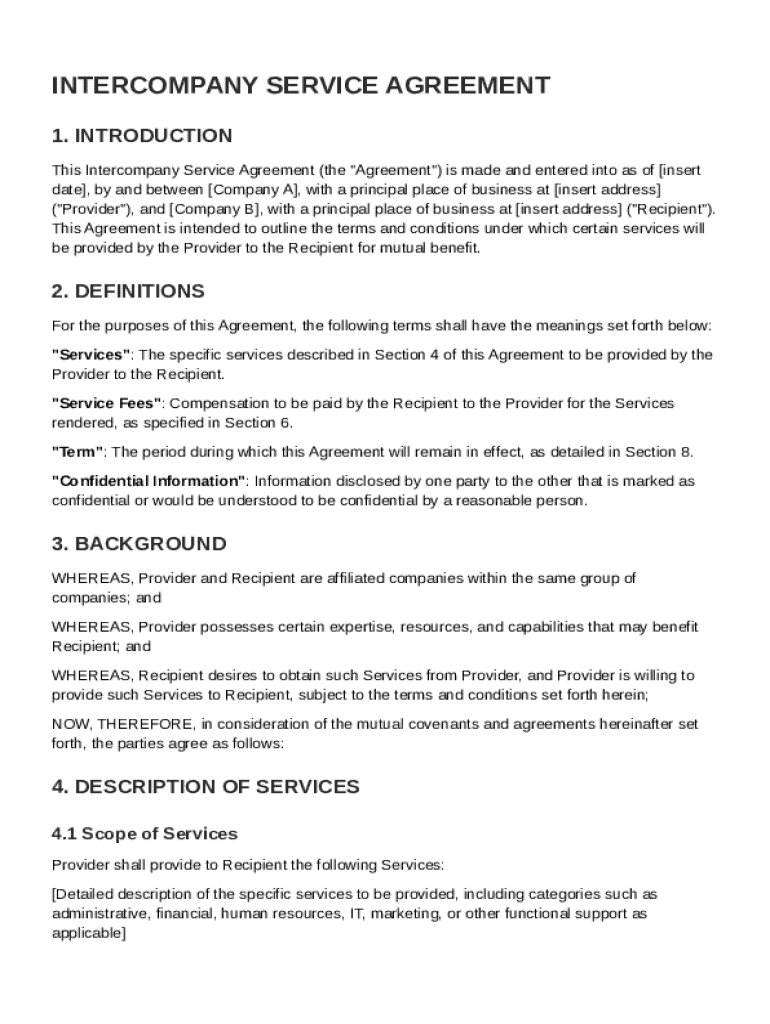
An Intercompany Service Agreement (ISA) is a formal document that outlines the terms and conditions under which one company within a corporate group (the Provider) delivers services to another company within the same group (the Recipient). This form covers detailed descriptions of services rendered, the responsibilities of each party, compensation structures, confidentiality clauses, and provisions for termination and dispute resolution. Such agreements are crucial for maintaining clarity and compliance within a corporate structure, ensuring that all intra-group transactions are conducted fairly and transparently.
How to Use the Intercompany Service Agreement Template
The Intercompany Service Agreement Template serves as a foundational document that can be customized based on specific business needs. To effectively utilize it, companies should first identify the types of services to be provided and the involved parties. The template should be tailored to include detailed service descriptions, pricing models, and any specific terms unique to the business arrangement. After customization, the agreement should be reviewed by legal experts to ensure it complies with relevant regulations. Finally, both parties should sign the document to formalize the agreement.
Steps to Complete the Intercompany Service Agreement Template
- Identify Parties: Clearly state the names and details of the Provider and Recipient companies.
- Specify Services: Detail the services that will be provided, including scope and limitations.
- Determine Compensation: Outline financial terms, including how and when payments will be made.
- Define Responsibilities: Clarify the obligations and expectations of both parties.
- Include Confidentiality Terms: Establish how sensitive information will be handled.
- Set Termination Clauses: Define conditions under which the agreement can end.
- Dispute Resolution: Specify methods for resolving potential conflicts.
- Review and Sign: Ensure both parties review the completed document, make necessary adjustments, and sign the agreement.
Key Elements of the Intercompany Service Agreement Template
- Service Descriptions: Specifics of what services are provided, including deliverables and timelines.
- Pricing and Payment Terms: Clear financial arrangements, such as fees, rates, and payment schedules.
- Confidentiality: Protocols for protecting proprietary and sensitive information.
- Termination: Conditions that allow either party to end the agreement.
- Dispute Resolution: Agreed-upon methods for handling disagreements, such as mediation or arbitration.
Who Typically Uses the Intercompany Service Agreement Template
Primarily, large corporations and multinational companies that manage multiple subsidiaries utilize ISAs to streamline intra-group service transactions. They are particularly useful for businesses with centralized departments providing shared services, such as IT, HR, or finance. By using ISAs, these organizations can delineate responsibilities, manage costs, and ensure intra-company transparency.


Legal Use of the Intercompany Service Agreement Template
ISAs are legally binding contracts, designated to structure and record the interactions between affiliated companies. To be legally enforceable, they must comply with local and federal laws, including tax regulations. It is essential to ensure the agreement does not violate transfer pricing rules, which could lead to regulatory scrutiny or penalties. Organizations are advised to seek legal counsel during the drafting phase to ensure compliance.
Important Terms Related to the Intercompany Service Agreement Template
- Provider: The company offering services within the group.
- Recipient: The company receiving services.
- Scope of Services: The range and limitations of services offered.
- Transfer Pricing: Financial rules governing transactions between related entities to ensure fair pricing.
State-Specific Rules for the Intercompany Service Agreement Template
Although ISAs are generally governed by federal regulations, state-specific rules regarding corporate transactions and tax obligations can affect how they are drafted and enforced. For instance, certain states may require specific disclosures or record-keeping practices. Companies must consult with legal professionals familiar with both federal and state laws to tailor the agreement appropriately to each jurisdiction they operate in.
Examples of Using the Intercompany Service Agreement Template
A multinational corporation with a centralized IT department may use an ISA to provide support services to its subsidiaries. Terms would include the scope of IT services, cost allocation strategies, and performance metrics. Another example is a conglomerate offering shared financial services, where an ISA specifies the nature of services, fee structures, and confidentiality clauses essential for maintaining financial data integrity across companies.