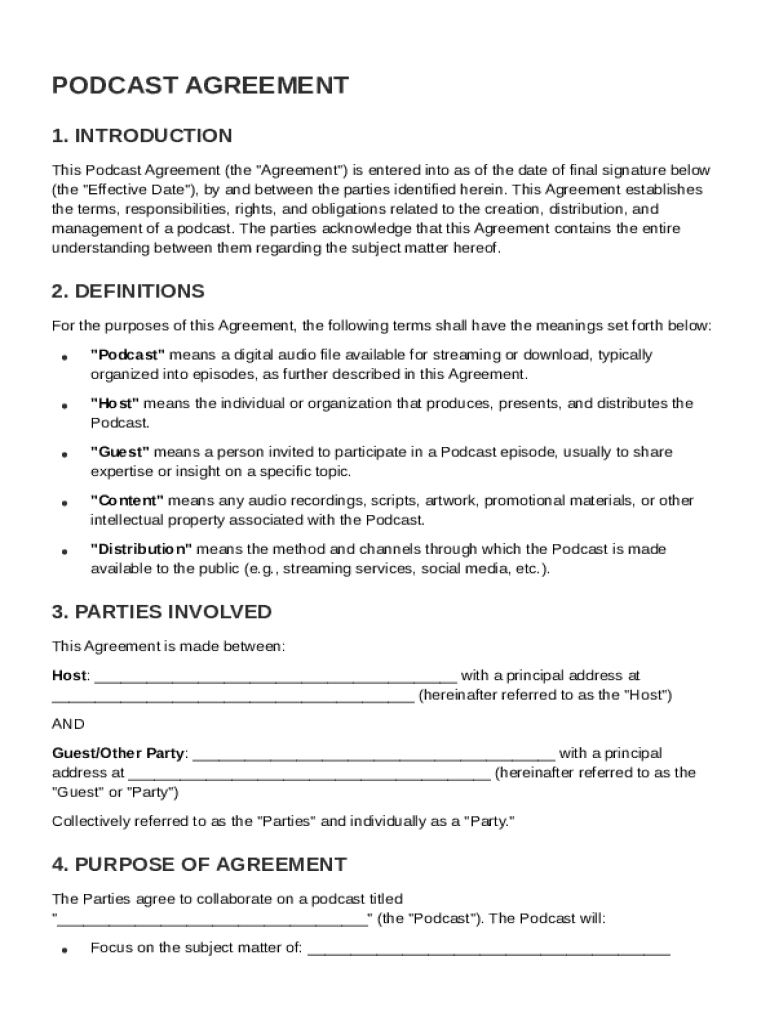







Definition and Meaning of Podcast Agreement Template
A Podcast Agreement Template serves as a foundational document detailing the responsibilities and entitlements of all parties involved in podcast production and distribution. It clarifies the roles of podcast hosts, guests, producers, and any other contributors, ensuring alignment and mutual understanding. This template outlines the framework for collaboration, covering intellectual property rights, revenue shares, confidentiality clauses, and termination conditions. Its primary function is to safeguard the interests of everyone involved, allowing for smooth operation and a professional relationship by defining terms and expectations clearly.
The agreement is adapted to the unique nature of podcasting, where creative contribution and content rights can become complex. By delineating who owns what and how profits are distributed, the document mitigates potential disputes. It is designed to be comprehensive, addressing both creative and commercial aspects, thus providing a balanced approach to content creation. This clarity not only enhances cooperation but also maintains a trustful environment essential for long-term partnerships.
Key Elements of the Podcast Agreement Template
The Podcast Agreement Template comprises several critical components that cater to the nuanced requirements of podcasting ventures:
- Roles and Responsibilities: Clearly defines what each party is responsible for, including production tasks, marketing efforts, and distribution strategies.
- Intellectual Property Rights: Specifies who owns the podcast content, music, artwork, and other creative materials used in the production.
- Compensation Structure: Outlines how profits or revenues from the podcast will be divided among the parties, including any upfront payments or royalties.
- Confidentiality Agreements: Ensures that sensitive information about the podcast, its strategies, or its content is protected from unauthorized disclosure.
- Termination Conditions: Details the circumstances under which the agreement can be dissolved by either party, providing a clear exit strategy.
- Dispute Resolution: Offers solutions or mediation methods in case of conflicts, promoting resolution without legal escalation.
These elements are crucial in constructing a legally sound and mutually beneficial agreement, safeguarding interests while promoting transparency and cooperative working relationships.
Steps to Complete the Podcast Agreement Template
Completing a Podcast Agreement Template involves a systematic approach to ensure accuracy and comprehensiveness. Follow these steps for a concise and thorough completion process:
-
Identify Parties Involved: Start by listing all parties to the agreement, including hosts, guests, producers, and any other contributors. This includes specifying the legal names and roles of each participant.
-
Outline Roles and Responsibilities: Clearly delineate the specific duties each party is expected to perform. Ensure each role is clearly documented to avoid ambiguity.
-
Define Intellectual Property Rights: Determine and document who holds ownership of the podcast content and other creative assets. This includes considerations for future adaptations or uses.
-
Set Compensation Terms: Detail how and when parties will be paid, including profit-sharing percentages or upfront payment terms. Consider various revenue streams such as advertisements, sponsorships, and merchandise.
-
Establish Confidentiality Requirements: Include clauses that protect sensitive information, detailing what is considered confidential and how it should be handled.
-
Termination and Dispute Procedures: Specify the procedures for terminating the agreement and resolving disputes. Clearly outline how disagreements will be addressed and any mediation or arbitration processes.
-
Review and Sign: Ensure all parties read and understand the terms before signing. Utilize DocHub’s electronic signature options to make the signing process efficient and legally binding.
Completing the template thoroughly ensures all parties have a clear understanding of their rights and obligations, fostering a productive and harmonious collaboration.
How to Use the Podcast Agreement Template in Practice
Applying the Podcast Agreement Template in real-world scenarios involves a series of practical steps to enhance compliance and usability:
-
Customizing the Template: Begin by tailoring the template to fit the specific needs of your podcast production. Modify sections relevant to your unique circumstances, such as specific duties, intellectual property limitations, and unique compensation structures.
-
Collaborative Negotiation: Engage all parties in discussions to negotiate and agree upon terms before finalizing the document. This step ensures consensus and paves the way for future collaboration.
-
Legal Review: Consider having the document reviewed by a legal expert to ensure all clauses are compliant with applicable laws, particularly those concerning intellectual property and contract law.
-
Ongoing Documentation: Use the template as a dynamic document that can be updated as roles evolve or as new contributors become involved. Regular reviews can help ensure continued relevance and compliance with agreed terms.
The template is a versatile tool that supports both new and ongoing projects, ensuring that contractual obligations are clearly understood and adhered to by all parties involved.
Who Typically Uses the Podcast Agreement Template
The Podcast Agreement Template is utilized across a diverse range of industry participants, each requiring specific protections and clarity:
-
Podcast Hosts and Producers: Individuals or companies responsible for content creation and distribution typically use the template to clarify their creative and business interests.
-
Guest Contributors: Regular guests or contributors who provide unique perspectives or expertise can use the template to ensure their contributions are recognized and rights protected.
-
Podcast Networks and Agencies: Organizations that manage multiple podcast titles often employ such templates to standardize agreements across different productions, ensuring consistency and fairness.
This template is an essential resource for anyone seeking to engage collaboratively in the podcasting space, allowing each party to focus on content creation while safeguarding their legal and financial interests.


Important Terms Related to Podcast Agreement Template
A comprehensive understanding of key terms related to Podcast Agreement Templates helps in crafting effective and legally compliant documents:
-
Work for Hire: A legal term specifying that the content created by an individual is owned by the hiring party, typically applicable to employees or specific contracted work.
-
Revenue Sharing: A financial arrangement where proceeds from the podcast are split among contributors according to predefined criteria.
-
Moral Rights: Rights concerning the creator’s connection to their work, including rights to attribution and to prevent derogatory treatment of their work.
-
Exclusivity Clause: A provision that may restrict parties from engaging in similar podcasting agreements with competitors during the term of the contract.
These terms are instrumental in constructing a robust and clear agreement, providing a shared language and understanding for all parties involved in a podcasting endeavor.
Legal Use of the Podcast Agreement Template under U.S. Law
In the United States, the legal enforceability of a Podcast Agreement Template is determined by its compliance with contract law principles. Key considerations include:
-
Mutual Consent: All parties must agree to the terms consciously, and modifications should only occur with the consent of all involved.
-
Consideration: There must be an exchange of value between the parties, such as monetary payment, services, or mutual promises.
-
Legal Capacity: All parties entering the agreement should be of legal age and possess the mental capacity to understand the terms.
-
Legality of Content: The agreement should not include clauses that are illegal or contrary to public policy.
Ensuring that a podcast agreement meets these conditions helps validate its enforceability in a legal setting, offering protections and assurances under U.S. law for all involved parties.
Examples of Using the Podcast Agreement Template in Various Contexts
Real-world examples highlight the utility of the Podcast Agreement Template across different settings:
-
Educational Podcasts: Universities or educational institutions using guest lecturers can ensure each speaker's contribution is formally recognized, outlining their role and content ownership.
-
Sponsored Series: A series featuring guest experts financed through sponsorships can use the agreement to delineate financial distributions and intellectual property with precision.
-
Cross-Network Collaborations: When multiple podcast networks collaborate to produce a special series, the agreement simplifies the negotiation of content rights and revenue shares among diverse entities.
These examples underscore the versatility of the Podcast Agreement Template in fostering fair and transparent collaborations while accounting for the specific needs of various podcast styles and formats.