






Definition & Meaning
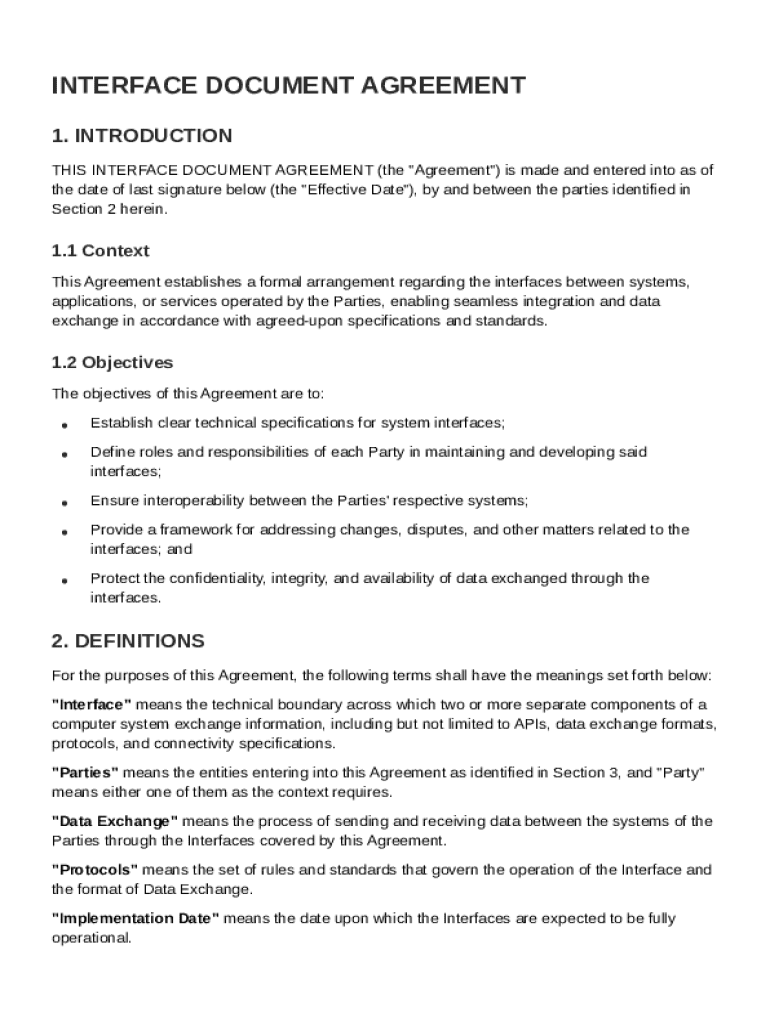
The Interface Document Agreement Template is a formal document used to outline the terms and conditions of integration and data exchange between two systems. This agreement delineates technical specifications, roles, responsibilities, and data security measures, ensuring both parties understand their obligations. By detailing change management procedures and dispute resolution methods, the template acts as a framework that is crucial for maintaining interoperability and protecting data integrity.
Key Elements of the Interface Document Agreement Template
- Technical Specifications: Clear descriptions of system interfaces, data formats, and communication protocols.
- Roles and Responsibilities: Specific duties and responsibilities of each party to ensure smooth implementation and operation.
- Data Security Measures: Protocols for data protection, including encryption methods and authentication requirements.
- Change Management Procedures: Steps for managing updates or modifications to the interface, reducing potential disruptions.
- Dispute Resolution: Mechanisms for addressing disagreements, possibly involving mediation or arbitration options.
These elements provide the foundational structure necessary for a successful implementation, reducing the risk of misunderstandings or conflicts.
How to Use the Interface Document Agreement Template
To effectively utilize this template, both parties should collaborate closely:
- Customize the Template: Adapt the generic terms to specify the exact requirements of the integration project.
- Consult with Legal and Technical Teams: Both teams should review the document for compliance and feasibility.
- Schedule Regular Reviews: Periodic assessments ensure that all parties are adhering to agreed-upon terms and address any emerging issues.
Conducting a thorough review of each section before finalization ensures clarity and mutual understanding of responsibilities and expectations.
Who Typically Uses the Interface Document Agreement Template
This template is commonly employed by:
- IT Departments: For software and system integrations within organizations.
- Vendors and Suppliers: To outline service agreements involving data transfer between systems.
- Consultants: In projects requiring technical and operational integration with client systems.
These users leverage the agreement to establish a clear and structured partnership, ensuring seamless interaction and cooperation.


Steps to Complete the Interface Document Agreement Template
- Identify the Parties: Clearly state the names of the organizations or individuals involved.
- Outline the Objectives: Define what the integration aims to achieve.
- Detail the Interfaces: Specify technical details such as protocols and data formats.
- Assign Roles: Allocate responsibilities to relevant team members.
- Specify Security Requirements: Include encryption and authentication measures.
- Set Change Management Policies: Establish how changes will be handled.
- Draft Dispute Resolution Clauses: Agree on methods to resolve conflicts.
- Finalize and Review: Ensure both parties sign off on the agreement.
Following these structured steps ensures that the agreement is comprehensive and reflects the needs of both parties accurately.
Important Terms Related to Interface Document Agreement Template
Understanding key terminologies can aid in navigating the agreement effectively:
- Interoperability: The ability of different systems to work together seamlessly.
- Data Integrity: Ensuring data is accurate and consistent throughout its lifecycle.
- Encryption: Converting information into a secure format to prevent unauthorized access.
- Authentication: Verifying the identity of users or systems before granting access.
- Mediation: A conflict resolution process involving a neutral third party.
These terms are crucial in understanding the scope and purpose of the agreement.
Legal Use of the Interface Document Agreement Template
The template serves multiple legal functions:
- Compliance: Ensures both parties adhere to applicable laws and regulations.
- Liability Limitation: Clarifies responsibilities and limits potential legal exposure.
- Contract Enforcement: Provides a legally binding document that can be upheld in court if necessary.
When drafted with precision, the agreement minimizes legal risks and sets the stage for productive partnerships.
Examples of Using the Interface Document Agreement Template
Real-world scenarios highlight its applicability:
- Software Integration: A company collaborates with a vendor to link its Customer Relationship Management (CRM) system with an Enterprise Resource Planning (ERP) system.
- Data Exchange: A healthcare provider and an insurance company agreeing on protocols for electronic health record transfer.
- Cross-Platform Operations: Financial institutions integrating payment systems for efficient transaction management.
By illustrating different examples, the template showcases its versatility across industries and functions.
State-Specific Rules for the Interface Document Agreement Template
Different states may impose varying regulations on contracts:
- Local Data Protection Laws: Compliance with state-specific data privacy laws may be necessary.
- Regulatory Requirements: Certain industries may require additional state-level documentation or approvals.
Awareness of these differences ensures that agreements are tailored appropriately to local legal standards.
Software Compatibility & Integration
The Interface Document Agreement Template is adaptable across various software environments:
- DocHub: Facilitates the editing, signing, and sharing of agreements digitally.
- Cloud Services: Integration with platforms like Google Workspace for enhanced accessibility and collaboration.
- Enterprise Software: Compatibility with systems such as SAP, Oracle, or Microsoft Dynamics.
Through these integrations, users can efficiently manage and execute agreements within their existing technological ecosystems.