






Definition and Meaning of a Prenuptial Agreement
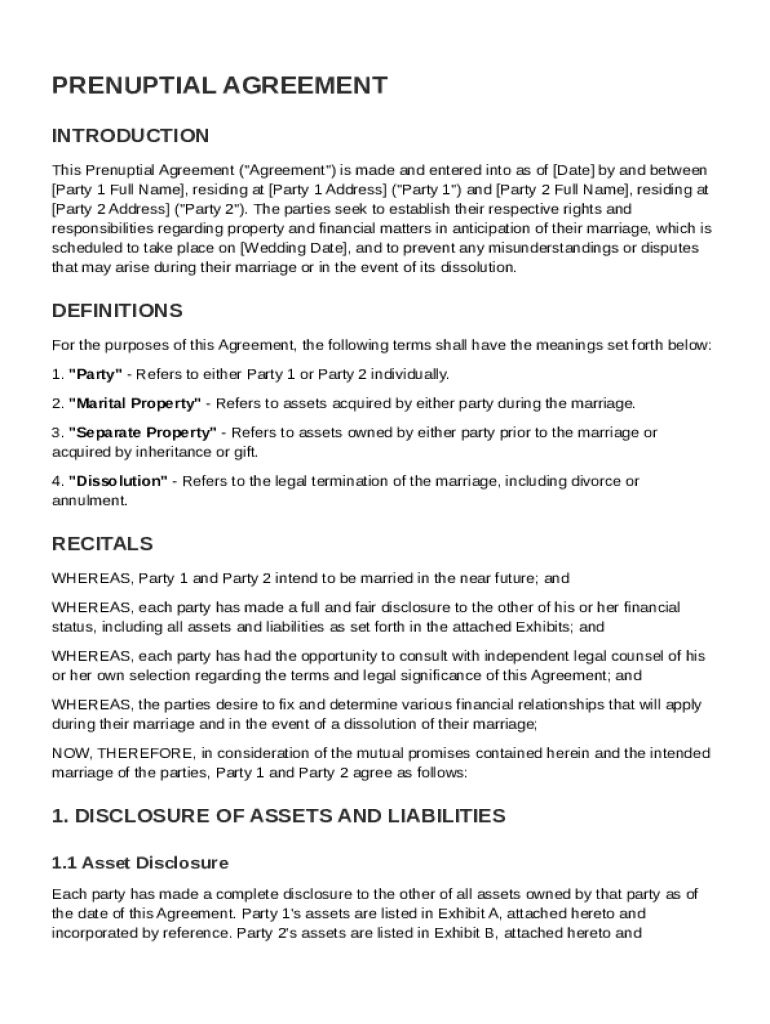
A prenuptial agreement, commonly called a prenup, is a legally binding document crafted between two parties intending to marry. It outlines their rights and responsibilities concerning property and financial matters in anticipation of their marriage. Prenups define key terms such as marital and separate property, address asset and liability disclosures, establish management rights over individual assets, and may include provisions for waiving spousal support. These agreements aim to mitigate conflicts or misunderstandings during the marriage or if it is dissolved.
Important Terms Related to Prenuptial Agreements
Understanding specific terms is crucial when dealing with prenuptial agreements:
- Marital Property: Assets acquired during the marriage that are subject to division upon divorce.
- Separate Property: Assets owned by either party before marriage or acquired as a gift or inheritance, typically not subject to division.
- Asset and Liability Disclosure: A detailed list of each party's property and debts, ensuring transparency pre-marriage.
- Spousal Support Waiver: A clause where one or both parties agree to limit or waive support payments in case of a divorce.
How to Use the Prenuptial Agreement Template
To effectively utilize a prenuptial agreement template, follow these steps:
- Fill in Personal Information: Include both parties' names, addresses, and other identifying details.
- List Property and Assets: Detail all current assets and liabilities, specifying what should remain separate.
- Determine Property Division: Decide on how marital property will be divided and managed.
- Include Support Terms: Address any spousal support arrangements or waivers.
- Finalize Terms: Review the agreement’s provisions on amendment, revocation, and applicable governing laws.
- Legal Review: It’s advisable to consult a legal expert to ensure legality and comprehensiveness.
Steps to Complete the Prenuptial Agreement Template
Completing the template involves several detailed processes to ensure its effectiveness:
- Negotiation and Agreement: Both parties should understand and agree on the document’s terms.
- Drafting: Use the template to structure the agreement, filling in specifics for clarity and precision.
- Review: Carefully review for accuracy, correcting any errors or omissions.
- Legal Consultation: Engage a lawyer to assess the legal soundness and ensure compliance with state laws.
- Signatures: Once finalized, both parties must sign the document in the presence of witnesses and, potentially, a notary public.
Key Elements of the Prenuptial Agreement Template
A comprehensive prenuptial agreement includes several key components:
- Purpose Statement: Outlining the primary intent of the agreement.
- Definitions: Clear explanations of terms used within the document.
- Property Ownership: Detailed sections specifying ownership and management of property.
- Financial Responsibilities: Stipulations on how financial obligations will be handled.
- Settlement of Disputes: Methods to resolve disagreements that may arise.
Legal Use of the Prenuptial Agreement Template
Prenuptial agreements serve a legal purpose by providing a clear framework for how financial and property matters will be handled in a marriage. They are utilized to:
- Prevent misunderstandings or disputes between spouses.
- Protect individual assets or businesses from claims in the event of a divorce.
- Define the financial expectations and responsibilities within the marriage.
- Offer a predetermined structure for property division, reducing legal costs and time in contested divorces.
State-Specific Rules for Prenuptial Agreements
Prenuptial agreements must conform to state laws to be enforceable. Rules can vary significantly:
- Community Property States: Generally divide marital property equally, affecting how prenups are structured.
- Equitable Distribution States: Divide marital assets based on fairness, not equally, leading to unique considerations.
- Execution Requirements: Some states necessitate notarization or witnessing for the agreement's validity.
- Timing: Certain jurisdictions may require the agreement to be executed well before the marriage ceremony.
Examples of Using the Prenuptial Agreement Template
Prenuptial agreements can be applied in various scenarios:
- Protecting Inheritances: Ensuring inheritances remain separate from marital property.
- Business Owners: Safeguarding a business from being divided in a divorce.
- Debt Protection: Shielding a spouse from the other’s pre-existing debts.
- Estate Planning: Aligning the prenup with estate plans to manage asset distribution effectively.
These provisions make prenups an essential tool for financial planning and protection in marriage.