01. Edit your gv79 annex d online
Type text, add images, blackout confidential details, add comments, highlights and more.

Type text, add images, blackout confidential details, add comments, highlights and more.

Draw your signature, type it, upload its image, or use your mobile device as a signature pad.

Send gv79 maintenance contract via email, link, or fax. You can also download it, export it or print it out.
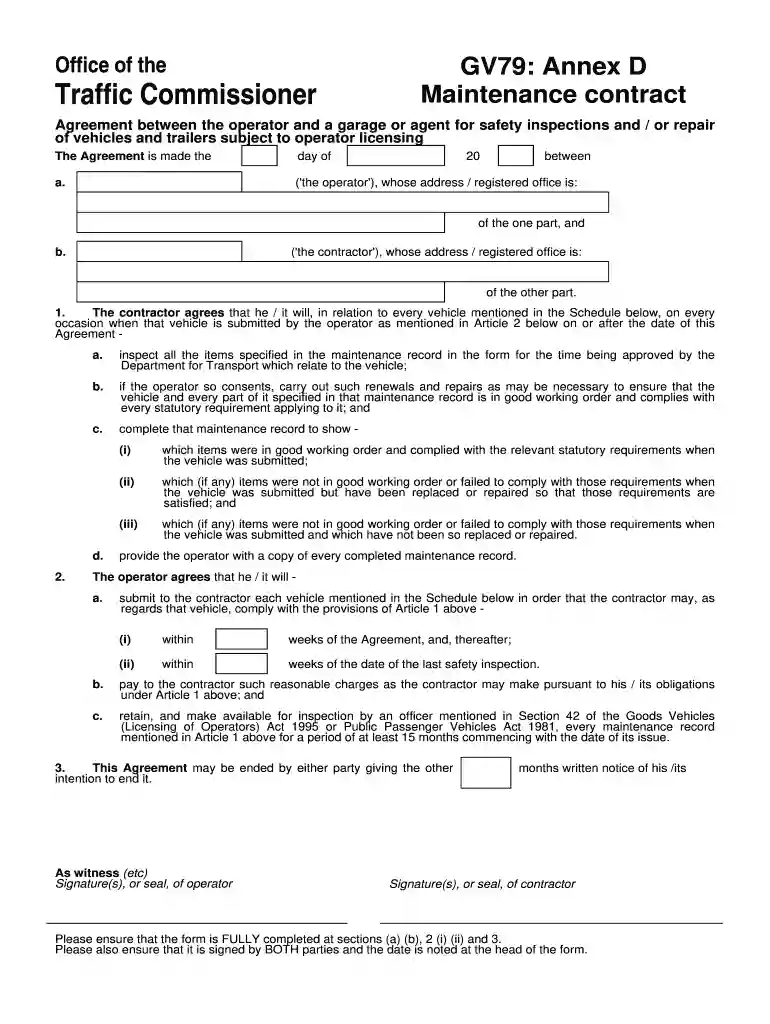
The gv79 Annex D is a crucial document in the realm of vehicle maintenance management, particularly for operators responsible for maintaining and repairing Heavy Goods Vehicles (HGVs). This form, which functions as a maintenance contract, defines the expectations and responsibilities between operators and contractors regarding fleet safety inspections and repairs. It serves legally binding purposes, ensuring compliance with regulatory requirements set by governing bodies such as the Driver and Vehicle Standards Agency (DVSA) in the United Kingdom.
In essence, the gv79 Annex D outlines the framework for maintenance agreements, providing clarity on what constitutes acceptable standards of practice in vehicle upkeep. The agreement specifies the types of maintenance checks required, the schedule for inspections, and the process for logging maintenance activities, contributing to improved vehicle safety and reliability. Compliance with such documentation is not only fundamental for legal operations but also promotes road safety and operational efficiency.
Acquiring the gv79 Annex D is a straightforward process that generally involves directly accessing the relevant regulatory body’s website or office. Typically, the form can be obtained through the following methods:
Online Download: The most common method is through the DVSA website or other official transport authority websites where forms are available for download. A simple search for "gv79 Annex D" will lead you to the correct resources.
Request by Mail: Some operators may prefer physical copies. In this case, submitting a written request to the DVSA via mail can yield results, though this method may take longer.
In-Person Requests: Visiting local DVSA offices allows operators to request and receive the necessary forms directly from officials who can provide additional guidance on completion and legal use.
Regardless of the method selected, ensuring you have the latest version of the form is critical for compliance and effective implementation.
Completing the gv79 Annex D requires careful attention to detail and adherence to specific guidelines. Here are the essential steps:
Review Requirements: Begin by reviewing the necessary requirements for vehicle maintenance as outlined by the DVSA. This ensures you understand what is expected.
Fill in Operator Information:
Outline Contractor Responsibilities:
Detail Maintenance Schedule:
Log and Documentation Procedures:
Review and Sign:
Maintain Copies:
Following these steps ensures a thorough and legally compliant completion of the gv79 Annex D.
Understanding key terms associated with the gv79 Annex D is essential for navigating the landscape of vehicle maintenance contracts effectively. Here are some of the most significant terms:
Maintenance Agreement: A legally binding contract detailing the obligations and expectations of the operator and maintenance contractor regarding vehicle upkeep.
Inspections: Regular checks performed to assess the condition of vehicles, which can include safety checks, compliance checks, and routine maintenance assessments.
Compliance: Adhering to regulations set forth by the DVSA or other relevant authorities to ensure that all maintenance practices meet established standards.
Record Keeping: The process of documenting maintenance activities, which is vital for accountability and legal compliance. This includes logs of inspections, repairs, and any changes made to vehicles.
Safety Standards: Specific guidelines and regulations that must be followed to ensure that vehicles are safe for operation on public roads.
Familiarity with these terms allows operators and contractors to communicate effectively and maintain adherence to the necessary legal frameworks.
The gv79 Annex D is predominantly utilized by a wide range of stakeholders in the transportation and logistics sectors, which include:
HGV Operators: Companies or individuals responsible for the management and operation of heavy goods vehicles who require a structured approach to maintenance.
Maintenance Contractors: Organizations or individuals hired to perform inspections and maintenance on HGVs, ensuring compliance with safety and legal standards.
Fleet Managers: Professionals overseeing the maintenance and operation of vehicle fleets, requiring a streamlined process for record keeping.
Regulatory Authorities: Agencies such as the DVSA that monitor compliance with vehicle maintenance requirements, using forms like the gv79 Annex D to assess and support operator practices.
Understanding the roles of these stakeholders clarifies who the gv79 Annex D is designed for and how it fits into the broader context of vehicle maintenance management.


At DocHub, your data security is our priority. We follow HIPAA, SOC2, GDPR, and other standards, so you can work on your documents with confidence.