Type text, add images, blackout confidential details, add comments, highlights and more.
02. Sign it in a few clicks
Draw your signature, type it, upload its image, or use your mobile device as a signature pad.
03. Share your form with others
Send complaint of unlawful detainer via email, link, or fax. You can also download it, export it or print it out.
How to use or fill out UD-100 Complaint Unlawful Detainer with DocHub
Ease of Setup
DocHub User Ratings on G2
Ease of Use
DocHub User Ratings on G2
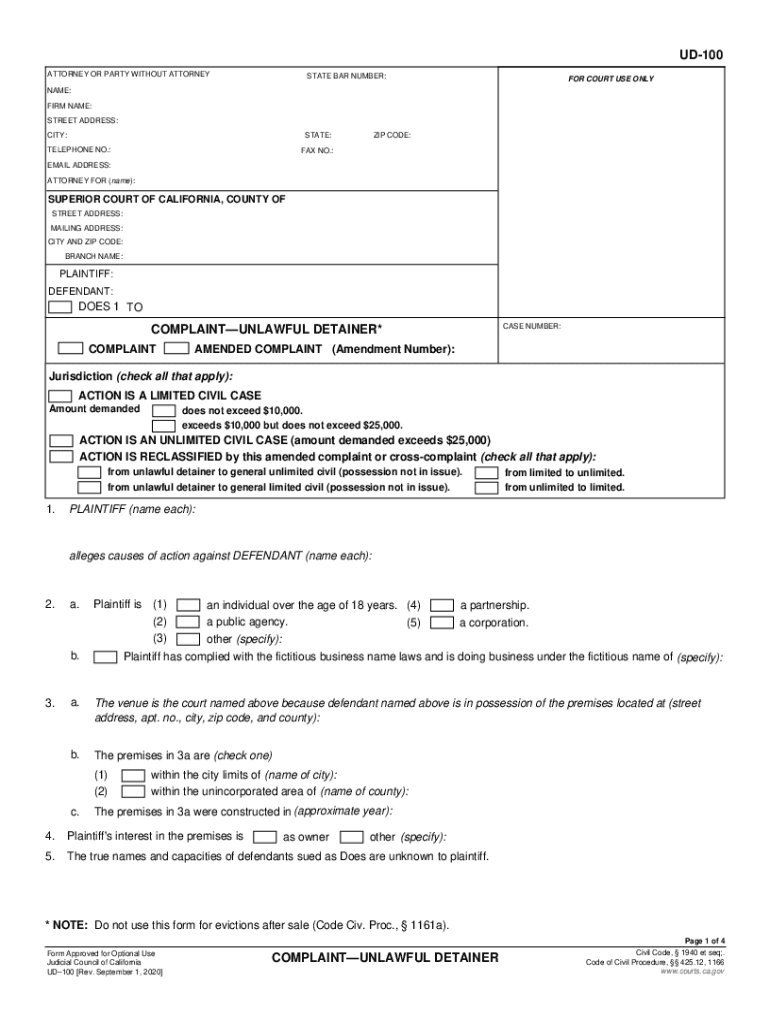
Click ‘Get Form’ to open the UD-100 Complaint Unlawful Detainer in our editor.
Begin by filling in your details as the plaintiff, including your name, address, and contact information. Ensure accuracy for effective communication.
In the jurisdiction section, check the appropriate boxes based on the amount demanded and whether it is a limited or unlimited civil case.
Provide detailed information about the defendant(s), including their names and any relevant agreements regarding rent. Attach necessary documents as exhibits if applicable.
Complete sections regarding notices served to defendants, ensuring you specify dates and methods of service accurately.
Finally, review all entries for completeness and correctness before signing. Use our platform’s tools to save or print your completed form.
Start using our platform today to fill out your UD-100 form easily and for free!
Fill out UD-100 Complaint Unlawful Detainer online It's free
See more UD-100 Complaint Unlawful Detainer versions
We've got more versions of the UD-100 Complaint Unlawful Detainer form. Select the right UD-100 Complaint Unlawful Detainer version from the list and start editing it straight away!
How do you remove an eviction from your record in California?
File a Petition: File a petition to be erased by the appropriate court. This may be the same court that handled your original eviction case. You may need to pay a filing fee and provide copies of your petition to the other parties in the case, such as your former landlord.
How long does an unlawful detainer stay on your record in California?
Your landlord can start an eviction case. If you lose in court: A sheriff can make you leave your home. The eviction can stay on your record for 7 years.
What is the statute of limitations on unlawful detainers in California?
In California, tenants must file wrongful eviction claims within specific statutory periods. For most wrongful eviction cases, the statute of limitations is two years from the date of the unlawful eviction. However, if the claim is based on a written contract (lease agreement), the statute extends to four years.
What happens after an unlawful detainer in California?
The judge will sign a Judgment of Possession. It means you have the legal right to take back your home. The judge may also order your tenant to pay you money, like past due rent, damages, penalties, or court costs.
What is the UD 105 answer to unlawful detainer?
The UD-105 Answer to Unlawful Detainer form is used by tenants in California to formally respond to an eviction lawsuit filed by their landlord, providing specific denials, defenses, or objections to the claims made in the complaint.
complaint unlawful detainer
UD-100 formUD-100 sampleUD-100 instructionsUD-105 Answer Unlawful detainerHow to fill out Unlawful Detainer formsUD-101Form UD-101Summons Unlawful Detainer
Security and compliance
At DocHub, your data security is our priority. We follow HIPAA, SOC2, GDPR, and other standards, so you can work on your documents with confidence.
How much does an unlawful detainer cost in California?
Base Filing Fee Components Courts across Southern California counties structure their unlawful detainer filing fees based on several key factors: Initial filing fees range from $240 to $450 depending on the jurisdiction and case complexity. Additional fees may apply for motion filings, jury demands, or case management.
What is the unlawful detainer process in Arkansas?
The unlawful detainer process begins when the landlord gives the tenant a written eviction notice stating that the lease has been terminated. For non-payment of rent, this notice must give the tenant at least three days to vacate. For all other lease violations, the notice period should be at least 14 days.
How long does it take for an eviction to fall off your record in California?
In California, an eviction can remain on your public record for seven years. This includes court filings and judgments, which can docHub tenant screening companies and landlords.
form ud100
UD-100 ComplaintUnlawful Detainer - California Courts
Plaintiff must complete items 11ad and, if later seeking a default judgment, will also need to file Verification by. Landlord Regarding Rental AssistanceRead more
Cookie consent notice
This site uses cookies to enhance site navigation and personalize your experience.
By using this site you agree to our use of cookies as described in our Privacy Notice.
You can modify your selections by visiting our Cookie and Advertising Notice.