
Farming Balance Sheet Templates - Page 2
Get all the right resources when organizing Farming Balance Sheet Templates and enhance your efficiency. Adjust and handle your financial documents online with a free DocHub account.

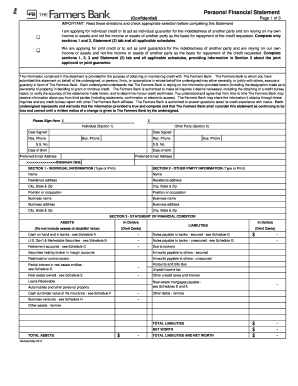

- 1
-
2
Get and manage Farming Balance Sheet Templates online
Boost your form operations using our Farming Balance Sheet Templates library with ready-made form templates that meet your needs. Get your document template, modify it, complete it, and share it with your contributors without breaking a sweat. Begin working more efficiently with the documents.
The best way to use our Farming Balance Sheet Templates:
- Open our Farming Balance Sheet Templates and search for the form you want.
- Preview your form to ensure it’s what you want, and click on Get Form to begin working on it.
- Edit, add new text, or highlight important information with DocHub features.
- Complete your form and preserve the modifications.
- Download or share your form template with other recipients.
Discover all the possibilities for your online file administration with the Farming Balance Sheet Templates. Get a totally free DocHub profile right now!
Video Guide on Farming Balance Sheet Templates management

Commonly Asked Questions about Farming Balance Sheet Templates
Are growing crops a current asset?
Current assets are considered liquidthose that are cash or can be turned into cash promptly, including checking and savings accounts or mutual funds, stored production (such as grain in the bin), market livestock and growing crops, feed on hand, paid-for but not yet used inputs or other supplies, and accounts
How to fill out a farm balance sheet?
The balance sheet is divided into two columns: assets on the left side and liabilities on the right side. The net worth will appear on the bottom-right side. The value of the assets will balance or equal the sum of the liabilities and net worth (owners equity).
What are the current assets of a farm?
Common examples of current assets include bank accounts, prepaid expenses, crop inventories in the bins, market livestock, and accounts receivable.
Is farm equipment a current asset?
Non-current Assets: Non-current assets are assets that are not meant for sale or consumption but contribute to the farming operations productivity. It includes land, buildings, breeding livestock, machinery, and equipment.
What are the steps to prepare a balance sheet?
Follow these steps: Step 1: Finalize the Balance Sheet date. Step 2: List all of your assets. Step 3: Sum Up All The Assets. Step 4: Ensure current liabilities. Step 5: Calculate long-term liabilities. Step 6: Add up liabilities. Step 7: Calculate the owners equity. Step 8: Combine Liabilities Owners Equity.
What are the assets of agriculture?
Agricultural assets means machinery, equipment, facili- ties, land or livestock used in agriculture or aquaculture. Agricultural assets means machinery, equipment, facilities, or livestock that is used in farming.
What is the balance sheet of agriculture?
An agricultural balance sheet is the leading indicator lenders review to assess your debt ratiototal liabilities divided by total assets. These agricultural balance sheet ratios are an important piece of ensuring the borrower isnt overleveraged and protect them against being put in a difficult financial situation.
What are current assets examples?
Current assets include cash, cash equivalents, accounts receivable, stock inventory, marketable securities, pre-paid liabilities, and other liquid assets. The Current Assets account is important because it demonstrates a companys short-term liquidity and ability to pay its short-term obligations.
How do I make my own balance sheet?
How To Create A Personal Finance Balance Sheet Gather Financial Documents. Getting all your financial documents ensures you have accurate information. Make Or Use A Free Personal Financial Statement Template. List Your Assets. List Your Liabilities. Categorize The Information And Add Up The Values. Determine Your Net Worth.
What are the current liabilities of a farm?
The most recognized current liabilities are operating notes, upcoming bills and other accounts payable, and credit card balances. Do not forget to consider other current liabilities like accrued interest on debts, and the current principal due on intermediate and long-term notes.
Related Templates

New patient questionnaire
The document is a comprehensive new patient questionnaire designed to gather detailed medical, social, and lifestyle inf ...

Uw medicine order form
The document is a Radiology Order Form for UW Medicine, providing essential contact information, scheduling details, and ...
Charitable Giving Form - Johns Hopkins Medicine
The document is a charitable giving form for the Johns Hopkins Division of Gastroenterology & Hepatology, detailing opti ...
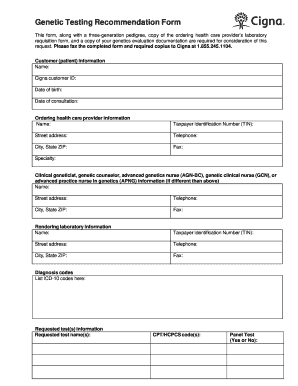
Genetic form
The document is a Genetic Testing Recommendation Form required for submitting requests for genetic testing to Cigna. It ...

Kidney Clinical Research & Epidemiology - NIDDK - NIH
The document outlines the application process for postdoctoral candidates applying to the UCLA Translational Research Tr ...

A Brief Hearing Loss Screener - UnitedHealthcareOnlinecom
The document discusses the prevalence of hearing loss in older adults, highlighting that it affects a significant percen ...

Health net prior authorization medical form
The document is a Pharmacy Prior Authorization Form designed to request approval for medication based on medical necessi ...
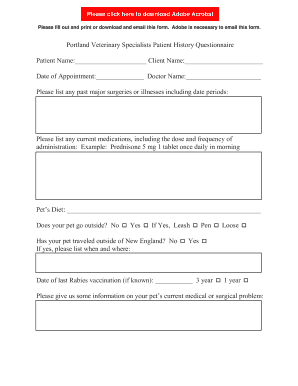
Veterinary patient history questionnaire
The document is a patient history questionnaire for Portland Veterinary Specialists, designed for pet owners to provide ...