



01. Edit your georgia interlock waiver form online
Type text, add images, blackout confidential details, add comments, highlights and more.

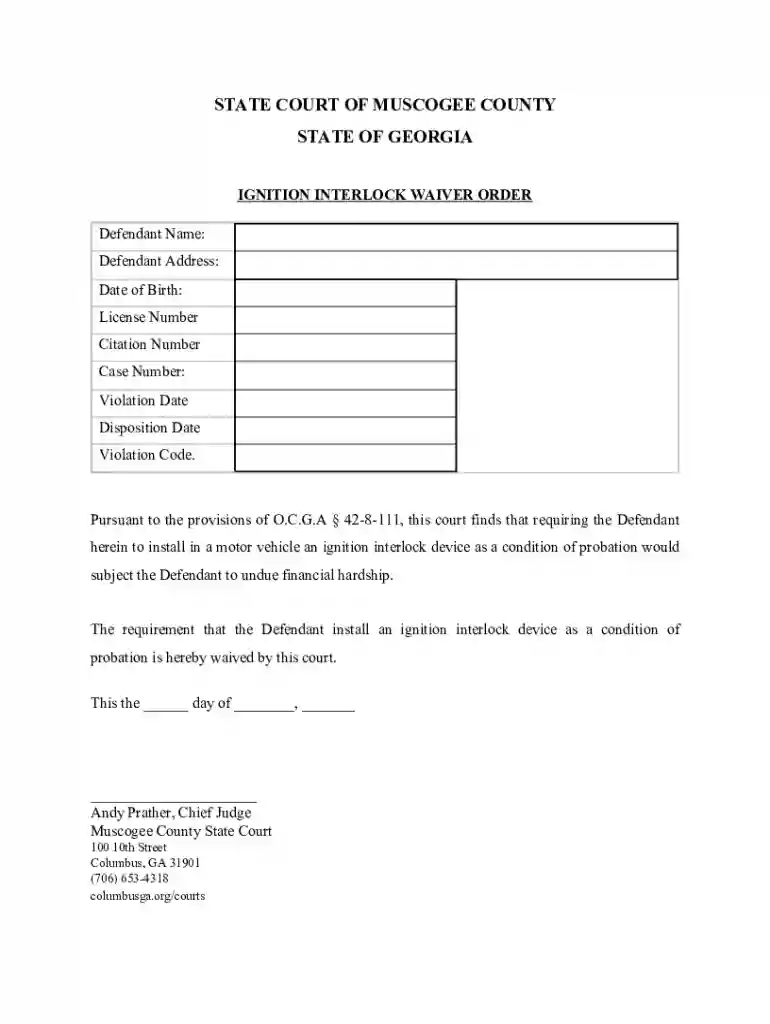
Type text, add images, blackout confidential details, add comments, highlights and more.

Draw your signature, type it, upload its image, or use your mobile device as a signature pad.

Send interlock waiver form ga via email, link, or fax. You can also download it, export it or print it out.
The ignition waiver hardship refers to a legal provision that allows individuals facing financial challenges to apply for a waiver of the ignition interlock requirement, particularly after second DUI convictions. This application can serve as a vital resource for those who struggle with the financial burden of installing an ignition interlock device, making it critical to understand the nuances involved in the process.
An ignition interlock device is required for certain individuals as a condition of regaining driving privileges after DUI offenses. The ignition waiver hardship helps eligible individuals to bypass this requirement based on financial need. This waiver is commonly utilized in various states, including Georgia and Tennessee, to provide relief for individuals demonstrating that the interlock device would cause undue financial strain.
To successfully apply for an ignition waiver hardship, understanding the eligibility criteria is crucial. States may have slightly differing requirements, but common guidelines include:

Completing the ignition waiver hardship application requires careful attention to detail and organization. Here’s a general outline of the process:
The costs associated with installing and maintaining an ignition interlock device can be considerable. In states like Georgia, those costs include:
Providing evidence that these expenses cause financial hardship is essential for a successful form submission.
Understanding the legal implications of the ignition waiver hardship, including how laws vary between states, is essential for applicants. In Georgia, the OCGA 42-8-111 statute outlines the conditions under which a waiver may be granted, focusing on the criteria defined by the courts and the intended financial relief for eligible individuals.
Following the law is crucial, as any inaccuracies or omissions in the application can lead to outright denial or delays in processing.
Various situations illustrate the necessity and effectiveness of seeking an ignition waiver hardship. For instance:
Each case will have unique circumstances, but emphasizing financial hardship and the inability to meet additional costs will be paramount for approval.
The ignition waiver hardship process is fundamentally about balancing public safety with individual financial realities. It provides a pathway for those genuinely in need to regain their driving privileges without undue financial burden, underlining the importance of understanding both eligibility criteria and application nuances. This knowledge ultimately supports individuals in navigating the complexities of DUI-related requirements.
At DocHub, your data security is our priority. We follow HIPAA, SOC2, GDPR, and other standards, so you can work on your documents with confidence.
20-179.5(f) Review of Denial An applicant denied a waiver of ignition interlock system costs may seek review by the. Division of Motor Vehicles of theRead more
Cited by 231 Waiver was one of six waiver options that allowed for alternative remedial ignition. The heat released then serves to heat NAPL farther away, and the.Read more
Jun 8, 2022 #4. Ignition interlock vendors must waive a portion of ignition interlock costs for persons who are unable to afford the cost of the system.Read more


