







Definition & Meaning of Patient's Global Impression of Change (PGIC)
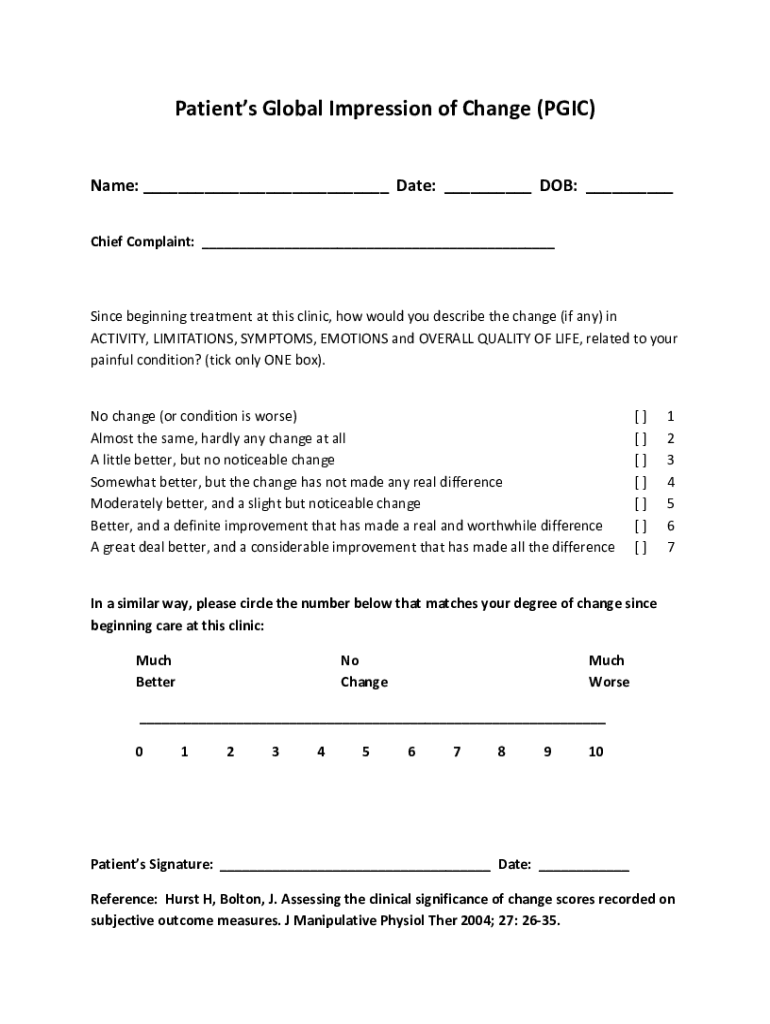
The Patient's Global Impression of Change (PGIC) is a standardized tool used in healthcare settings to assess a patient’s perceived changes in their health status over a specified period, typically since commencing treatment. It captures subjective feedback from patients, allowing healthcare professionals to evaluate the effectiveness of interventions related to pain management, rehabilitation, or any medical treatment. The PGIC focuses on various dimensions such as symptom intensity, activity limitations, emotional well-being, and overall quality of life.
The PGIC is typically presented as a questionnaire that includes several scaled options, where patients indicate the degree of change they perceive. This could range from "very much improved" to "very much worse." By utilizing this scale, healthcare providers can gain insights into treatment benefits or drawbacks from the patient's perspective, which is invaluable for tailoring future medical decisions and improving care outcomes.
Elements of the PGIC Scale
- Rating Options: The scale often includes descriptors like "no change," "a little better," or "much worse." This range allows patients to express a nuanced understanding of their health.
- Patient-Centric Focus: The PGIC prioritizes the patient's viewpoint, emphasizing the importance of subjective data in the overall assessment of treatment success.
- Simple Administration: The questionnaire can often be completed quickly, making it easy for both patients and healthcare personnel to implement in clinical settings.
How to Use the Patient's Global Impression of Change (PGIC)
Using the Patient's Global Impression of Change involves several straightforward steps, ensuring that both patients and healthcare professionals can effectively engage with the process. This tool can be a crucial part of routine evaluations to gauge treatment effectiveness and patient satisfaction.
Steps to Administer the PGIC
-
Interview Preparation:
- Ensure the environment is comfortable and private for the patient.
- Explain the purpose of the PGIC to the patient, emphasizing its role in guiding their treatment.
-
Distributing the Questionnaire:
- Provide the PGIC questionnaire to the patient, either in paper format or through a digital medium, such as an online form.
- Instruct patients to reflect on their health status compared to the beginning of their treatment.
-
Collecting Responses:
- After the patient completes the questionnaire, review their responses together.
- Encourage open communication, where the patient can elaborate on their selected responses, providing context to their ratings.
-
Analyzing Results:
- Review the collected data with the healthcare team to determine trends and insights.
- Utilize the PGIC findings to inform treatment modifications or continued strategies as appropriate.
-
Follow-up:
- Schedule regular intervals to repeat the PGIC, helping to track changes over time and adjust care based on ongoing patient feedback.
Important Terminology Related to PGIC
Understanding key terms associated with the Patient's Global Impression of Change is essential for effective communication and implementation in clinical settings. Here are several critical terms that are frequently used:
- Treatment Efficacy: This refers to the effectiveness of a medical intervention in achieving desired health outcomes, as perceived by the patient.
- Subjective Assessment: This term highlights evaluations based on personal feelings, perceptions, and perspectives rather than solely objective clinical indicators.
- Quality of Life: Often discussed in the context of health, it encompasses an individual’s general well-being, including emotional, social, and physical aspects impacted by health conditions.
Significance of Terminology in PGIC
Proper understanding of these terms allows healthcare providers to better interpret PGIC results and communicate effectively with patients. Each term plays a critical role in assessing not just the quantitative aspects of treatment but also the qualitative dimensions that reflect the patient's overall experience.
Who Uses the Patient's Global Impression of Change (PGIC)?
The PGIC is utilized by a variety of stakeholders in the healthcare industry, reflecting its versatility and importance in capturing patient feedback effectively. Here are the primary users:
- Healthcare Providers: Physicians, nurses, and physical therapists use the PGIC to assess treatment effectiveness and make informed decisions about care plans.
- Researchers: In clinical trials and studies, researchers employ the PGIC as a metric to measure outcomes and patient satisfaction associated with specific interventions.
- Patients: As the primary respondents, patients complete the PGIC to convey their perceptions of change, thereby directly influencing their treatment journey.
Beneficiaries of PGIC Implementation
The integration of PGIC into practice benefits numerous aspects of the healthcare process:
- Enhanced Communication: It fosters open dialogue between patients and providers, ensuring that treatment aligns with patient needs.
- Improved Outcomes: By closely monitoring patient feedback, healthcare professionals can implement necessary adjustments to treatment plans, significantly enhancing recovery trajectories.
Key Elements of the Patient's Global Impression of Change (PGIC)
Several core components constitute the Patient's Global Impression of Change, ensuring a comprehensive evaluation of patient-centered outcomes. These elements emphasize the tool's structural integrity and effectiveness.
Core Components
- Rating Scale: The PGIC utilizes a clearly defined scale that patients can easily understand and respond to.
- Clarity: Each question is crafted to minimize confusion, allowing patients to quickly communicate their experiences without ambiguity.
- Holistic Perspective: The PGIC is designed to ask about various aspects of a patient's health, providing a well-rounded view of their state.
Importance of Each Element
Emphasizing these key aspects facilitates more accurate and meaningful assessments of patient sentiment. The clarity and comprehensiveness of the PGIC allow healthcare providers to capture a detailed picture of patient experiences, which is essential for effective treatment planning.




