



01. Edit your wrap plan template word document online
Type text, add images, blackout confidential details, add comments, highlights and more.

Type text, add images, blackout confidential details, add comments, highlights and more.
Draw your signature, type it, upload its image, or use your mobile device as a signature pad.
Send mini wrap plan pdf via email, link, or fax. You can also download it, export it or print it out.
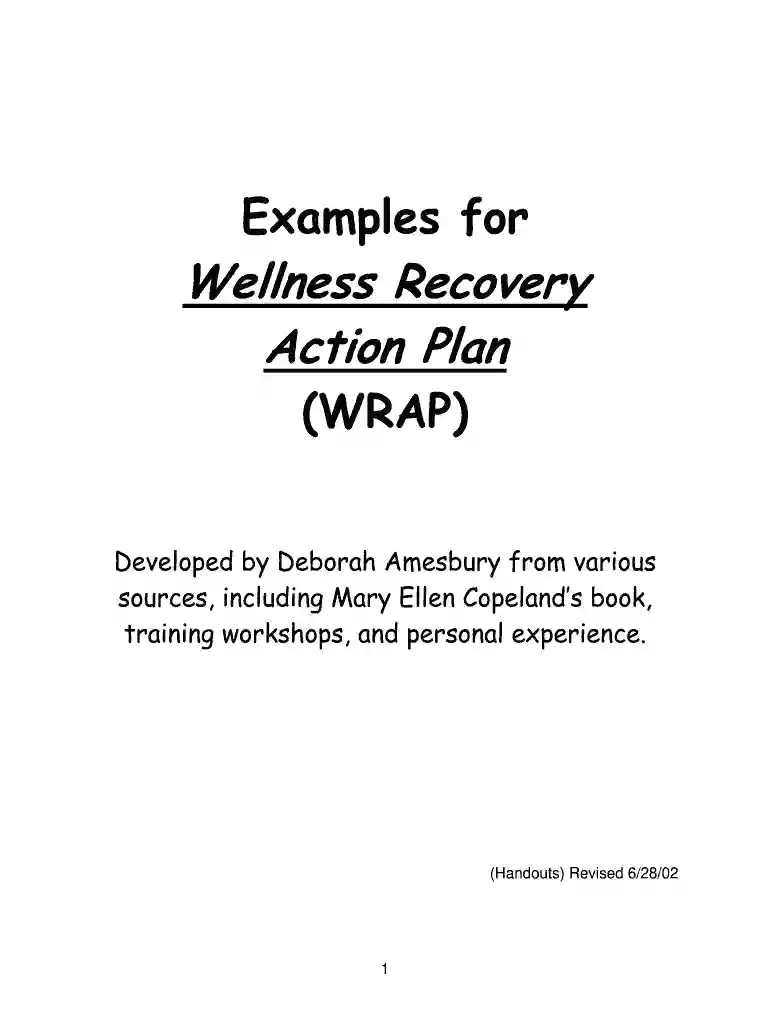
A Wellness Recovery Action Plan (WRAP) is a personalized action plan designed to help individuals maintain their mental health and well-being. Developed by individuals managing mental health challenges, WRAP emphasizes proactive self-care strategies, coping mechanisms, and support systems. This document serves as a foundational guide in recovery, promoting empowerment and personal responsibility for mental wellness.
A comprehensive WRAP plan typically includes several essential components:
Creating an effective WRAP plan involves a series of structured steps:
Practical examples of WRAP plans illustrate their application:
The implementation of a WRAP plan confers multiple advantages:
To assist in developing a WRAP, individuals can access various resources:
The Wellness Recovery Action Plan is a critical self-help tool designed to guide individuals through their mental health journey, promoting resilience and proactive management of their well-being.
We've got more versions of the wrap plan template word document form. Select the right wrap plan template word document version from the list and start editing it straight away!
| Versions | Form popularity | Fillable & printable |
|---|---|---|
| 2002 | 4.8 Satisfied (52 Votes) |
At DocHub, your data security is our priority. We follow HIPAA, SOC2, GDPR, and other standards, so you can work on your documents with confidence.
Wellness Recovery Action Plan (WRAP) is a manualized group intervention for adults with mental illness. WRAP guides participants through.Read more
The Wellness Recovery Action Plan is a framework with which you can develop an effective approach to manage distressing symptoms and gain insight into patternsRead more
Jun 30, 2020 Inputs, Thresholds Wrap-Up. Discussion. Stakeholder Workshop o Plan to address request for the potential to display in Heat Map pop-ups.Read more


