






Definition & Meaning
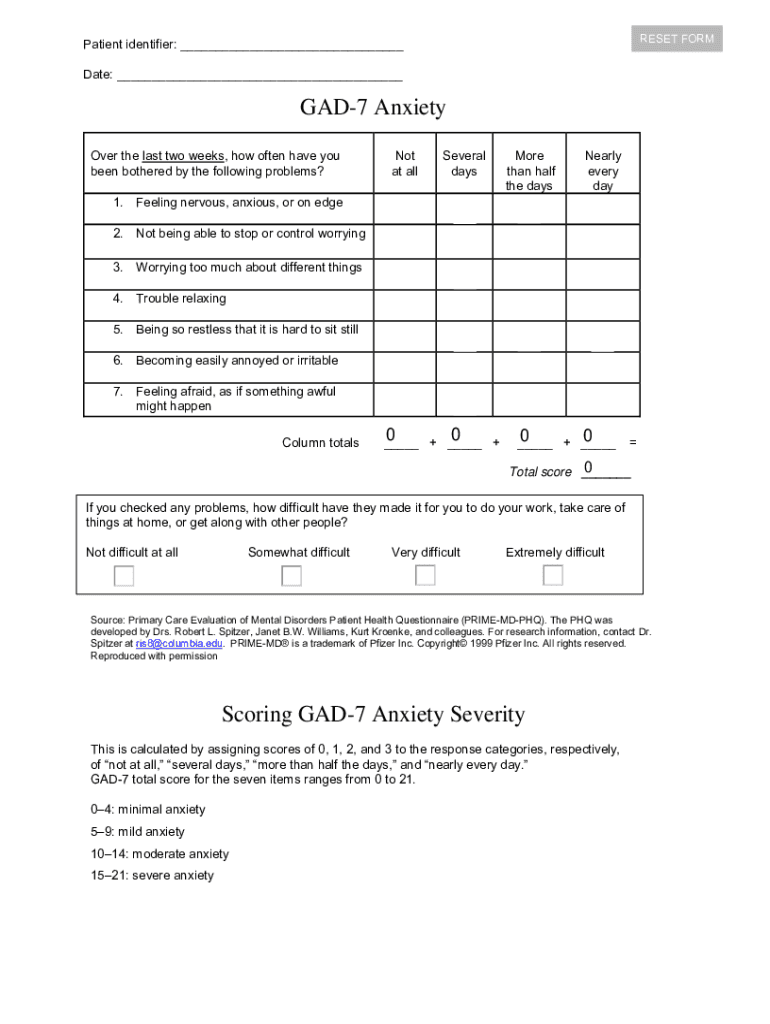
The GAD-7 Anxiety Form, often referred to simply as GAD-7, is a self-administered screening tool used to assess the severity of generalized anxiety disorder or GAD. It comprises seven questions that help in evaluating how often a person has been bothered by anxiety symptoms over the past two weeks. The form provides a quick and efficient way for healthcare providers to determine the level of anxiety symptoms and is frequently used in clinical practice as a first-line assessment tool.
How to Use the GAD-7 Anxiety Form
To use the GAD-7 Anxiety Form, an individual needs to respond to seven questions based on their experience over the last two weeks. Each question corresponds to a symptom of anxiety, such as feeling nervous, unable to stop worrying, or experiencing restlessness. Individuals rate each symptom on a scale of zero to three: zero for "not at all," one for "several days," two for "more than half the days," and three for "nearly every day." The scores are then totaled to assess the severity of the anxiety, with higher scores indicating more severe symptoms.
Examples of Use
- Clinical Setting: A physician may use the GAD-7 to quickly gauge the anxiety level of a patient during a routine health check-up.
- Therapy Sessions: Therapists can monitor progress in therapy by asking clients to complete the GAD-7 form at regular intervals.
How to Obtain the GAD-7 Anxiety Form
The GAD-7 Anxiety Form is widely accessible. It can be found online through various healthcare websites or directly from healthcare providers. In clinical settings, the form is often available as part of standard intake paperwork. It’s also incorporated into many electronic health record systems, allowing for easy distribution to patients.
Steps to Complete the GAD-7 Anxiety Form
- Gather Necessary Materials: Ensure you have the form either in digital or paper format.
- Understand Each Question: Carefully read each of the seven questions and reflect on your experiences over the past two weeks.
- Rate the Frequency: Use the 0-3 scale to rate how often you've been bothered by each symptom.
- Calculate the Total Score: Add up the scores for all seven questions to get a total score.
- Interpret the Results: Compare your total score against the established benchmarks to understand the severity of your anxiety.
- Discuss with a Professional: If using in a clinical context, review your results with a healthcare professional to determine next steps.
Key Elements of the GAD-7 Anxiety Form
- Symptom Items: Seven specific questions that align with the symptoms of generalized anxiety disorder.
- Scoring System: A numerical scale from zero to three allowing users to quantify symptom frequency.
- Total Score: A cumulative score that categorizes the severity of the anxiety into mild, moderate, or severe.
- Use in Diagnoses: Facilitates the preliminary diagnosis of generalized anxiety disorder when paired with clinical judgment.
Who Typically Uses the GAD-7 Anxiety Form
The GAD-7 is commonly used by a range of professionals in mental health and primary care settings. Psychiatrists, psychologists, and primary care physicians frequently incorporate this form into their assessment protocols to identify potential anxiety disorders. Additionally, clinical social workers, counselors, and therapists find the GAD-7 valuable for initial screenings and ongoing evaluation of anxiety.

Potential Users
- Healthcare Providers: Doctors and therapists for diagnostic screenings.
- Patients: Individuals taking a proactive approach to personal mental health.
- Researchers: Academics conducting studies on anxiety prevalence and treatment efficacy.
Important Terms Related to GAD-7 Anxiety Form
- Generalized Anxiety Disorder (GAD): A mental health disorder characterized by excessive, uncontrollable worry about various aspects of life.
- Self-Reporting: The process where individuals report their own experiences or symptoms.
- Score Interpretation: A method to categorize the severity of anxiety symptoms based on numerical scores.
Legal Use of the GAD-7 Anxiety Form
Within the United States, the GAD-7 form is a standardized tool used for clinical purposes and is compliant with healthcare guidelines. It adheres to professional standards set by leading mental health organizations, ensuring its legitimacy and reliability as a diagnostic aid. The scores can help inform treatment plans but are not used in isolation to diagnose anxiety disorders. Healthcare providers are advised to combine the GAD-7 with other diagnostic tools and clinical evaluations.