






Definition and Meaning
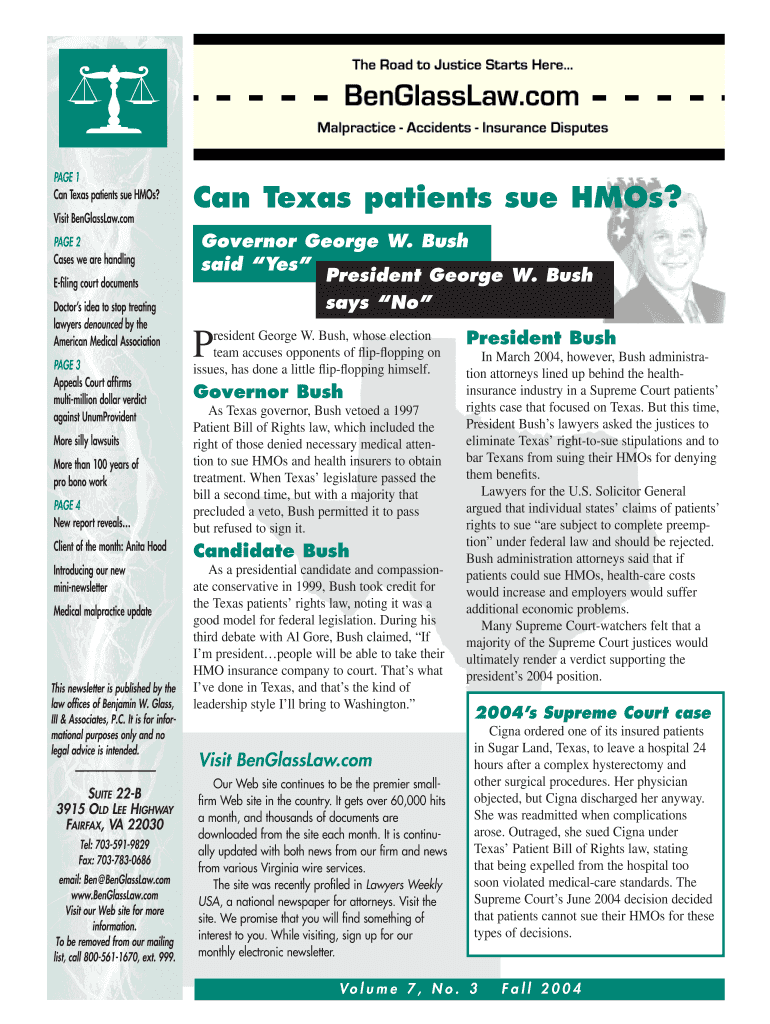
Exploring whether Texas patients can sue health maintenance organizations (HMOs) involves understanding the legal frameworks that govern these disputes. In Texas, HMOs are entities that provide managed care for health insurance, self-funded health care benefit plans, and similar arrangements. The question of whether Texas patients can sue HMOs revolves around the patient's rights and the obligations of these organizations, particularly in the context of providing necessary medical care and coverage decisions. Understanding Texas legislation and past legal precedents can clarify this matter for patients and legal professionals.
Key Elements of the Form
The form "Can Texas patients sue HMOs? - Virginia Personal Injury Lawyers" likely covers several key components essential for anyone exploring legal actions against HMOs. These include:
- Rights of Patients: Detailed information about patients' rights under Texas law when dealing with HMOs.
- Obligations of HMOs: Explanation of the duties and responsibilities HMOs have towards their patients.
- Legal Actions: Guidance on how patients can initiate and pursue legal action against HMOs.
- Case Examples: Insights into previous cases where Texas patients have successfully litigated against HMOs.
- Legal Representation: Information about available legal support for patients in Texas considering lawsuits against HMOs.
State-Specific Rules
Texas has unique regulations affecting the ability of patients to sue HMOs. Understanding these rules is crucial for any Texan contemplating such legal action. Key state-specific elements include:
- State Healthcare Regulations: Texas law dictates specific requirements HMOs must meet, which can impact the grounds for a lawsuit.
- Patient Protection Laws: These laws aim to safeguard patient rights and ensure fair treatment by HMOs.
- Tort Reform Impacts: The influence of tort reform on legal actions against HMOs, including potential limitations on lawsuits.
- Insurance Code: Provisions in the Texas Insurance Code relevant to HMOs and patient rights.
Legal Use of the Form
This form serves as a critical resource for patients and lawyers in Texas by providing:
- Guidance for Legal Proceedings: Offers a step-by-step approach to navigating legal battles with HMOs.
- Educational Resource: Educates patients about their rights and the legal landscape in Texas.
- Support for Legal Strategy: Assists lawyers in strategizing cases against HMOs based on state laws and precedents.
- Aid for Case Preparation: Provides necessary legal terminology and requirements to build a strong case.
Steps to Complete the Form
Completing this form involves several critical steps designed to facilitate the legal process:
- Gather Relevant Information: Collect all necessary documents related to the HMO's decisions and patient care experiences.
- Consult Legal Professionals: Engaging with a Virginia personal injury lawyer who understands the Texas legal context can ensure proper form completion.
- Understand the Legal Grounds: Determine the specific legal grounds for suing the HMO by reviewing Texas law and prior cases.
- Assess Available Evidence: Evaluate all evidence and documentation that support the case against the HMO.
- Submit the Form: Ensure that all information is accurate and submit the form through the appropriate legal channels.
Who Typically Uses This Form
This form is particularly useful for:
- Patients in Texas: Individuals who believe their rights have been violated by an HMO and are seeking legal recourse.
- Virginia Personal Injury Lawyers: Legal professionals looking to assist clients involved in disputes with Texas HMOs.
- Healthcare Advocates: Organizations and individuals advocating for patient rights and fair HMO practices in Texas.
- Legal Scholars: Researchers examining the intersection of patient rights, healthcare law, and HMO practices.
Important Terms Related to Suing HMOs
Understanding key legal terms is essential for patients and professionals using this form:
- Managed Care: A health care delivery system aimed at managing cost, utilization, and quality.
- Tort Reform: Laws designed to reduce litigation and damages awarded in tort litigation.
- Patient Rights: Legal rights afforded to patients, including the right to informed consent and the right to sue for malpractice.
- Breach of Contract: Failure by an HMO to fulfill the terms agreed upon in a contract with the patient.
- Negligence: A failure to exercise the care that a reasonably prudent person would exercise in similar circumstances.
Examples of Using the Form
Real-world scenarios offer insights into how this form can be practically applied:
- Successful Legal Outcomes: Descriptions of cases where Texas patients successfully used legal action to secure compensation from HMOs.
- Common Challenges: An exploration of typical obstacles faced in suing HMOs, such as limited evidence or conflicting legal interpretations.
- Strategic Approaches: Effective strategies employed by Virginia personal injury lawyers in building strong cases for their clients.
Why Patients Might Sue HMOs
Several factors might prompt Texas patients to consider suing an HMO:
- Denial of Coverage: Instances where necessary medical procedures or treatments are unjustly denied.
- Substandard Care: Situations where a patient's health deteriorated due to inadequate attention or action from the HMO.
- Breach of Agreement: When an HMO fails to uphold the terms outlined in their patient contract.
- Financial Damages: Cases involving significant medical expenses due to the HMO's failure to provide agreed-upon services.
The detailed understanding and application of this form help ensure that patient rights are adequately represented and protected within the Texas legal system.