






Definition and Purpose of Schedule A (Form 1040)
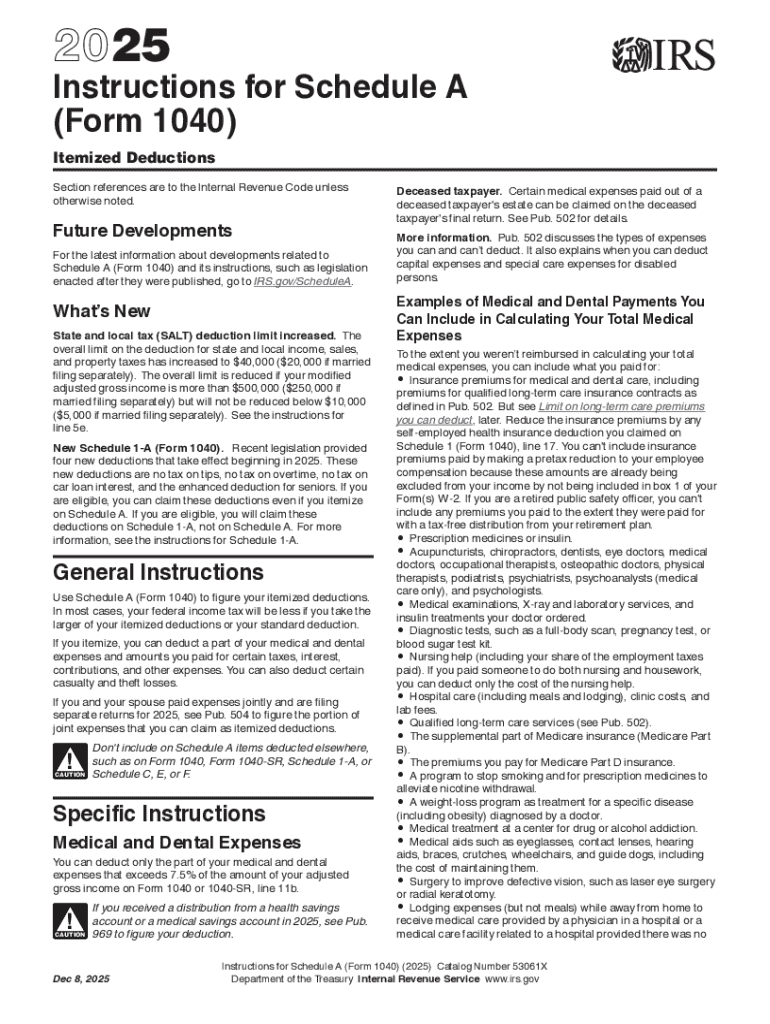
Schedule A (Form 1040) is a crucial component of the U.S. federal tax return that allows taxpayers to itemize their deductions. This form is used to report specific deductible expenses, which can reduce the amount of taxable income. It is particularly valuable for taxpayers whose deductible expenses exceed the standard deduction. By itemizing, individuals can deduct expenses such as medical costs, property taxes, mortgage interest, charitable contributions, and more, thus potentially lowering their overall tax liability.
Key Elements of Schedule A
Each section of Schedule A covers different categories of deductions, which must be meticulously documented:
- Medical and Dental Expenses: This includes payments for medical care, dental costs, and health insurance premiums that are not reimbursed by insurance or employer.
- Taxes Paid: Taxpayers can deduct state and local income taxes, real estate taxes, and personal property taxes.
- Interest You Paid: Interest on mortgage loans is deductible. Special rules apply depending on the use of the borrowed funds.
- Gifts to Charity: Describes the rules for deducting cash and non-cash contributions to qualifying organizations.
- Other Miscellaneous Deductions: Includes specific fees and expenses that don't easily fit into the other categories but are deductible under IRS guidelines.
Steps to Complete Schedule A
Completing Schedule A requires careful attention to detail. Here’s a step-by-step guide:
- Gather Documentation: Start by collecting all receipts and statements that pertain to potential deductions.
- Medical and Dental Expenses: Calculate total expenses and apply the 7.5% AGI threshold to determine the deductible portion.
- Taxes Paid: Record the amounts paid throughout the year in state and local taxes and any other applicable business taxes.
- Interest Deductions: Include all interest paid on home mortgages, ensuring proper substantiation.
- Charitable Contributions: Tabulate all charitable donations, ensuring documentation, especially for non-cash items exceeding $500.
- Miscellaneous Deductions: List any miscellaneous deductions and detail each.
IRS Guidelines and Requirements
The IRS provides specific guidelines on what qualifies as a deductible expense on Schedule A, ensuring compliance and avoiding penalties. It is essential for taxpayers to adhere strictly to the provided categories, maintain adequate records, and ensure that all claimed deductions meet IRS standards. Proper application of these guidelines can often require consulting the IRS publications or seeking help from a tax professional.
Important Filing Deadlines
Filing Schedule A is aligned with the taxpayer's filing of Form 1040. Typically, the deadline is April 15th of the year following the tax year unless extended due to weekends or holidays. For those seeking an extension, Form 4868 must be filed to extend the deadline typically to October 15th.
Digital Versus Paper Version
Schedule A can be filled out digitally using tax preparation software like TurboTax or manually on paper. Many taxpayers opt for digital submission for ease of use and quick calculations, with e-filing widely encouraged by the IRS due to faster processing times and less potential for error.
Penalties for Non-Compliance
Failure to properly submit Schedule A or any discrepancies found during an audit can result in penalties and the potential for interest on overdue taxes. This underscores the importance of accuracy and following IRS guidelines carefully in all reporting.
Examples of Using Schedule A
For practical scenarios, consider a self-employed individual with significant home office expenses or a retiree with substantial medical expenses. In these cases, itemizing deductions using Schedule A can significantly benefit their tax situations by maximizing allowable deductions.
Software Compatibility and Integration
Incorporating software like TurboTax and QuickBooks into the filing process for Schedule A can streamline itemization by importing financial data directly. These applications assist in calculations, help adhere to IRS statutes, and often offer guidance on maximization strategies to optimize tax refunds.
State-Specific Variations
While Schedule A follows federal guidelines, some states have unique provisions regarding how state taxes can interact with federal itemized deductions. Taxpayers should be aware of these differences to ensure compliance not only with federal statutes but also with specific state tax requirements.
By understanding the detailed nature of Schedule A (Form 1040) and utilizing appropriate tools and advice, taxpayers can effectively manage their deductions, ensuring they receive all benefits they are entitled to while remaining compliant with IRS requirements.