Definition & Meaning
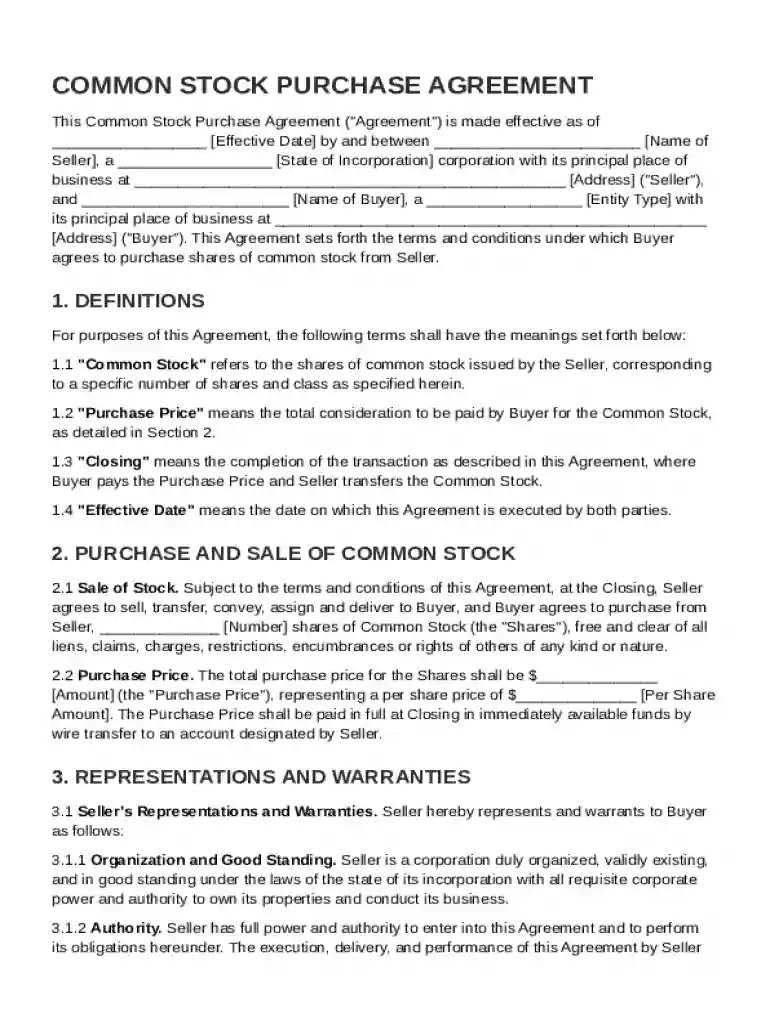
The Common Stock Purchase Agreement is a legal contract that sets forth the terms and conditions under which a buyer agrees to purchase shares of common stock from a seller. This document is pivotal in ensuring both parties understand their rights and obligations during the transaction. It typically includes elements such as share price, quantity, representations, and warranties. In essence, this agreement serves as a safeguard for both parties, outlining the framework for a straightforward and legally binding transaction.
Key Components of the Agreement
- Purchase Price: The agreed amount the buyer will pay per share.
- Number of Shares: Clearly specifies the quantity of stock being purchased.
- Representations and Warranties: Ensures that both parties have provided truthful information regarding their ability to conduct the transaction.
- Closing Conditions: Lists the conditions that must be met before the transaction is finalized.
Key Elements of the Common Stock Purchase Agreement Template
A Common Stock Purchase Agreement Template includes specific sections that detail the comprehensive process of stock transfer. Understanding each element is crucial for ensuring a smooth transaction.
Major Sections
- Introductory Clauses: Define parties involved, date, and purpose of the transaction.
- Transaction Details: Outlines the purchase price, closing date, and payment methods.
- Representations and Warranties: Statements of fact made by each party, crucial for legal and financial transparency.
- Covenants: Agreements on actions both parties must refrain from or commit to before closing.
Detailed Subsections
- Indemnification: Protects parties from legal liabilities post-transaction.
- Miscellaneous Provisions: Addresses governing law, dispute resolutions, and amendment procedures.
Steps to Complete the Common Stock Purchase Agreement Template
Completing a Common Stock Purchase Agreement Template involves a methodical approach to ensure all relevant details are accurately captured.
Step-by-Step Process
- Party Identification: Clearly list names, addresses, and identifying details of the buyer and seller.
- Detail Transaction Terms: Specify the amount of stock being bought and the purchase price.
- Representations and Warranties: Fill in the necessary disclosures from both parties.
- Outline Conditions for Closing: Include any required approvals, filings, or pre-closing covenants.
Review and Finalize
- Legal Review: Have the agreement reviewed by legal counsel to ensure compliance with applicable laws.
- Signing: Both parties must review and sign the document, indicating their agreement to the terms and conditions.
Scenarios
- Employee Stock Options: Used when employees exercise their stock options in a company.
- Mergers and Acquisitions: When one company acquires the stock of another as part of a merger or acquisition.
State-Specific Rules for the Common Stock Purchase Agreement Template
Stock purchase transactions must comply with differing state laws, which can affect the agreement.
Variations by State
- Securities Regulations: Some states have unique securities regulations that impact how stock sale transactions are conducted.
- Tax Implications: Varying state taxation laws may influence the structure of the transaction.
Adapting the Template
- Legal Counsel: It’s advisable to consult local legal experts to ensure compliance with state-specific regulations.
- Custom Clauses: Incorporate clauses addressing state-specific requirements into the template.
Legal Use of the Common Stock Purchase Agreement Template
Ensuring the legal standing of the Common Stock Purchase Agreement is crucial for protecting both parties involved.
Compliance and Legal Considerations
- Regulatory Compliance: Align with laws under the Securities Act and other regulatory bodies.
- Due Diligence: Both parties should conduct thorough investigations to confirm the accuracy of provided information.
Advantages
- Clarity and Protection: Provides a clear record of terms agreed upon, mitigating potential disputes in the future.
Penalties for Non-Compliance
Non-compliance with the stipulations set out in the Common Stock Purchase Agreement can lead to significant penalties.
Potential Consequences
- Legal Action: Breach of contract can result in lawsuits seeking damages or specific performance.
- Monetary Fines: Regulatory bodies may impose fines for failing to adhere to securities laws.
- Void Transactions: Non-compliance may result in the invalidation of the stock purchase.
Preventative Measures
- Regular Audits: Conduct regular legal audits to ensure ongoing adherence to terms and regulations.
- Detailed Tracking: Maintain detailed records of all correspondence and modifications to the agreement.