






Definition & Meaning
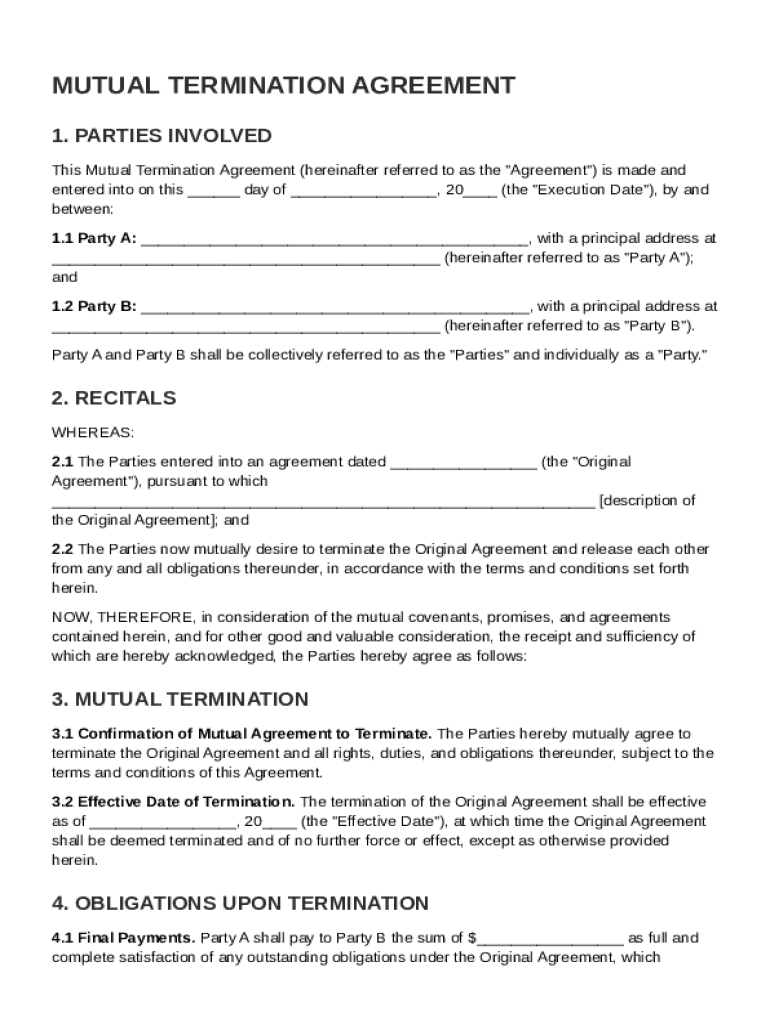
A Mutual Termination Agreement Template is a legal document used to formally conclude an existing contractual relationship between two parties, typically referred to as Party A and Party B. This agreement outlines the procedures and terms under which the contract is terminated, ensuring that both parties mutually consent to the dissolution. It encompasses various critical elements, such as the return of property, final payments, the waiver of future claims, and confidentiality clauses. By using this template, parties can avoid potential disputes and ambiguities regarding the termination.
Key Elements of the Mutual Termination Agreement Template
The Mutual Termination Agreement Template comprises several pivotal components that ensure a comprehensive and clear understanding between the involved parties:
- Identification of Parties: Clearly defines who Party A and Party B are, along with their respective roles in the initial contract.
- Termination Conditions: Specifies the conditions under which the agreement is terminated, including any actions or payments required before termination is finalized.
- Release of Claims: Includes a mutual release of claims, preventing either party from pursuing further legal action related to the terminated contract.
- Confidentiality Obligations: Outlines the obligations of both parties regarding the handling of sensitive information shared under the original agreement.
- Governing Law Provisions: Identifies the jurisdiction whose laws will govern the interpretation and enforcement of the agreement.
- Amendments Clause: Sets out the procedure for making amendments to the agreement, if necessary.
How to Use the Mutual Termination Agreement Template
To effectively utilize a Mutual Termination Agreement Template, it is important to follow these steps:
- Review the Original Contract: Begin by thoroughly reviewing the initial contract to understand the obligations and terms currently in place.
- Fill in Party Details: Input the names and details of both parties, ensuring accuracy and legal compliance.
- Specify Termination Terms: Clearly articulate the terms and conditions under which the agreement will end, such as the completion of final payments and the manner in which property is to be returned.
- Include Release Clauses: Incorporate clauses detailing the release of claims to prevent future legal disputes.
- Seek Legal Advice: Consider consulting a legal professional to review the completed document to ensure its enforceability and legal soundness.
Steps to Complete the Mutual Termination Agreement Template
Completing the Mutual Termination Agreement Template involves several key steps to ensure completeness and accuracy:
- Download the Template: Obtain the template from a trusted source, ensuring it is up-to-date and relevant to your state's regulations.
- Fill in the Identification Section: Accurately fill in the details of both parties involved in the agreement.
- Define Termination Details: Clearly state the reasons for termination, including any specific conditions that must be met.
- Detail Final Obligations: List any obligations both parties must fulfill, such as the payment of outstanding amounts or the return of borrowed property.
- Sign and Date the Document: Ensure both parties sign and date the agreement to make it legally binding.
Examples of Using the Mutual Termination Agreement Template
The Mutual Termination Agreement Template is applicable in various scenarios:
- Business Partnerships: When business partners decide to amicably dissolve their partnership agreement without pursuing litigation.
- Employment Contracts: Employers and employees may use this to settle employment contracts when concluding the employment relationship on mutual terms.
- Service Agreements: Parties involved in service contracts who wish to terminate their agreement by mutual consent.
- Real Estate Leases: Landlords and tenants agreeing to terminate a lease early, while outlining the terms of the termination.
Important Terms Related to Mutual Termination Agreement Template
Understanding the terminology associated with a Mutual Termination Agreement is critical:
- Obligations: Tasks or duties that each party must fulfill before the termination of the agreement.
- Confidentiality: The requirement to keep information shared under the original contract confidential even after termination.
- Governing Law: The legal framework under which the terms of the agreement are interpreted and enforced.
- Release of Claims: An agreement by both parties not to pursue further legal action related to the contract being terminated.
Legal Use of the Mutual Termination Agreement Template
The template serves multiple legal purposes:
- Risk Mitigation: Reduces the risk of future disputes by clearly documenting each party's duties and responsibilities upon termination.
- Formal Closure: Provides a formal conclusion to legal relationships, ensuring that all parties are in agreement with the terms of dissolution.
- Legal Protection: Offers protection by including clauses such as confidentiality and release of claims, which can prevent future litigation.
Who Typically Uses the Mutual Termination Agreement Template
This template is utilized by various individuals and organizations:
- Business Entities: Companies or businesses that wish to terminate contracts with partners, suppliers, or customers.
- HR Departments: Used by HR professionals to formalize the end of an employment relationship with minimal conflict.
- Legal Professionals: Attorneys who draft or review these agreements to ensure legal compliance and protect client interests.
- Real Estate Agents: Used when drafting agreements to terminate leases in a mutually beneficial manner.


State-Specific Rules for the Mutual Termination Agreement Template
State laws may influence how the Mutual Termination Agreement Template is utilized:
- Jurisdictional Variations: Certain states may have unique requirements or stipulations regarding the enforceability of termination agreements.
- Legal Compliance: Ensuring the agreement complies with state-specific laws is essential for its legal validity.
- Customization Needs: Templates may need customization to address state-specific regulations or statutes that impact contractual terminations.