




01. Edit your form online
Type text, add images, blackout confidential details, add comments, highlights and more.

Type text, add images, blackout confidential details, add comments, highlights and more.

Draw your signature, type it, upload its image, or use your mobile device as a signature pad.

Send it via email, link, or fax. You can also download it, export it or print it out.
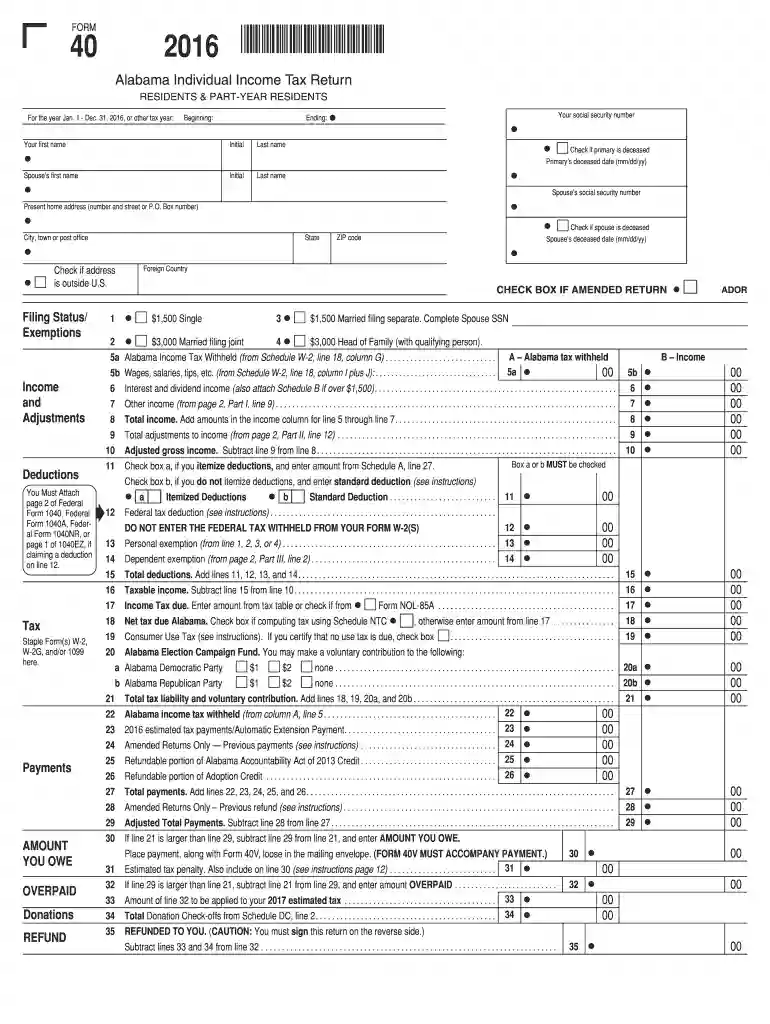
The Alabama Individual Income Tax Return Form 40 is a financial document required by the state of Alabama for residents to report their annual income. This form calculates the amount of state income tax owed or the refund due based on the individual's financial activities within the tax year. This form is primarily used by individuals who are full-year residents of Alabama, making it crucial for state tax compliance.
Residents can acquire Form 40 through several methods to fit their preference. It is available on the Alabama Department of Revenue's official website for download, allowing taxpayers to print the form and complete it manually. Alternatively, forms can be requested through mail by contacting the Alabama Department of Revenue’s main office. Additionally, many tax software programs include Form 40, providing a convenient means for electronic filing.
Completing Form 40 requires careful attention to detail to ensure all sections are accurately filled out. Here’s a step-by-step guide:
Understanding key terms is essential for accurately completing the form:
The deadline for submitting the Alabama Individual Income Tax Return Form 40 is April 15th each year, aligning with the federal tax deadline. If April 15th falls on a weekend or holiday, the deadline is extended to the next business day. Taxpayers can file for an extension, granting an additional six months to file the return, though any taxes owed must still be paid by the original April deadline to avoid penalties.
Preparing the following documents will facilitate the completion of Form 40:
Taxpayers have multiple submission options depending on their filing preference:
Failure to file Form 40 or pay taxes by the deadline results in penalties imposed by the state. The penalties can include a failure-to-file penalty, which is a percentage of unpaid taxes for each month or part of a month that the return is late, and a failure-to-pay penalty. Interest accrues on unpaid taxes from the day after the tax deadline until payment is made in full. Extensions to file don’t extend the time for payment; hence timely payment is crucial.
We've got more versions of the Alabama Individual Income Tax Return Form 40 form. Select the right Alabama Individual Income Tax Return Form 40 version from the list and start editing it straight away!
| Versions | Form popularity | Fillable & printable |
|---|---|---|
| 2025 | 4.8 Satisfied (28 Votes) | |
| 2023 | 4.5 Satisfied (25 Votes) | |
| 2022 | 4.8 Satisfied (22 Votes) | |
| 2021 | 4.8 Satisfied (118 Votes) | |
| 2020 | 4.4 Satisfied (117 Votes) | |
| 2019 | 4.3 Satisfied (94 Votes) | |
| 2018 | 4.3 Satisfied (239 Votes) | |
| 2017 | 4.4 Satisfied (232 Votes) | |
| 2016 | 4.4 Satisfied (103 Votes) | |
| 2015 | 4.2 Satisfied (68 Votes) | |
| 2014 | 3.6 Satisfied (39 Votes) | |
| 2013 | 4.4 Satisfied (69 Votes) | |
| 2011 | 4.2 Satisfied (63 Votes) |
At DocHub, your data security is our priority. We follow HIPAA, SOC2, GDPR, and other standards, so you can work on your documents with confidence.
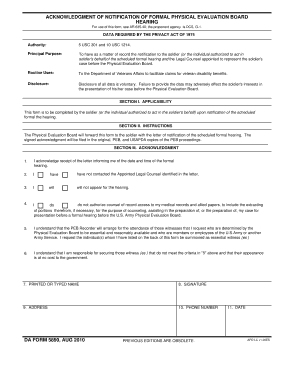



Individuals domiciled within Alabama should file a Resident Individual Income Tax Return, Form 40 or 40A each year. (a) Domicile is the home, the fixed place ofRead more
Current Form 40 Individual Income Tax Return, Alabama Department of Revenue P. O. Box 2401. Montgomery, AL 36140 -0001 ; Current Form E40- Individual IncomeRead more


