






Definition and Purpose of the Commission Split Agreement Template
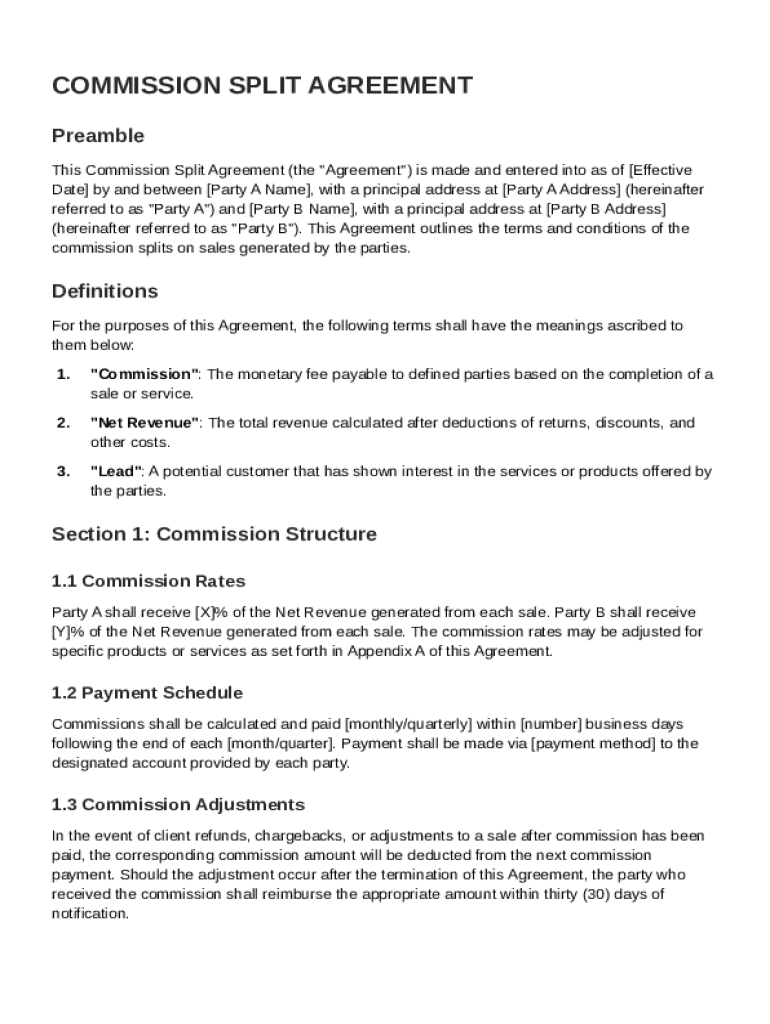
A Commission Split Agreement Template serves as a formal contract between two parties—commonly referred to as Party A and Party B—defining how commissions from sales will be distributed. This document plays a critical role in ensuring both parties have a clear understanding of the key terms such as 'Commission' and 'Net Revenue,' the commission rates, payment schedules, and the specific responsibilities each party holds regarding sales activities. Through well-defined clauses, the template helps avert misunderstandings and potential disputes by clearly outlining obligations and rights.
Key Components of a Commission Split Agreement
- Commission Structure: It specifies the percentage each party will receive from sales, which may vary based on different conditions.
- Payment Terms: Outlines when payments are to be made, such as on a monthly or quarterly basis.
- Roles and Responsibilities: Details the duties of each party, such as who is responsible for making a sale and who manages logistics.
- Confidentiality Clauses: Protects sensitive business information from being disclosed to unauthorized entities.
- Dispute Resolution: Provides methods for resolving disagreements, often through mediation or arbitration.
- Termination Conditions: Establishes how and under what circumstances the agreement can be terminated.
- Governing Law: Determines which jurisdiction’s laws will be applied in interpreting the agreement.
How to Use the Commission Split Agreement Template
Utilizing the Commission Split Agreement Template effectively requires familiarity with its sections and a precise understanding of both parties' expectations. Here’s a step-by-step guide to using the template:
- Download the Template: Obtain the template from a trusted source like DocHub, ensuring it meets your business needs.
- Review the Sections: Familiarize yourself with components such as commission rates, roles, and legal provisions.
- Consultation: Engage legal counsel to review the document, ensuring compliance with any relevant state laws and business standards.
- Personalization: Customize the template according to specific business agreements and commission structures.
- Parties Agreement: Both parties should thoroughly read and discuss the terms to ensure mutual understanding.
- Sign and Implement: Both parties should sign the document electronically for legal effectiveness, using platforms that allow for signature tracking and audit trails.
Key Elements of the Commission Split Agreement Template
The Commission Split Agreement is composed of several vital elements designed to capture all aspects of the commission process:
Commission Rates and Calculation
- Base Commission: Defines the standard percentage split of total sales revenue.
- Performance-Based Incentives: Additional rates offered for exceeding sales targets.
- Deductions: Specific costs that may be removed from gross revenue before commissions are calculated.
Payment Schedules
- Regular Intervals: States whether commissions are paid weekly, bi-weekly, or monthly.
- Delay Penalties: Conditions under which penalties will apply for late payments.
Obligations and Duties
- Sales Targets: Establishes goals that need to be met for commission eligibility.
- Marketing and Lead Generation: Specifies which party is responsible for generating leads and marketing efforts.
Legal Use of the Commission Split Agreement Template
A significant aspect of the Commission Split Agreement Template is its legal application, ensuring that the agreement is both enforceable and binding:
Ensuring Enforceability
- Legal Compliance: Must align with state and federal laws governing sales and commissions in the United States.
- Signatures: Requires signatures from authorized representatives of both parties—using electronic signatures enhances legal standing.
Common Legal Provisions
- Non-Compete Clause: Prevents parties from engaging in competitive activities for a defined period post-termination.
- Confidentiality Agreement: Safeguards against the unauthorized use of proprietary business information.
Practical Examples of Using the Commission Split Agreement Template
To illustrate the utility of the Commission Split Agreement, consider these scenarios:
- Real Estate Agency: A real estate firm uses the agreement to define splits between agents and the broker when homes are sold.
- Sales Partnerships: Firms working in partnership with distributors can use the template to outline how sales leads and profits are shared.
Case Study: Software Company Collaboration
A software company partners with a hardware vendor. To incentivize sales of bundled products, they use a Commission Split Agreement Template to determine how revenue from each joint sale is allocated. This prevents disputes and strengthens the business relationship.
Who Typically Uses the Commission Split Agreement Template?
Companies across various sectors where sales are a crucial component commonly use this template. Here are a few who benefit most:
- Real Estate Agencies: Division of commissions between agents or between agents and brokers.
- Product Distributors: Agreements between suppliers and local distributors on revenue splits.
- Consultancies: Independent consultants and firms often split revenue based on client acquisition and management roles.


Important Terms Related to Commission Split Agreement Template
A comprehensive understanding of relevant terminology is essential for the effectiveness of the Commission Split Agreement Template:
- Commission: A fee paid based on a sales transaction, often a percentage of the sale amount.
- Net Revenue: Total income earned from sales after deducting returns, allowances, and discounts.
Additional Terms
- Gross Sales: The total sales unadjusted for discounts, returns, or allowances.
- Exclusive Agreement: Specifies if the agreement restricts parties from engaging with other competitors.
State-Specific Rules for the Commission Split Agreement Template
State-specific legislation may influence the conditions and legality of the Commission Split Agreement:
Examples:
- California: Requires written commission agreements for certain employment relationships to be enforceable.
- New York: Regulations may dictate the method of calculation for commission payments.
Understanding the nuances of state regulations helps ensure the legality and enforceability of commission arrangements within specific jurisdictions.