
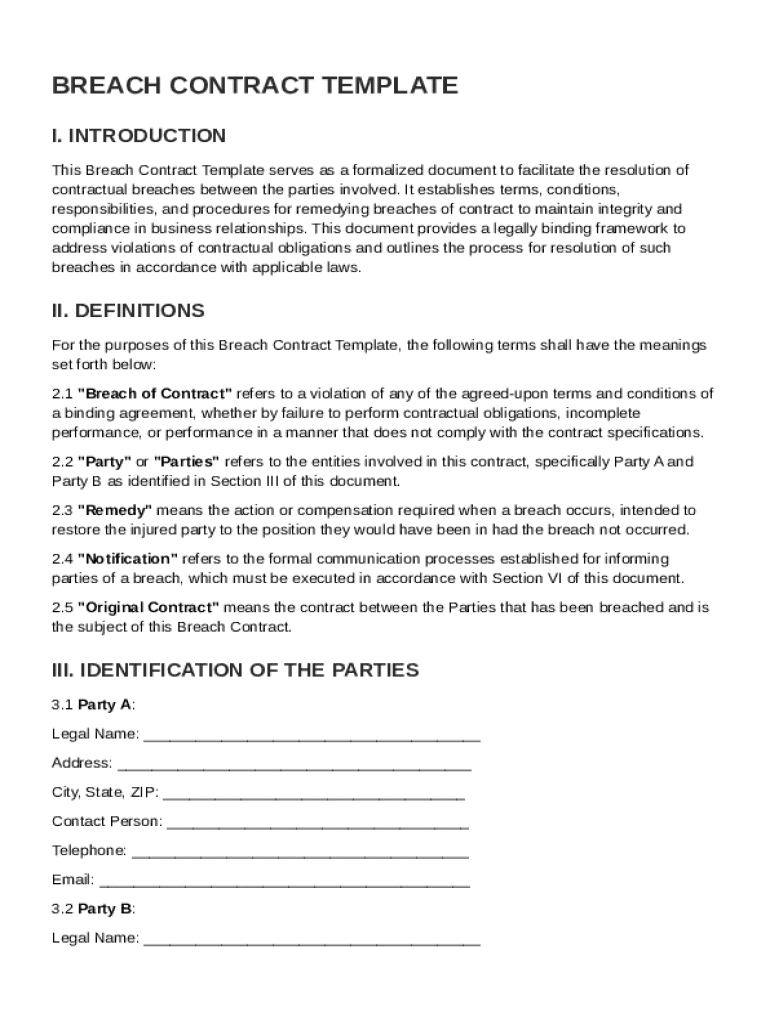







Definition & Meaning
The Breach Contract Template is a formal legal document crafted to address breaches of contract between two parties. It functions as a comprehensive framework, outlining the definitions, roles of involved parties, and the specifics of the original agreement. Within this context, a breach of contract refers to a failure to fulfill the promises or terms set out in the contract, and this template aims to handle such incidents effectively by providing structured solutions.
Types of Breaches
- Minor Breach: Involves slight deviations from the agreed terms without a fundamental impact on the contract's core objectives.
- Material Breach: Substantial failure to perform, affecting the contract's foundation and possibly warranting termination or legal action.
- Anticipatory Breach: Occurs when one party indicates they intend to break the agreement in the future.
The template ensures clarity and predictability by categorizing possible breaches, which aids in applying appropriate remedies and resolving disputes.
Key Elements of the Breach Contract Template
This document is composed of critical components designed to enforce compliance and maintain the integrity of business relationships. Some of the essential elements include:
- Identification of Parties: Clearly details the identities of the involved parties to prevent ambiguity.
- Details of the Original Contract: Provides a concise summary of the initial agreement.
- Notification Procedures: Lays out the steps for notifying the breaching party, promoting timely rectifications.
- Remedies and Penalties: Offers explicit consequences for breaches, encouraging adherence to the contract.
Each element plays a pivotal role in ensuring that all parties understand their obligations and the potential outcomes of non-compliance.
How to Use the Breach Contract Template
To utilize this template effectively, follow a structured approach to ensure all applicable details are included:
- Review Original Contract: Begin by analyzing the initial contract to understand its obligations.
- Identify Breach Type: Determine the nature of the breach and its implications on the contract as a whole.
- Complete Template Sections: Fill out the template with the necessary information, addressing each component thoroughly.
- Seek Legal Advice: Consider consulting with legal counsel to ensure accuracy and compliance with jurisdictional laws.
Using this methodical process ensures that the template is both comprehensive and legally sound, mitigating risks associated with contractual disputes.
Legal Use of the Breach Contract Template
The template serves as a legally binding instrument, dovetailing with existing contract law to offer protection and recourse. In the U.S., the Uniform Commercial Code (UCC) often governs such agreements, mandating specific protocols for breach notifications and remedies.
Legal Provisions
- Remedies for Breach: The template can enforce specific performance, monetary compensation, or an alternative resolution.
- Dispute Resolution: Arbitration or mediation clauses may be included to facilitate amicable settlements.
By adhering to these legal standards, parties ensure their contractual relationship remains enforceable in court if necessary.
Important Terms Related to Breach Contract Template
Understanding key terminology within the template is crucial to its successful application:
- Obligor and Obligee: The party responsible for fulfilling an obligation and the party benefiting from it, respectively.
- Force Majeure: Clauses addressing unforeseen events preventing contract fulfillment.
- Indemnification: Ensures one party is compensated for losses due to the other's actions.
Familiarity with these terms enhances comprehension of the template, promoting precise and effective use.
Steps to Complete the Breach Contract Template
Filling out the template requires attention to detail and accuracy:
- Gather Required Documents: Compile any contracts, correspondence, or evidence related to the breach.
- Document Parties and Breach Details: Clearly note who is involved and what the breach entails.
- Outline Remedies and Penalties: Specify actions to rectify or compensate for the breach.
- Review and Sign: Ensure all sections are complete, then all parties should sign to affirm their understanding and agreement.
This step-by-step process helps ensure no vital information is overlooked, supporting an effective resolution.
Who Typically Uses the Breach Contract Template
A broad range of professionals and organizations might rely on this template:
- Businesses: Corporations and LLCs often utilize it to maintain contractual integrity.
- Legal Professionals: Lawyers may draft or review these documents to support clients involved in disputes.
- Contract Managers: Individuals responsible for managing contract life cycles rely on templates for efficiency.
These users benefit from the template’s guidance in resolving breaches efficiently and legally.


Examples of Using the Breach Contract Template
Consider these scenarios as practical illustrations of the template's application:
Scenario 1: Vendor Non-Delivery
A vendor fails to deliver goods as promised. The template outlines notification procedures and potential financial penalties, supporting the offended party's claim for damages.
Scenario 2: Service Delay
A service provider delays the delivery of services, prompting the client to use the template to initiate remediation or contract termination processes.
By applying the template to these situations, parties can seek appropriate compensation or amend the contract without resorting to litigation.




