
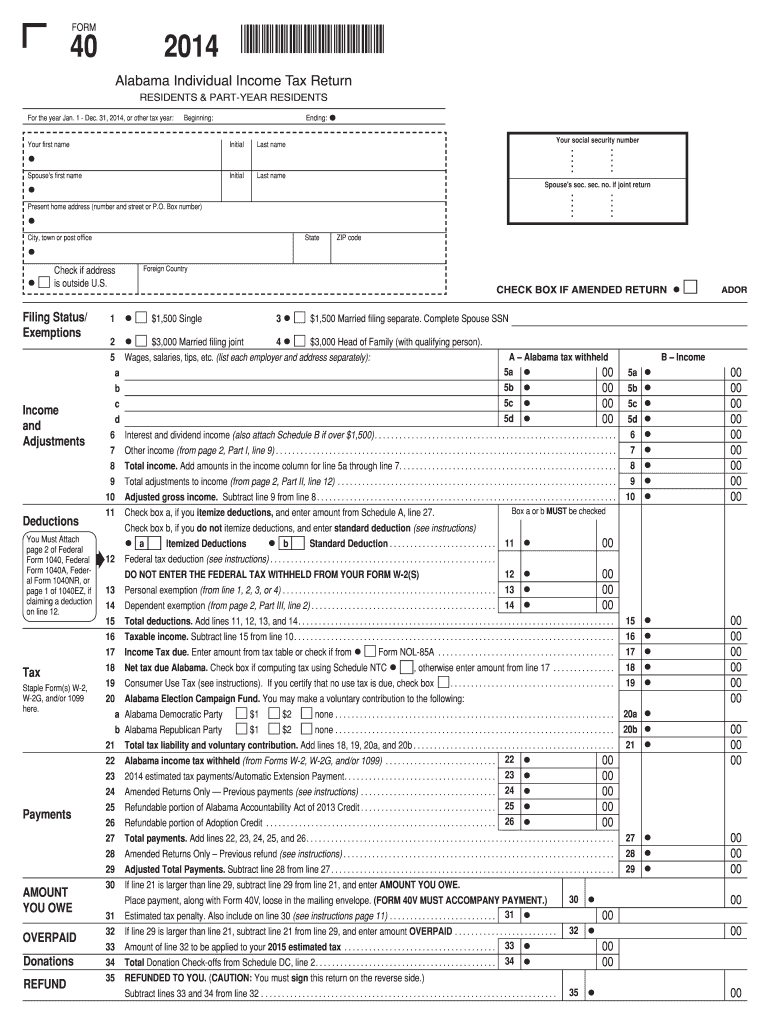







Definition and Purpose of the 2014 Form 40
The 2014 Form 40 serves as the Alabama Individual Income Tax Return for residents and part-year residents of Alabama for the tax year 2014. It is a document required by the state to report personal income, determine tax liabilities, and ensure compliance with Alabama state tax laws. The form is essential for taxpayers to report their income, claim deductions, calculate taxable income, and determine any tax refund or amount owed to the state.
- Report Income: Individuals must disclose all sources of income, including wages, salaries, dividends, and other earnings.
- Claim Deductions: Allows for the inclusion of various deductions to reduce taxable income, such as medical expenses and charitable contributions.
- Tax Calculation: Assists in determining the total tax liability based on reported income and deductions.
- Payment Instructions: Provides guidance on paying any owed amounts or receiving refunds from the state.
Important Sections of Form 40
Form 40 is structured to collect comprehensive information on various aspects of an individual's financial situation:
Personal Information
This section captures basic personal details including the filer's name, address, and Social Security Number. It sets the foundation for processing the return accurately and ensures correct identification of the taxpayer.
Filing Status
- Single: For individuals who are unmarried.
- Married Filing Jointly: Allows married couples to combine their income and report it collectively.
- Head of Household: Offers benefits to unmarried individuals who maintain a home for dependents.
- Married Filing Separately: Enables married couples to file separate returns.
Income Details
Here, taxpayers must report all forms of income. This includes wages, interest, dividends, and any other sources.
- Wages and Salaries: Typically reported using W-2 forms.
- Self-employment Income: Requires additional documentation like profit and loss statements.
- Investment Income: Includes income from stocks, bonds, and rental properties.
Steps to Complete the 2014 Form 40
Completing the 2014 Form 40 involves several sequential steps:
- Gather Necessary Documents: Collect W-2s, 1099s, receipts, and statements relevant to reported income and deductions.
- Fill Personal Information: Begin with your name, address, and Social Security Number.
- Choose Filing Status: Select the appropriate status based on your situation.
- Report Income: Enter necessary details in the income section.
- Claim Deductions and Credits: Include applicable deductions and credits to reduce taxable income.
- Calculate Tax Owed or Refund: Determine the final tax amount owed or refundable.
- Sign and Date the Form: Ensure the form is duly signed and dated before submission.
Common Mistakes to Avoid
- Incorrect Social Security Number: Ensure the correct number is entered to avoid processing errors.
- Unclaimed Deductions: Review all potential deductions to maximize tax benefits.
- Missed Deadlines: Timely submission is key to avoid penalties.
Filing Guidelines and Deadlines
The deadline for filing the 2014 Form 40 was typically April 15, 2015, mirroring the federal tax deadline. However, certain conditions might have warranted extensions:
- Natural Disasters: Extensions may apply to those affected.
- Service in the Military: Members serving in combat zones typically receive automatic extensions.
Taxpayers could file either electronically or via mail. Each method has its steps and requirements:
- Online Submission: E-file platforms provide a quick option to file.
- Mailing the Form: Ensure all pertinent documents are enclosed and postmarked by the deadline.
Who Typically Files the 2014 Form 40
The 2014 Form 40 is primarily used by:
- Residents of Alabama: Full-year residents provide comprehensive income data for the state tax calculation.
- Part-Year Residents: Those who lived in Alabama for part of the year and another state for the remaining period.
- Non-residents With Alabama Income: Individuals not residing in Alabama but earn income from Alabama sources must also file.
Special Considerations
- Retirees: Must report pension and social security income.
- Self-Employed Individuals: Need to detail business income and expenses.
Legal Compliance and Use
Adhering to the filing obligations of Form 40 is crucial for legal compliance with Alabama tax laws. By accurately filing this form:
- Avoid Penalties: Misreporting or failure to file can result in fines.
- Ensure Accurate Tax Assessment: Enables correct calculation of state tax obligations.
Submitting the form correctly supports state infrastructure, education, and public services through collected taxes.
State-Specific Regulations for Form 40
Each state has distinct rules, and Alabama has specifics affecting the Form 40, such as:
- Tax Brackets: Unique rate structures for calculating state taxes.
- Credits and Deductions: State-specific deductions may apply, such as retirement income exclusions.
Understanding these nuances ensures accurate filing and compliance with Alabama-specific tax obligations.
Key Takeaways
- Utilize all available deductions and credits to minimize tax load.
- Ensure all information is complete and accurate to avoid processing delays.
- Keep a copy of the completed form and all supporting documents for personal records.
- Familiarity with state regulations can guide a smoother tax-filing experience.


