






Definition & Meaning
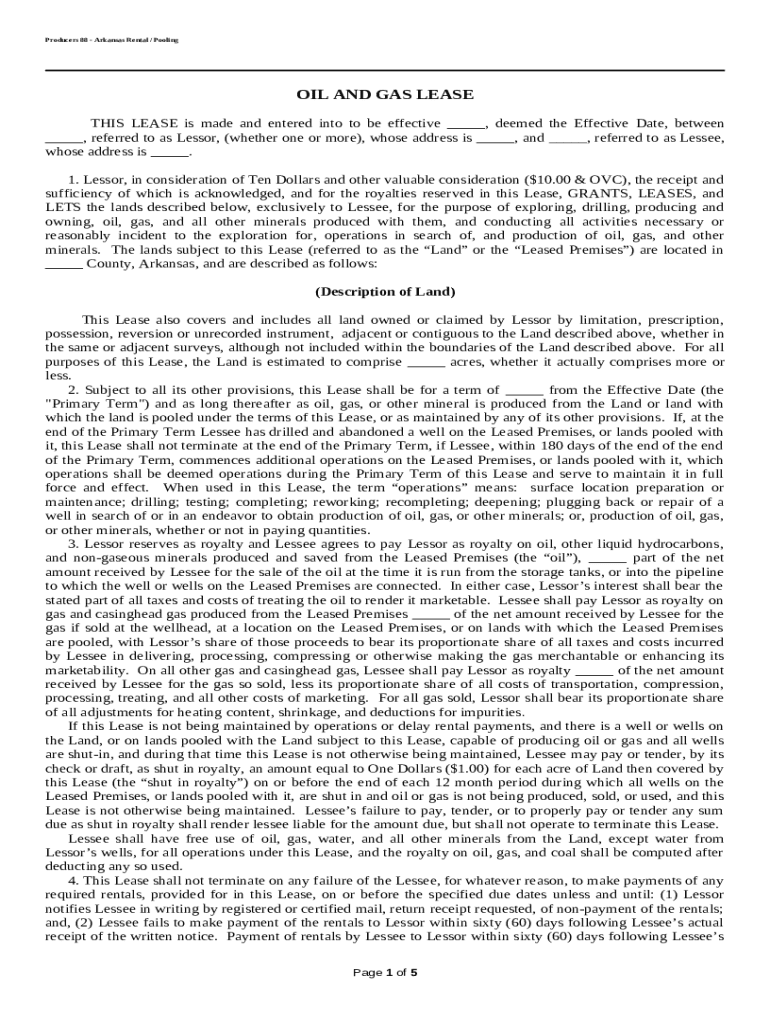
The Arkansas Oil and Gas Lease is a legal document that outlines the agreement between the lessor, who owns the land, and the lessee, who seeks to explore and extract oil and gas from the land. This lease provides the lessee with rights to conduct seismic and geophysical operations on the property for the specified period. The lease details the legal responsibilities, rights, and obligations of both parties involved. It encompasses terms ranging from the extent of land usage to the duration of the lease and any financial agreements regarding royalties or compensation.
How to Obtain the Arkansas Oil and Gas Lease
-
Identify the Property: Begin by identifying the property and ensuring the landowner is willing to lease it for oil and gas exploration. A detailed legal description of the land is required to avoid future disputes.
-
Drafting the Agreement: Work with legal counsel or use established lease templates to draft the agreement. Ensure that all parties understand the terms, including lease duration, royalties, and specific rights granted to the lessee.
-
Approval Process: The agreement may require approval or vetting by land-use boards or local authorities, depending on state regulations. Consult relevant local government offices to comply with jurisdictional requirements.
-
Execution of Lease: Once agreed, both parties sign the lease. Notarization may be required to authenticate the document.
-
Recording the Lease: To protect lessee rights, file the lease document with the appropriate county land records office.
Steps to Complete the Arkansas Oil and Gas Lease
-
Gather Necessary Information: Collect data regarding land ownership, geological surveys, and known resources in the area to fill in lease specifics.
-
Negotiate Lease Terms: Discuss lease duration, compensation, and operational terms with the lessor to ensure mutual agreement on all aspects.
-
Prepare the Document: Use the negotiated terms to prepare the lease, either through legal assistance or standardized forms.
-
Review and Finalize: Parties should thoroughly review the prepared lease, confirming that it meets all legal requirements and aligns with the initial terms discussed.
-
Sign and File: Once final, both parties sign the lease, after which it should be filed with the local county clerk for public record access.
Key Elements of the Arkansas Oil and Gas Lease
-
Lease Term: Specifies the effective duration, including potential extensions or renewability clauses.
-
Royalty Provisions: Details the percentage of production revenue or fixed payments made to the lessor.
-
Operational Rights: Outlines the activities permitted on the land, such as drilling and equipment installation.
-
Land Use Specifications: Describes the exact geographical boundaries and any limitations or restrictions on land use imposed by the lessor.
-
Termination Conditions: Lists circumstances under which the lease may be terminated early, such as non-production or breach of terms.
Legal use of the Arkansas Oil and Gas Lease
The Arkansas Oil and Gas Lease allows lessees to legally access and use designated land for resource extraction, adhering to state and federal environmental regulations. It serves as an enforceable contract that upholds property rights while facilitating resource management. By defining permissible activities and requiring compliance with safety standards, it balances economic interests with environmental protection.
State-Specific Rules for the Arkansas Oil and Gas Lease
Arkansas law mandates specific provisions in oil and gas leases to protect landowner interests and ensure fair use of resources. These rules govern:
-
Surface Rights Management: Lessees must minimize disruption to the land and compensate for any surface damage.
-
Environmental Regulations Compliance: Lessees must adhere to state-mandated environmental protection standards to avoid legal penalties.
-
Recording and Disclosure Requirements: All leases need to be recorded, and detailed disclosures must be made to the landowner regarding operations and potential impacts.
Important Terms Related to Arkansas Oil and Gas Lease
-
Seismic Operations: Activities related to mapping underground formations for resource identification.
-
Royalty: Payment to the landowner based on a percentage of production revenue or fixed amount for resource extraction.
-
Surface Use Agreement: An agreement detailing how the surface will be utilized, separate from the subsurface lease terms.
-
Renewal Option: A clause allowing the extension of the lease under predefined conditions.
Who Typically Uses the Arkansas Oil and Gas Lease
-
Energy Companies: Engaged in exploration and extraction to maximize resource yield.
-
Landowners: Individuals or entities looking to monetize their land through leasing while retaining ownership.
-
Legal Professionals: Attorneys specializing in natural resource law facilitating the drafting and negotiation of leases.
These stakeholders typically use the lease to formalize arrangements regarding oil and gas-related activities while ensuring responsible use and fair compensation for all parties involved.