






Understanding the Birth Certificate Form
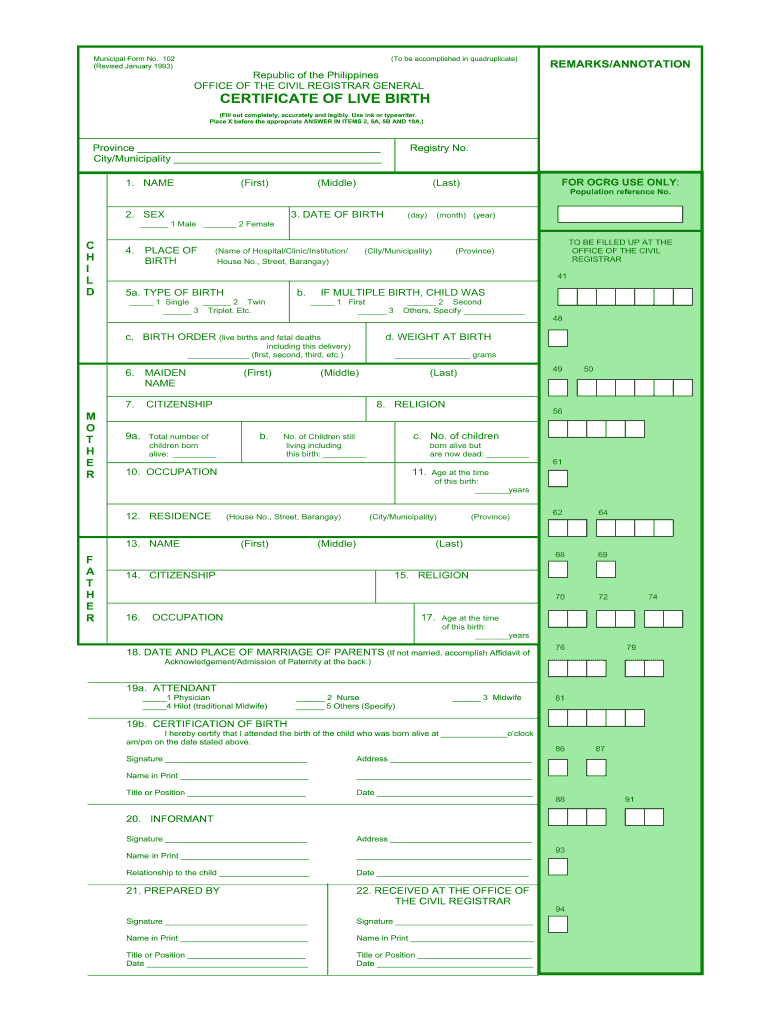
The birth certificate form, often referred to as the certificate of live birth form, is a critical document that serves as the official record of a person's birth. This form includes essential information such as the child's name, date of birth, birthplace, and parental details. It is vital for various legal, educational, and health-related purposes throughout a person's life.
Essential Components of the Birth Certificate Form
- Personal Information: This section typically requires details such as the child's full name, sex, and date of birth.
- Place of Birth: The form must include the city or town and state where the birth took place, which is important for legal identification.
- Parent Information: Information about the parents, including names, dates of birth, and their places of residence, is also mandatory.
- Certification Statement: A statement confirming the details provided are true, often requiring a signature from a medical professional or the attending physician.
Steps to Complete the Birth Certificate Form
- Gather Required Information: Collect all necessary details about the child and parents, ensuring accuracy for legal compliance.
- Fill Out the Form: Carefully complete sections including the child's name, date and place of birth, and parent information.
- Signatures: Ensure that the responsible parties, such as the attending physician or midwife, sign the document as required by state law.
- Submit the Form: Depending on jurisdiction, the completed form may need to be submitted to health department offices or equivalent government entities for processing.
Common Uses of the Birth Certificate Form
- Identification: A birth certificate serves as a foundational document for obtaining other identification, such as a driver's license or passport.
- Legal Purposes: It is necessary for various legal processes, including establishing identity, citizenship, and parental rights.
- Educational and Medical Records: Schools and healthcare providers often require a birth certificate as part of enrollment or registration processes.
Differences Between a Certificate of Live Birth and Birth Certificate
While the terms are often used interchangeably, a certificate of live birth typically refers to the initial document filed by medical personnel, while the birth certificate is the official document issued by the state upon registration. The certificate of live birth contains more detailed information about the birth event, whereas the birth certificate may be a more simplified version.
Digital vs. Paper Versions of the Birth Certificate Form
- Digital Versions: Many states now offer electronic filing options for the birth certificate form. This can streamline the submission process and reduce paperwork.
- Paper Versions: In some cases, particularly for legal documents or records that need to be notarized, a paper version may still be required. It is important to understand the requirements of the specific state when choosing the submission method.
Legal Considerations Regarding the Birth Certificate Form
- Accurate Reporting: Falsifying information on a birth certificate can have serious legal consequences, including criminal charges.
- Timely Registration: States may have specific timeframes within which a birth must be registered, often within a few weeks after the event. Delays can result in challenges in obtaining the document later on.
Relevant Terms and Definitions
- Fillable Birth Certificate: An editable template that can be filled out digitally, enhancing accuracy and efficiency.
- Editable Birth Certificate Template: A customizable version that allows users to modify details as necessary before printing or submitting.
- Affidavit of Live Birth: A document that may be used to affirm or attest to the details surrounding a birth, often used in cases of delayed registration.
Examples of Situational Uses
- Child Registration: Parents may need the birth certificate form to enroll a child in school or daycare.
- Healthcare Access: A newborn's birth certificate is often required for health insurance coverage enrollment.
In summary, understanding the birth certificate form's components, processes for completion, and legal implications is essential for anyone managing the documentation of a child's birth. Whether through traditional paper forms or digital means, ensuring accuracy and timeliness in this process is crucial for establishing an individual’s identity and access to various services.