
Discovery Documents

Create a new Discovery Document
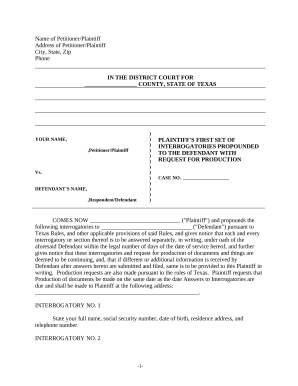
Discovery Interrogatories from Plaintiff to Defendant with Production Requests - Texas
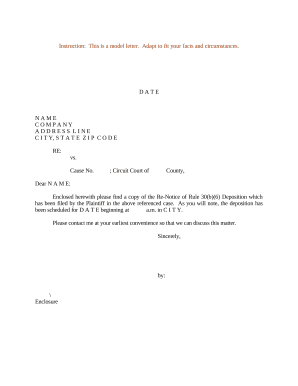
Notice deposition
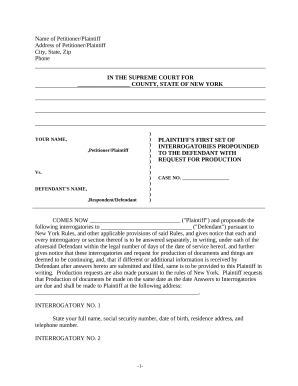
Ny interrogatories

Interrogatories
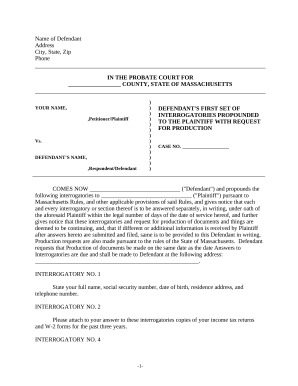
Discovery Interrogatories from Defendant to Plaintiff with Production Requests - Massachusetts
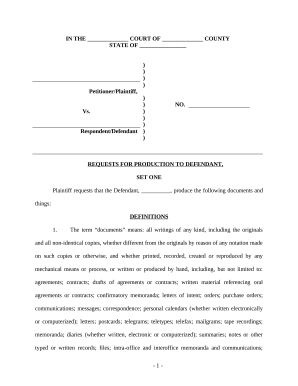
Plaintiff request production
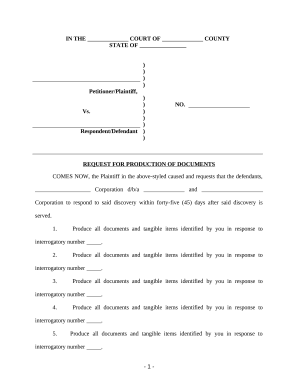
Request production documents
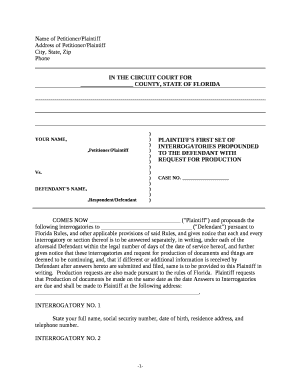
Discovery Interrogatories from Plaintiff to Defendant with Production Requests - Florida
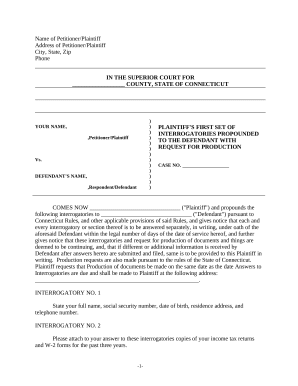
Discovery Interrogatories from Plaintiff to Defendant with Production Requests - Connecticut
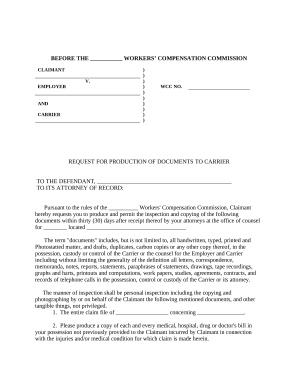
Production of documents
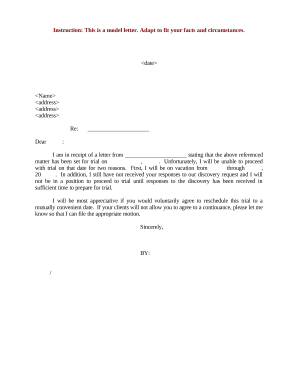
Sample requesting discovery

Mn notarized
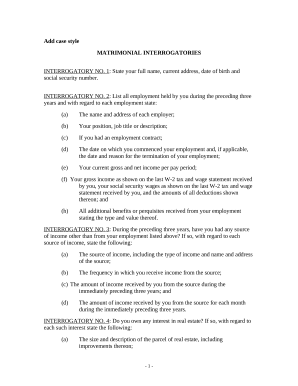
Discovery interrogatories divorce
Boost your productivity with Discovery Documents
Form administration occupies to half of your office hours. With DocHub, you can easily reclaim your office time and improve your team's efficiency. Access Discovery Documents category and check out all document templates related to your daily workflows.
Effortlessly use Discovery Documents:
- Open Discovery Documents and employ Preview to obtain the relevant form.
- Click on Get Form to begin working on it.
- Wait for your form to open in the online editor and start modifying it.
- Add new fillable fields, symbols, and pictures, change pages order, and many more.
- Fill out your file or prepare it for other contributors.
- Download or deliver the form by link, email attachment, or invite.
Speed up your daily file administration with our Discovery Documents. Get your free DocHub account today to discover all forms.
Commonly Asked Questions about Discovery Documents
Process What is the discovery process in law?
Discovery has been defined as the pre-trial devices that can be used by one party to obtain facts and information about the case from the other party in order to assist the partys preparation for trial. Law 101: Legal Guide for the Forensic Expert | Definition and Purpose of ojp.gov discovery definition-and-purpose- ojp.gov discovery definition-and-purpose-
What is the legal definition of document discovery?
Definition and Purpose of Discovery Discovery has been defined as the pre-trial devices that can be used by one party to obtain facts and information about the case from the other party in order to assist the partys preparation for trial.
What is the purpose of discovery?
Discovery is the formal process by which the parties to a case in court exchange information about the case. This includes information about the witnesses and evidence to be presented at trial. Its purpose is to make the parties aware of the evidence which may be presented at trial.
How do you write a discovery document?
Write out each fact you wish the other party to admit is true. When writing these facts, be as clear and concise as possible. Each request must be for a single fact; do not include multiple facts, compound questions, or subparts.
What is the purpose of a discovery report?
Discovery reports help you identify categories that are highly-correlated to a defined audience, media, sites, or conversion (floodlight activities) events.
What are the five most important forms of discovery?
In the United States, there are five basic forms of discovery: depositions, interrogatories, requests for production of documents (or permission to inspect), physical and mental examinations, and requests for admission.
What is a discovery document request?
Discovery means you send the other side questions and requests for information or items (like documents) in writing. The other side must respond to your question or request in writing.
How to prepare a discovery request?
How To Write a Discovery Request for Production Have a Meet-and-Confer Session. The first step is to meet and confer with the other party. Determine the Evidence That You Need. The next step is to determine what type of evidence you need. Create a Request. Wait for a Response.
What are the three types of discovery?
Disclosure is accomplished through a methodical process called discovery. Discovery takes three basic forms: written discovery, document production, and depositions.
Related Templates

Notification of Associated Educators
The document from the Office of Human Resources at The College of New Jersey outlines the definition and status of Assoc ...

Articles - Library of The College of St Scholastica - CSSLibraryGuides
The document provides instructions on accessing and utilizing the 'America’s Newspapers' database at the College of St. ...

COMPLAINT OF DISCRIMINATORY TREATMENT - ladpss
The document is a complaint form for individuals to report discriminatory treatment by the County of Los Angeles Departm ...

Updated Medical Disability Form (Itr-Dd) Issued By Sars
The document is a form for the Confirmation of Diagnosis of Disability, required to determine eligibility for tax benefi ...

How to Apply for a Kenyan Passport: Complete Guide
The document is a membership application form for Tembo Sacco, requiring personal, employment, and business details from ...

Stud welding wps
The document is an annex related to AWS D1.1/D1.1M:2008, detailing a Stud Welding Procedure Specification (WPS), Procedu ...

Data set 3 dietary requirements answer key
The document discusses the nutritional requirements of various animal species, focusing on herbivores, omnivores, and ca ...

Canada Child Benefit Application
The document is a Canada Child Benefit Application form that allows individuals to apply for the Canada Child Benefit (C ...