




Definition and Meaning
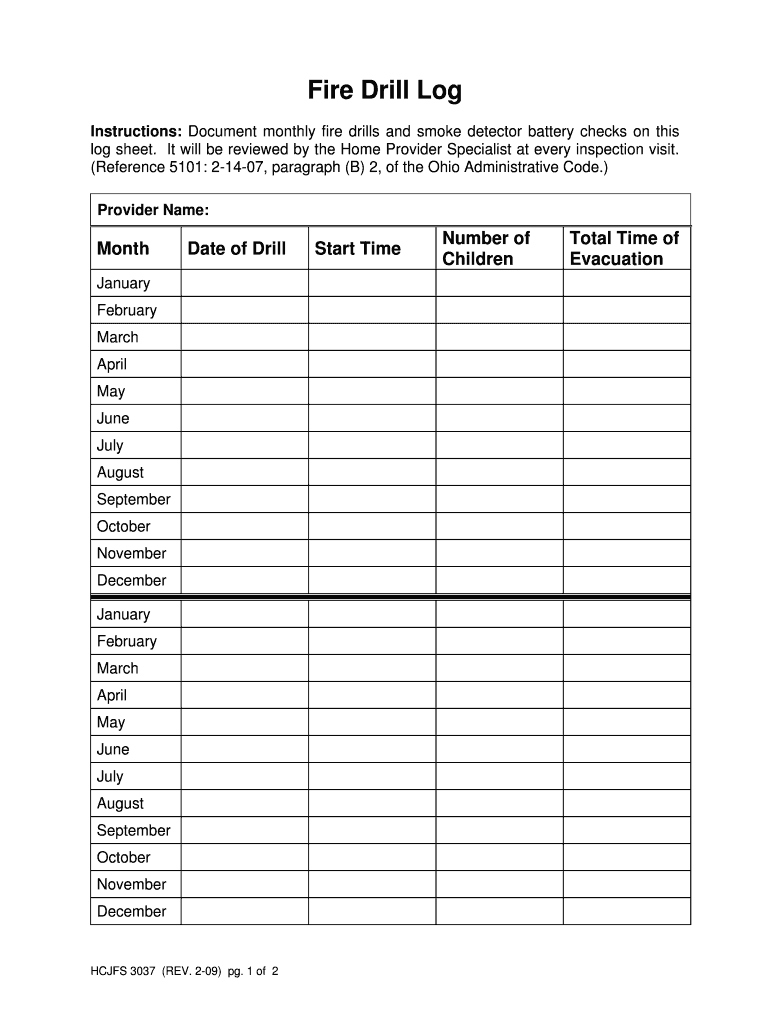
The "Fire Drill Log" is a crucial document used to record details of fire drills conducted in a facility. Its primary function is to ensure that personnel or residents are familiar with emergency evacuation procedures, which enhances safety and compliance with fire safety regulations. The log typically includes details such as the date and time of each drill, the duration, the participants involved, and any issues or observations noted during the exercise. This log serves as an official record that can be reviewed by safety inspectors or fire marshals.
How to Use the Fire Drill Log
Using the Fire Drill Log involves several key steps to ensure accurate and comprehensive documentation:
- Recording Details: After each fire drill, record the date, time, and duration of the drill. Include information about the fire alarm system's response time and any challenges encountered during the evacuation.
- Participant List: List all participants, highlighting any absent individuals to address potential risks.
- Observations and Notes: Document observations, such as obstruction issues or equipment failures. Detail any areas for improvement to enhance future drills' effectiveness.
- Signing and Storing: Ensure the log is signed by the person in charge of the drill before filing it safely for future reference or audits.
Steps to Complete the Fire Drill Log
Completing the Fire Drill Log efficiently involves the following steps:
- Prepare for the Drill: Schedule the drill and inform all relevant parties in advance.
- Conduct the Drill: Execute the drill, ensuring all safety procedures are adhered to.
- Documenting: Immediately after the drill, fill out the log with precise details of the drill execution.
- Review and Sign: Submit the log for review and obtain signatures from responsible personnel.
- File the Log Safely: Store the completed log in an accessible location for future reference or inspections.
Key Elements of the Fire Drill Log
The essential elements of a Fire Drill Log ensure a comprehensive record-keeping process:
- Date and Time: When the drill occurred to track frequency and compliance.
- Duration: Time taken to complete the drill, measuring efficiency.
- Participants Involved: A list of all individuals who took part, identifying departments or roles.
- Evacuation Route Used: Details of the evacuation path, noting any deviations or blockages.
- Issues Identified: Any problems encountered during the drill such as non-functional equipment.
- Recommendations for Improvement: Suggestions based on observed issues for improving future drills.
Examples of Using the Fire Drill Log
Practical applications of the Fire Drill Log span various scenarios:
- Schools: Regular drills ensure students and staff are prepared for emergencies, with logs reviewed by administrative bodies.
- Corporate Offices: Logs aid in assessing emergency response preparedness, which is critical for employee safety.
- Residential Buildings: Building management uses logs to comply with local fire safety regulations, providing evidence of regular drills.
Legal Use of the Fire Drill Log
The Fire Drill Log plays a critical role in legal compliance and safety audits:
- Compliance Verification: Documents adherence to mandated fire drill frequencies as per state or federal regulations.
- Audit Trail: Provides an audit trail for safety inspectors evaluating a facility's readiness for emergencies.
- Liability Reduction: Demonstrates proactive measures were taken to ensure safety, potentially reducing liability in fire-related incidents.
Important Terms Related to the Fire Drill Log
Understanding key terms associated with the Fire Drill Log is crucial for effective utilization:
- Evacuation Plan: The strategy outlining how individuals should evacuate during a fire.
- Fire Alarm System: The system that alerts occupants to evacuate in the event of a fire.
- Muster Point: Predetermined safe location where participants gather post-evacuation.
State-Specific Rules for the Fire Drill Log
State regulations may dictate specific requirements for the Fire Drill Log:
- Frequency of Drills: Some states mandate monthly drills, while others require quarterly.
- Retention Period: Different states specify how long records of fire drills must be maintained.
- Inspector Reviews: Fire marshals may have access to review logs during inspections to ensure conformity with state laws.
Digital vs. Paper Version
Deciding between digital and paper formats for maintaining the Fire Drill Log involves considering several factors:
- Accessibility: Digital logs offer greater accessibility, allowing quick updates and easy storage.
- Security: Digital solutions typically offer enhanced security features like encrypted data storage.
- Record Maintenance: Digital logs streamline storage and retrieval, facilitating efficient management during audits.
By thoroughly documenting and utilizing these aspects of the Fire Drill Log, facilities can improve their emergency preparedness and compliance with safety standards, thereby protecting both personnel and property.