




01. Edit your form online
Type text, add images, blackout confidential details, add comments, highlights and more.

Type text, add images, blackout confidential details, add comments, highlights and more.

Draw your signature, type it, upload its image, or use your mobile device as a signature pad.

Send it via email, link, or fax. You can also download it, export it or print it out.
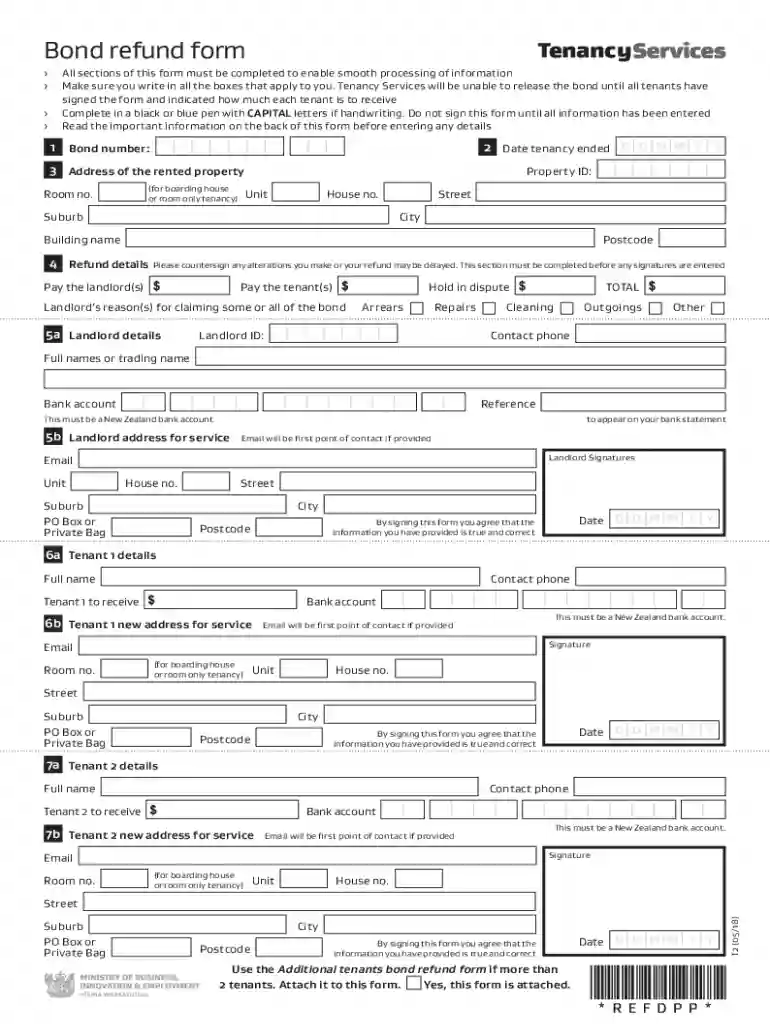
The bond refund form for tenancy serves as a critical document in the property rental process, primarily used to facilitate the return of a tenant's security deposit at the end of a lease. It is a legally binding document that ensures both tenants and landlords have clear, documented terms regarding the bond's distribution. The form includes essential information, such as tenancy end date, property address, and precise payment instructions, ensuring a smooth refund process. Typically, tenants and landlords must agree on the condition of the property and sign the form to acknowledge any withheld amount or deductions, if applicable.
Using this form correctly is crucial to ensuring a timely refund of a tenant’s bond. Both tenants and landlords should review the property’s condition using the original entry inspection report as a comparison. Tenants should communicate their forwarding address and preference for refund distribution, such as bank transfer details. Upon mutual agreement regarding property condition and necessary deductions, both parties must complete and sign the form. This step marks their consent to the amount of bond to be returned. It is important to retain a copy for personal records before submitting the form to the relevant tenancy authority.
Securing a bond refund form is typically straightforward. Most landlords or property management companies provide this form directly to tenants at the end of their lease. In some jurisdictions, it may also be accessible through a governmental or tenancy-focused website. For those who prefer digital options, platforms like DocHub allow users to download or fill out the form online, enhancing remote access convenience. Engaging with online platforms often offers helpful additional functionalities, such as the ability to digitally sign documents.
Filling out this form requires a methodical approach to ensure accuracy:
The bond refund form comprises several core components, each vital for its effective functioning:
The legal application of this form lies in its role as a documented agreement between tenant and landlord. It confirms mutual consent on the bond amount to be refunded, post-deductions if any. The form, once completed, is submitted to a tenancy tribunal or equivalent authority, ensuring legal acknowledgment of both parties' obligations and rights. Legal compliance with state-specific tenancy laws and guidelines is necessary.
Staying organized with supporting documentation ensures a transparent refund process:
Submitting the bond refund form can be adapted to your needs:
Maximizing the use of comprehensive resources and ensuring clarity at every step of the bond refund process help both tenants and landlords minimize disputes and manage transactions efficiently.
At DocHub, your data security is our priority. We follow HIPAA, SOC2, GDPR, and other standards, so you can work on your documents with confidence.




The court must then determine whether to require the posting of a bond to secure the opposing parties damages, interest thereon, and attorneys fees and costs
The first step in filing a case is to file a petition, which is a form that says who you are suing, why you are suing them, how much you are suing them for, and.
The bond company will pursue the tenant for reimbursement of that debt. If the tenant leaves the property in good shape with no damage in excess of ordinary


