






Definition & Meaning
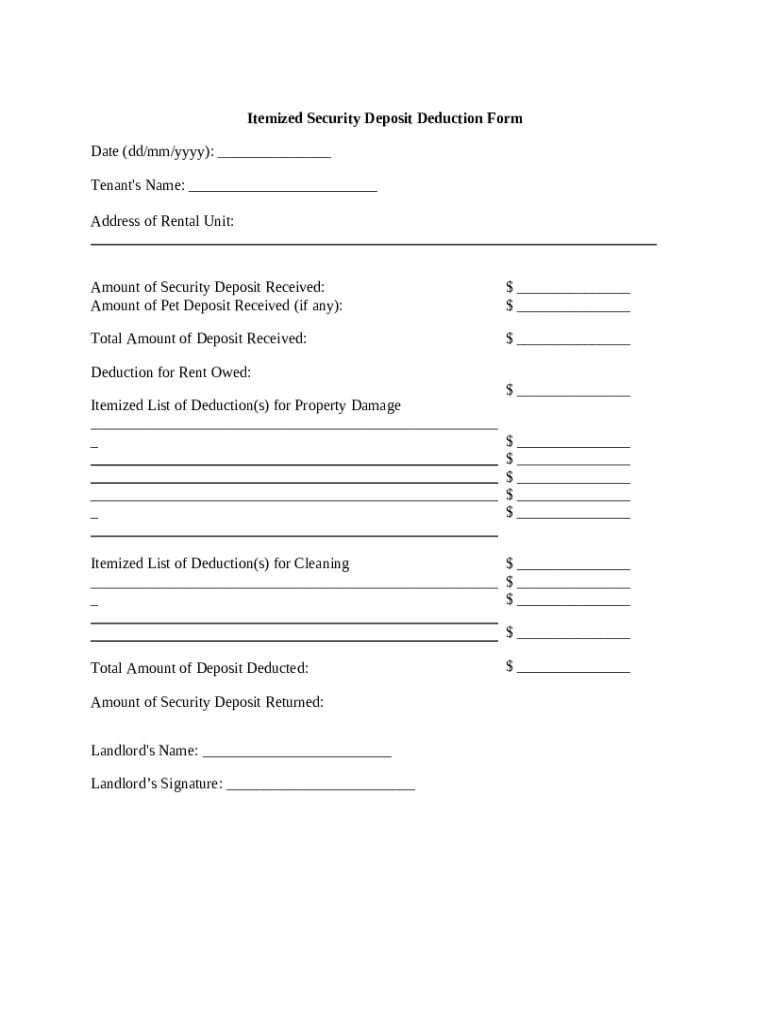
The Itemized Security Deposit Deduction Form is a crucial document used by landlords to provide a transparent breakdown of deductions made from a tenant's security deposit. This form itemizes specific charges and the reasons for deductions, ensuring clarity and preventing disputes between landlords and tenants. It typically includes details such as repair costs, unpaid rent, or cleaning fees. This transparency is often required by state laws in the U.S., which mandate that landlords must supply an itemized list if any portion of a security deposit is being withheld.
How to Use the Itemized Security Deposit Deduction Form
- Preparation: Before using the form, landlords should gather all necessary receipts and documentation of expenses related to repairs or cleaning. This ensures the deductions are justified and accurately documented.
- Detailing Deductions: For each item deducted, provide a detailed description, the amount deducted, and the reason for the deduction. This might include specifying the type of repair, materials used, or labor costs.
- Documentation: Attach copies of receipts or invoices that support each deduction listed. This enhances the credibility of the deductions made and can prevent potential disputes.
- Finalization: Review the form for completeness and accuracy before sharing it with the tenant. Ensure that all sections are filled out and that the total deductions accurately reflect the documented expenses.
Steps to Complete the Itemized Security Deposit Deduction Form
- Enter Landlord Information: Include your full name, address, and contact information.
- Tenant Details: Provide the tenant’s name and the address of the rental property.
- Security Deposit Amount: Start with the initial security deposit amount paid by the tenant.
- List of Deductions: Itemize each deduction with a description and amount. Common deductions include:
- Outstanding rent
- Damage repairs
- Cleaning services beyond normal wear and tear
- Net Return Calculation: Subtract the total deductions from the original deposit to determine the amount to be returned to the tenant.
- Sign and Date: Ensure the form is signed and dated before sending a copy to the tenant.
Important Terms Related to Itemized Security Deposit Deduction Form
- Security Deposit: An initial sum paid by tenants to cover potential damages or unpaid rent.
- Normal Wear and Tear: Deterioration that occurs from expected use, which may not qualify for deduction.
- Repair Costs: Expenses incurred by landlords for fixing damages caused by tenants.
- Invoice/ Receipt: Documentation of costs related to deductions included in the form.
Legal Use of the Itemized Security Deposit Deduction Form
The Itemized Security Deposit Deduction Form is designed to comply with legal requirements set by many U.S. states, necessitating a transparent deduction process. It legally obligates landlords to present valid reasons for each deduction, protecting tenants from unjust charges. Adherence to state-specific laws regarding timelines for returning the security deposit and any balance due after deductions is essential to ensure compliance.
Key Elements of the Itemized Security Deposit Deduction Form
- Itemization of Deductions: A clear breakdown of each deduction prevents misunderstandings.
- Associated Costs: Justification of costs via attached receipts or invoices is crucial.
- Tenant & Property Information: Accurate identification details for both tenant and property ensure proper record-keeping.
State-Specific Rules for the Itemized Security Deposit Deduction Form
Different states have specific regulations governing how and when security deposits should be returned. For instance, in California, landlords must return the deposit within 21 days, while in New York, it’s 14 days. These rules often dictate the level of detail required in the itemization and may also define what constitutes permissible deductions.
Examples of Using the Itemized Security Deposit Deduction Form
- Case of Damaged Property: If a tenant has caused significant damage to kitchen cabinetry, the landlord would list the cost of materials and labor for repairs, supported by receipts.
- Cleaning Fees: If a property was left excessively dirty, costing extra cleaning services, those fees should be itemized against the deposit.
- Outstanding Utilities: If a tenant left unpaid utility bills that the landlord had to settle, those amounts can be deducted and itemized.