
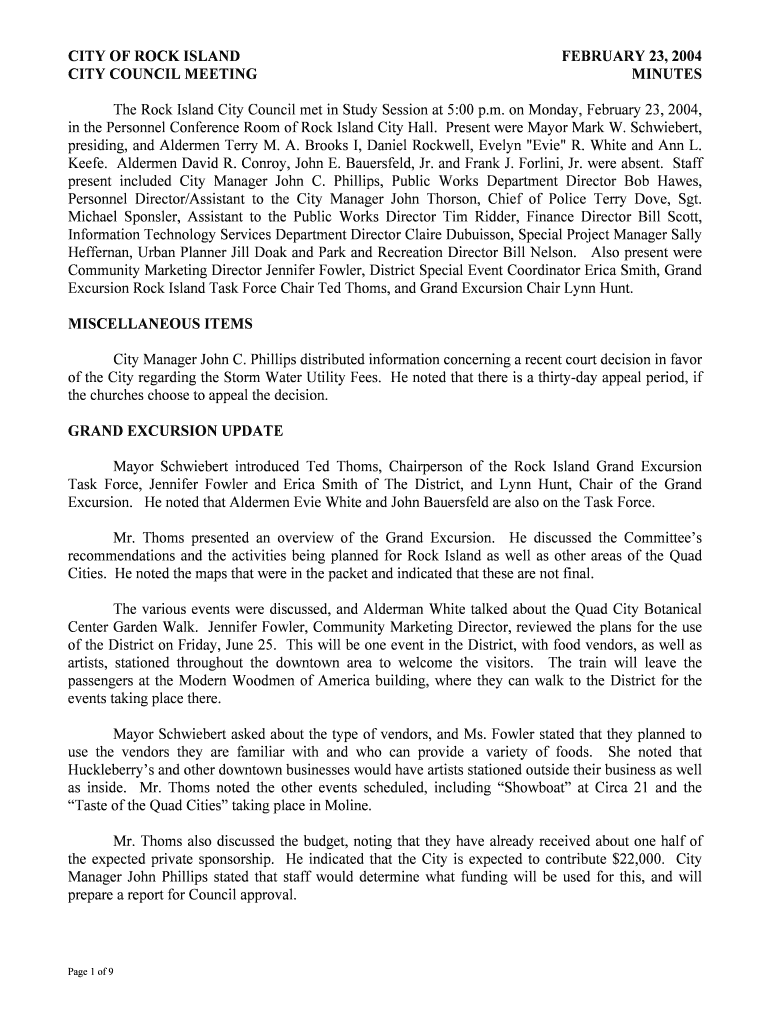







Definition and Context of February 23, 2004, Meeting
Understanding the specifics of the February 23, 2004, meeting held in the Personnel Conference Room at Rock Island City Hall involves examining the core agenda discussed during this session. This particular gathering was a City Council meeting where diverse topics were deliberated, including storm water utility fees, budget considerations for the fiscal year 2, and public works reports. These discussions aimed at addressing ongoing and future civic projects and financial matters impacting the Rock Island community.
Key Elements Discussed During the Meeting
In this meeting, several crucial elements were on the agenda, providing a holistic view of the community's development and operational plans. These included:
- Discussions on a recent court decision actively influencing Storm Water Utility Fees.
- Updates on the Grand Excursion event, a significant local cultural affair.
- Budget reviews for the fiscal year 2, essential for future city planning and operations.
- Considerations of claims and payroll that affected the city's overall financial health.
- Approval of storm water credits for organizations like Camelot Recreations, showcasing public-private partnerships.
- Conversations around property donations to Habitat for Humanity, reflecting community-oriented initiatives.
How to Use Information from the February 23, 2004, Meeting
Leveraging the insights from this meeting can be particularly useful for understanding municipal finance, urban planning, and community development strategies. These discussions act as a precedent for future policy-making and budgeting decisions within the city council. Stakeholders can utilize the documented decisions and strategies as a framework for similar future civic issues.
Importance of the February 23, 2004, Meeting
The importance of the February 23 meeting lies in its role in shaping the immediate and long-term strategies for Rock Island's infrastructure and community growth. The outcomes from these council meetings guide financial allocations, priority setting for civic projects, and community-focused initiatives that benefit the residents and stakeholders of Rock Island.
Legal Context of Decisions
The legal discussions during this meeting, such as the court decision on Storm Water Utility Fees, are crucial for understanding the legal landscape surrounding municipal operations. These legal elements ensure that city actions comply with both state and federal regulations, providing a lawful basis for city operations and projects.
Who Typically Uses Information from Such Meetings
Information from the February 23 meeting is primarily utilized by city council members, urban planners, financial auditors, and local community leaders. These stakeholders rely on accurate records of council meetings to make informed decisions, propose future initiatives, and ensure that the community's needs are met effectively. Additionally, residents with a vested interest in civic issues might refer to these minutes to better understand and engage with local governance.
Procedural Steps in City Council Meetings
City council meetings like the one held on February 23 follow a structured procedure to ensure that all topics are addressed comprehensively. Customarily, this involves:
- Opening session and roll-call.
- Approval of the agenda and minutes from previous meetings.
- Discussions and presentations on key topics.
- Open floor for public comments and inquiries.
- Voting on motions and resolutions.
Examples of Outcomes from the Meeting
The decisions taken during the Rock Island City Hall meeting led to tangible outcomes:
- The approval of storm water credits helped reduce operational costs for organizations like Camelot Recreations.
- Budgetary decisions influenced citywide fiscal strategies impacting various departments.
- The property donations to Habitat for Humanity facilitated community-centric housing projects.
State and City-specific Rules Impact
The meeting decisions reflect how state and city regulations influence local governance. State-specific rules provide the regulatory framework within which the city of Rock Island operates, ensuring that the council’s actions align with broader legislative requirements. Understanding these regulations is pivotal for aligning local strategies with state mandates, thereby ensuring legal compliance and operational efficacy.
Examples of Using Meeting Information in Civic Engagement
Citizens and local activists can utilize the documented minutes of the February 23 meeting to engage with ongoing city projects. By understanding what was prioritized during the meeting, community members can align their advocacy efforts to support or reroute city policies. Engaging with these records allows for a more informed and participatory civic discourse, empowering residents to have a direct impact on their community's future.




