






Definition and Purpose of the Foreclosure Worksheet
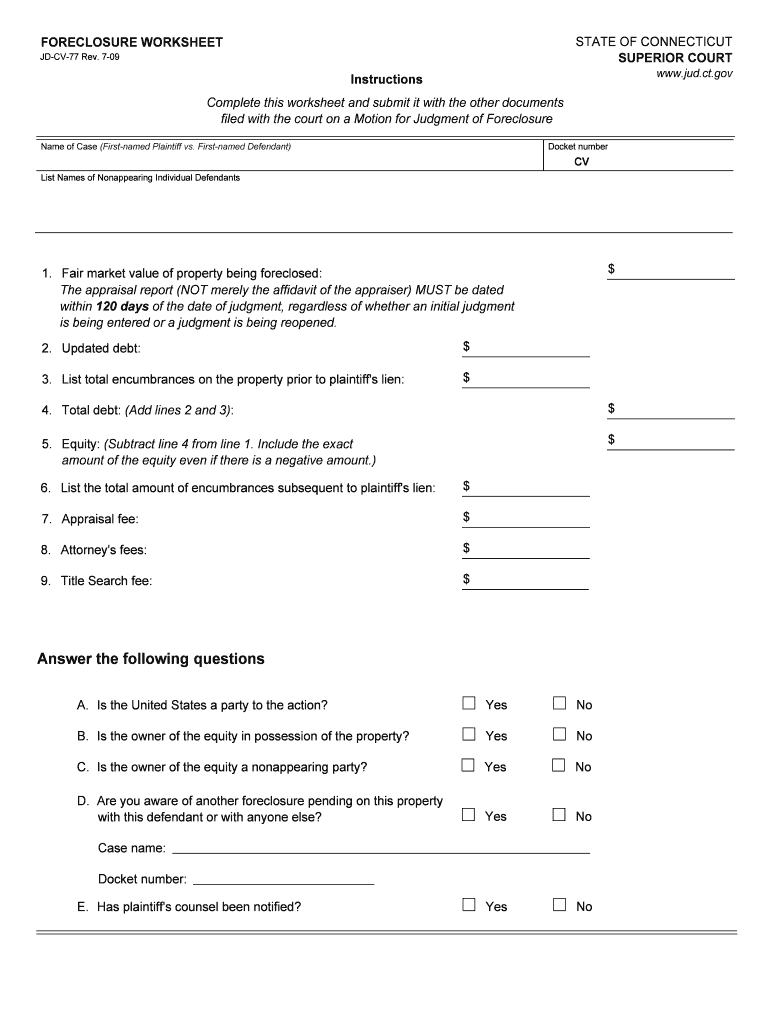
The Foreclosure Worksheet is a crucial document used in the legal process of foreclosure within the United States. Typically, it contains detailed information about the property being foreclosed, the terms of the loan or mortgage, and any associated financial obligations. This worksheet serves as an organized means of presenting necessary data to a court or financial institution during foreclosure proceedings. Understanding its layout and purpose is essential for anyone involved in property foreclosure, whether they are homeowners, lenders, or legal professionals.
Key Components of the Foreclosure Worksheet
-
Property Information: Details about the property, such as its address, legal description, and current valuation.
-
Loan Details: Information about the mortgage, including the original loan amount, interest rate, and outstanding balance.
-
Payment History: Documentation of payment records, including any missed payments and associated penalties or fees.
-
Legal Filings: A summary of any legal actions taken concerning the property or borrower, such as prior foreclosure notices or court orders.
-
Additional Liens or Claims: Information regarding any other liens or claims against the property, which can affect the foreclosure process.
Steps to Complete the Foreclosure Worksheet
Filling out the Foreclosure Worksheet accurately is essential to ensure that the foreclosure process proceeds smoothly. Here are the detailed steps involved:
-
Gather Necessary Documents: Collect all relevant paperwork, including mortgage agreements, payment records, and any prior legal notices related to the foreclosure.
-
Complete Property Information Section: Enter accurate details of the property, ensuring consistency with official records.
-
Fill in Loan and Payment Details: Provide comprehensive information on the mortgage terms and payment history. Cross-verify with bank statements and loan documents for accuracy.
-
Document Legal Filings: List any legal notices or court actions related to the foreclosure. This may require working with legal counsel to obtain the correct information.
-
Include Liens and Claims Information: Document any other financial claims or encumbrances on the property to avoid delays in the foreclosure process.
Legal Use of the Foreclosure Worksheet
The Foreclosure Worksheet is used within the legal framework to streamline foreclosure proceedings. It provides a comprehensive overview of the financial and legal status of a property, allowing courts to make informed decisions.
-
Court Submissions: As part of court filings, this worksheet must be completed accurately and submitted alongside other required documents. Any inaccuracies or omissions can lead to delays or legal repercussions.
-
Transparency and Accountability: By outlining the terms and obligations involved, the worksheet promotes transparency and ensures that all parties in the foreclosure process have access to the same information.
Key Elements of the Foreclosure Worksheet
Detailed Information Sections
-
Financial Overview: Clearly delineates all monetary aspects, the specifics of which can significantly affect future proceedings.
-
Documentation Consistency: Ensures that all submitted data aligns with official records, minimizing the risk of challenges during legal review.
Suggested Best Practices
-
Accuracy and Completeness: Double-check all entries for errors or omissions before submission.
-
Consultation: Work with financial experts or legal advisers to validate the information compiled on the worksheet.
State-Specific Rules for Foreclosure Worksheets
While the Foreclosure Worksheet follows a general template, specific requirements can vary by state. Understanding these nuances is crucial for proper preparation and filing.
-
State Requirements: Different states may require additional documentation or detail in certain sections of the worksheet. For example, some states may have more stringent reporting requirements for financial histories or lien details.
-
Legal Representation: Engage with legal counsel familiar with state-specific foreclosure laws to ensure compliance and avoid legal pitfalls.
Form Submission Methods: Online, Mail, or In-Person
Depending on jurisdiction and personal preference, the worksheet can be submitted through multiple channels:
-
Online Submissions: Many states offer digital submission through their judicial or financial institution portals, providing convenience and efficiency.
-
Mail: Traditional physical submission remains an option, though it may involve longer processing times.
-
In-Person Deliveries: Direct submission to the appropriate court or financial entity can be carried out, often preferred for immediate confirmation of receipt.
Considerations for Each Method
-
Online: Ensure that digital copies are of high quality and encryption standards are upheld to protect sensitive information.
-
Mail/In-Person: Maintain copies and request receipt acknowledgments when submitting through these channels.
Required Documents for Completing the Foreclosure Worksheet
A comprehensive checklist of documents is essential for completing the worksheet accurately:
-
Mortgage Documents: Include original loan paperwork, interest schedules, and any modifications made.
-
Payment Records: Bank statements and records confirming all transactions tied to the mortgage or property.
-
Legal Notices: Any correspondence from financial institutions or courts concerning foreclosure steps undertaken.
Document Organization Tips
-
Chronological Order: Arrange documents by date to assist in creating a coherent narrative of the loan's history.
-
Copies vs. Originals: Where possible, submit copies to retain original versions for personal records.
Examples of Using the Foreclosure Worksheet
In practice, different scenarios highlight the utility of the worksheet:
-
Lender Use: Helps lending institutions track compliance and identify discrepancies in borrower obligations.
-
Homeowner Preparation: Provides homeowners facing foreclosure with a clear picture of their financial standing, facilitating negotiation with lenders.
-
Legal Proceedings: Essential for court reviews, ensuring that judges have access to accurate and detailed information for ruling.
Each example demonstrates the pivotal role of this document in guiding stakeholders through complex foreclosure processes.
Penalties for Non-Compliance
Failing to complete or submit the Foreclosure Worksheet properly might have severe consequences:
-
Legal Ramifications: Courts may penalize non-compliance with fines or dismissal of the foreclosure case, prolonging the process.
-
Financial Consequences: Significant delays in proceedings can accrue additional interest or fees, exacerbating the financial burden on borrowers or lenders.
Avoiding Penalties:
-
Thorough Review: Prioritize accuracy in completion and stay informed of any changes in legal requirements or processes regarding foreclosure documentation.
-
Professional Assistance: Utilize legal or financial experts to mitigate risks associated with incomplete or incorrect worksheet submissions.
Providing users with this intricate understanding of the Foreclosure Worksheet ensures they can navigate the complexities efficiently, aligning with the professional, supportive tone of DocHub’s mission to streamline document workflows.