







Definition and Purpose of EA-330
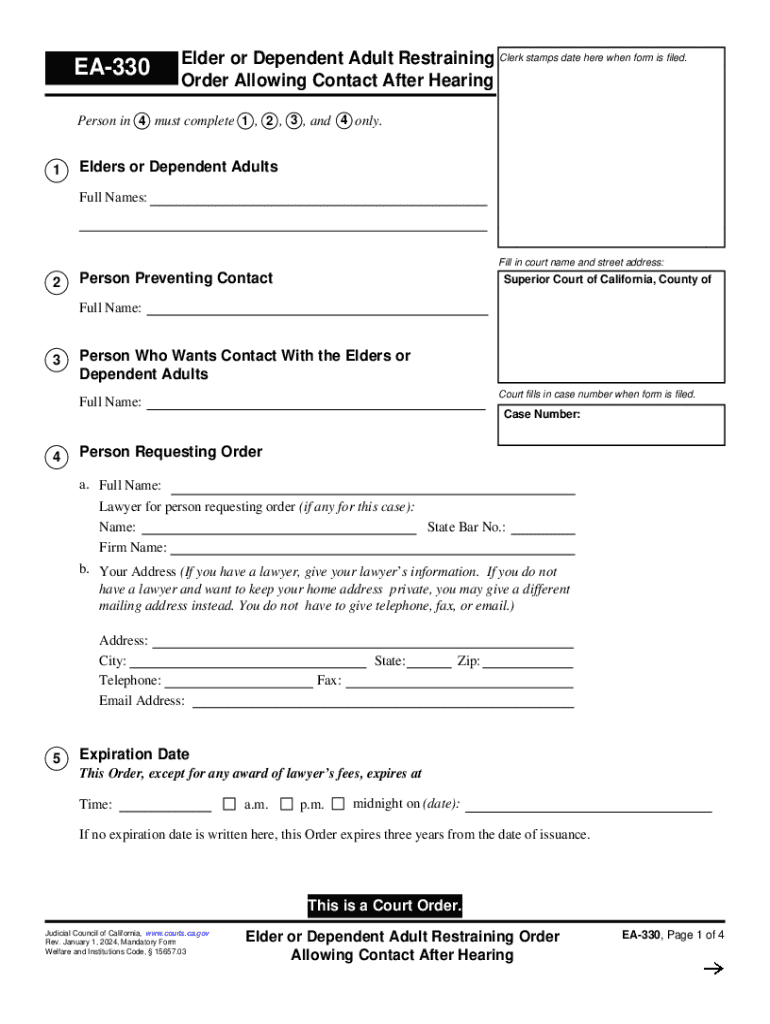
The EA-330 form serves as a court order issued by the Superior Court of California. It specifically allows contact between a person requesting it and elders or dependent adults after an official hearing has concluded. This form is vital in ensuring that individuals seeking contact can do so legally, particularly in situations where contact may have previously been restricted. It outlines all necessary information required for filing, including names, addresses, case numbers, and specific details regarding the hearing. By providing an official court sanction, the EA-330 helps facilitate the lawful communication and visitation of elders or dependent adults, ensuring their safety and well-being.
Steps to Complete the EA-330
Successfully completing the EA-330 requires attention to detail and understanding of what each section of the form demands. Start by providing detailed personal information, including full names, addresses, and any relevant relationship to the elder or dependent adult in question. Next, outline the specific terms of the desired contact, ensuring alignment with legal requirements. After filling in all mandatory fields, review the document carefully to avoid any errors. It's crucial to provide accurate information about the hearing details, such as the case number and scheduled court dates, to ensure the form is valid. Gathering and filing all necessary accompanying documents is also part of this process, which enhances the accuracy and completeness of the submission.
How to Obtain the EA-330
Obtaining the EA-330 form can be done through several channels. It is available for download directly from the official website of the Superior Court of California, where it can be accessed in both digital and printable formats. Alternatively, individuals can request a copy in person from the clerk's office at the courthouse. Some legal practitioners and services may also provide the form as part of their document preparation assistance. It's essential to ensure that the form is the latest version to avoid discrepancies during submission.
Legal Use of the EA-330
The EA-330 is primarily utilized within legal proceedings to legally validate contact with elders or dependent adults. It empowers courts and law enforcement agencies by defining the terms under which such contact is permissible. The document details provisions such as fees for legal representation, service of the order, and the enforcement of its terms by law enforcement agencies. Following the form's guidelines is crucial to avoid potential repercussions, including legal penalties for non-compliance or hindrance of court-approved terms. Additionally, this form can be instrumental when seeking legal redress if the contact is obstructed unreasonably.
Key Elements of the EA-330
Several key elements within the EA-330 are critical for its effective use. These include the identification of all parties involved, the explicit terms under which contact can occur, and any restrictions or conditions imposed by the court. Legal fees and obligations for both requester and objector are also defined, ensuring clear financial responsibilities. Furthermore, the form includes sections dedicated to legal penalties should the terms of the order be violated, thereby reinforcing the court's authority. Understanding these elements is essential for both compliance and enforcement.
State-Specific Rules for the EA-330
While the EA-330 form is standardized across California, specific counties might impose additional rules or interpretations based on local regulations and judicial preferences. It's important for individuals using the EA-330 to consult with local legal experts or the court clerk's office to understand any county-specific requirements that might impact the filing or execution of the order. This ensures all local procedural nuances are addressed, leading to smoother legal proceedings and adherence to regional legal standards.
Filing Deadlines and Important Dates
Timeliness in filing the EA-330 is critical. The court typically stipulates specific deadlines by which the form must be submitted in relation to the scheduled hearing. Missing these deadlines can result in delays or issues in processing the request for contact. Knowing the appropriate filing period, as well as any court-imposed deadlines for complementary submissions, such as evidence or additional forms, is crucial. Consistently checking for updates or changes to these deadlines is advisable.
Examples of Using the EA-330
The EA-330 has been applied in various situations that emphasize its utility. For instance, it has been used by adult children to facilitate regular visits with elderly parents who reside in assisted living facilities. Similarly, individuals who act as caregivers may utilize the form to ensure continued access when conflicts with other family members arise. In some cases, non-related guardians or advocates who wish to maintain supportive relationships have utilized the EA-330 to obtain the legal backing necessary for contact. These examples illustrate the form's flexibility and critical role in upholding meaningful relationships and ensuring the well-being of vulnerable populations.




